Best of DC: Week of February 5th, 2020

Best of this Week: The Dreaming #18 – Simon Spurrier, Marguerite Sauvage and Simon Bowland
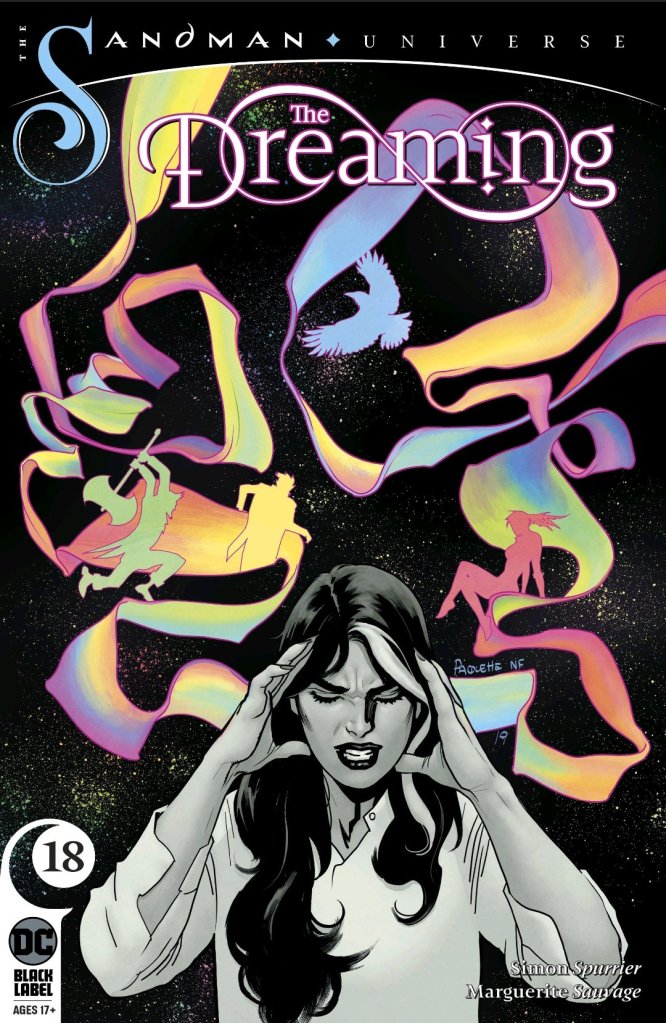
Okay, hear me out – The Dreaming has been really good since the beginning and while not on the same level as Sandman itself, Si Spurrier has done a fantastic job of contributing to this world of the fantastic and absurd with his own brand of whimsy and abject horror. I haven’t found the time to cover any of the issue because, well, there’s always been something just a bit better on the same weeks that this series released and though the normal artist, Bilquis Evely, wasn’t on the art this month, Marguerite Sauvage stepped up and provided her always stunning style.

A short-ish recap for the uninitiated, The Dreaming is a realm where all of humanity’s minds go when they sleep. It was ruled by Dream of the Endless, a being of immense power over and creator of the realm before he was succeeded by a young man named Daniel Hall. Daniel becomes Dream for a time and even appeared in Scott Snyder and Greg Cappullo’s Dark Nights: Metal, but at some point, he left the Dreaming entirely. This caused things to spin out of control until the realm lands in the hands of Wan, a moth like boy with a dark side.

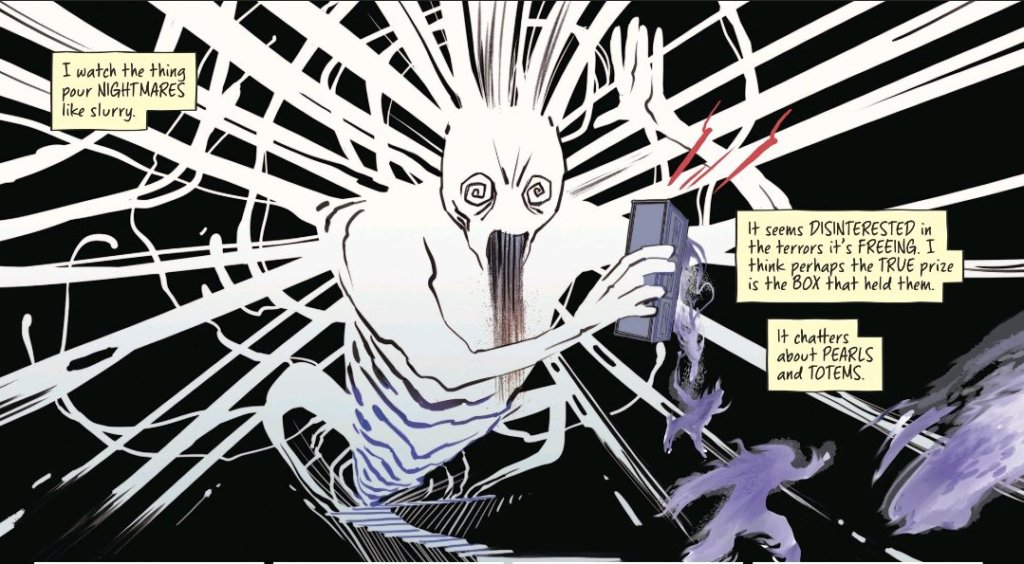
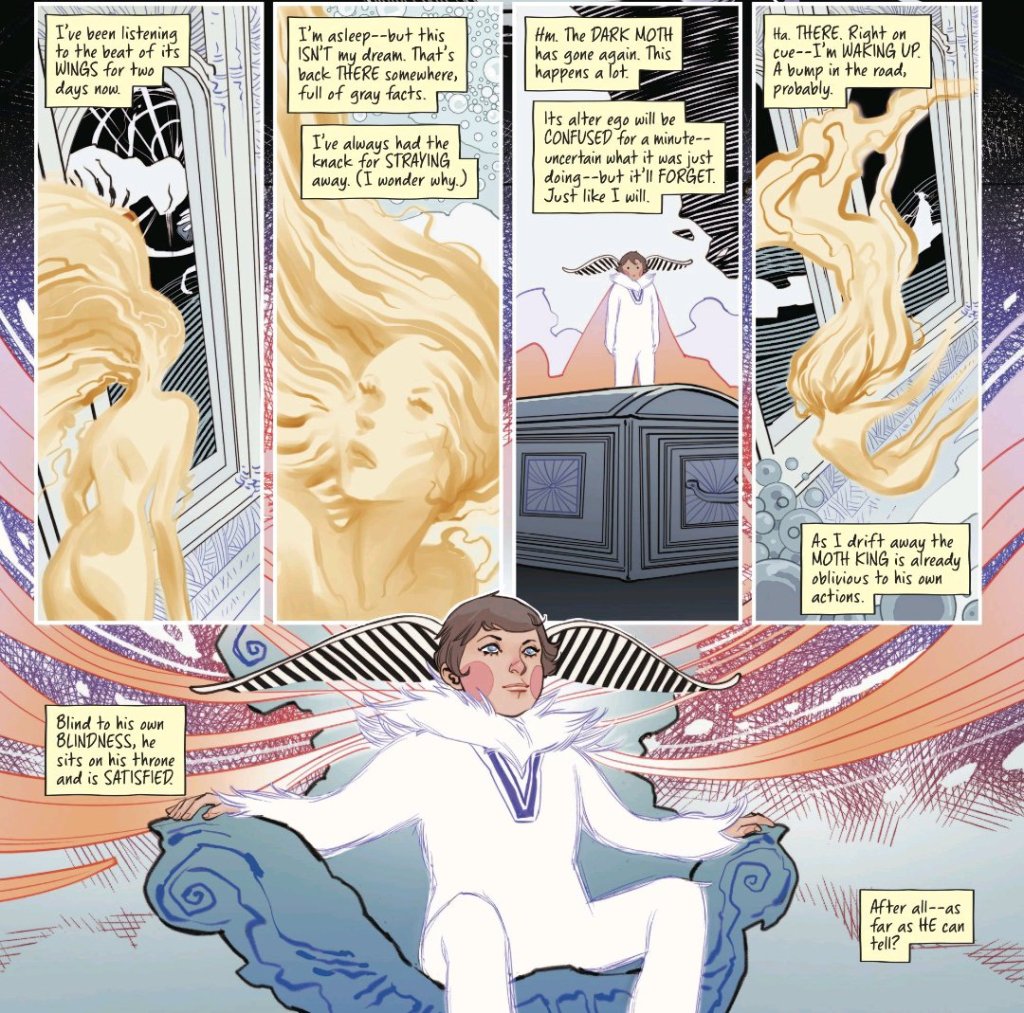
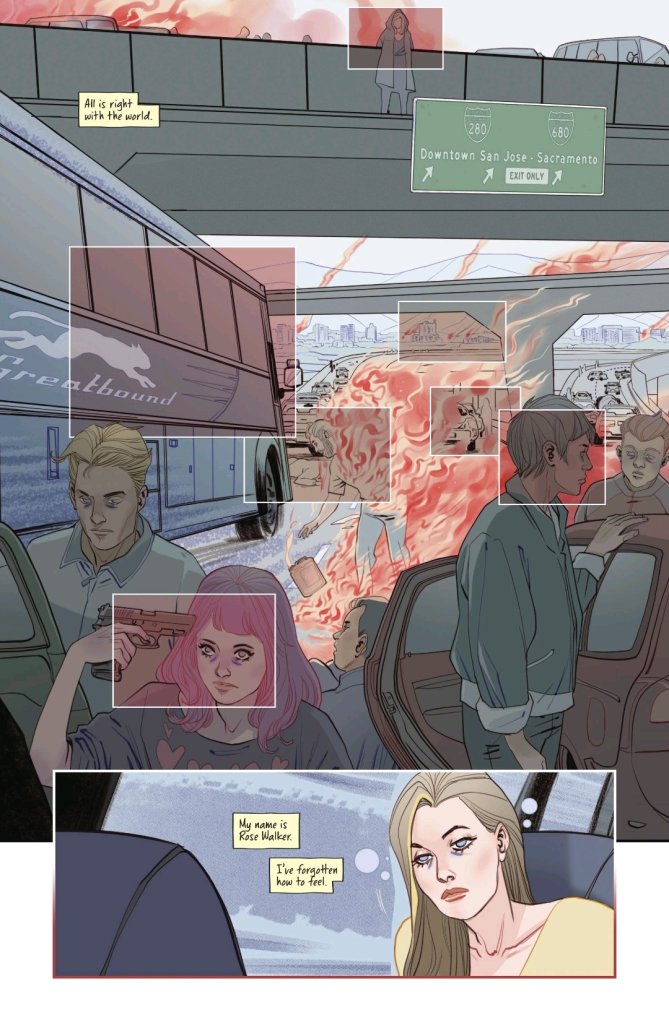
The book begins with a dream apparition of Rose Walker, a central character of the Sandman series, looking upon Wan’s Eldritch side as it releases nightmares into The Dreaming. She muses that she’s been watching him for some time now, acknowledging that when he returns to his cute moth form they both forget what had just occurred. Wan appears satisfied, thinking his rule over the Dreaming is making the world better as he’s been dispatching “blanks” into people’s dreams to make their whimsical dreams more logical instead. This has a profound effect on the world as it seems as though joy and color are lost.
Sauvage stuns with her depiction of this joyless world as people just walk around with utter lethargy and casually kill themselves. It’s absolutely disturbing to watch as a woman prepares to drop herself from an overpass, seeing another calmly hold a gun to the side of her head and a man self immolating in the background. What makes all of this especially great, however, is Sauvage’s use of soft colors to almost make the despair and horror feel unimportant. Rose walker is the only one that stands out because of her bright yellow dress and normal looking skin.

Her internal monologue allows her to see that something’s amiss and that she should be a wreck after losing her mother and daughter over the course of her personal story, but she lacks sufficient motivation to pursue any action aside from sleeping, but then she recalls how vivid her dreams always were and Sauvage portrays this excellently as an unseen figure lights a cigarette for her and she drifts into a white space filled with beautiful wisps of smoke and color. In the dream, she hears something about a Vortex that will likely play a big role later in the series.

We then cut to Dora as she watches the transferred consciousness of Cain kill the man who initially caused Dora to fear her own existence, Keter. Dora is a Night Hag that had haunted Keter in his younger years, causing him to want to figure out the secrets of the Dreaming and ultimately how to destroy it. It’s implied (or plainly stated, I forget) that he created Wan and set him upon the Dreaming in Daniel’s absence. Unfortunately for Dora, with Keter’s death there is no one able to remember her story and she starts to fade away.
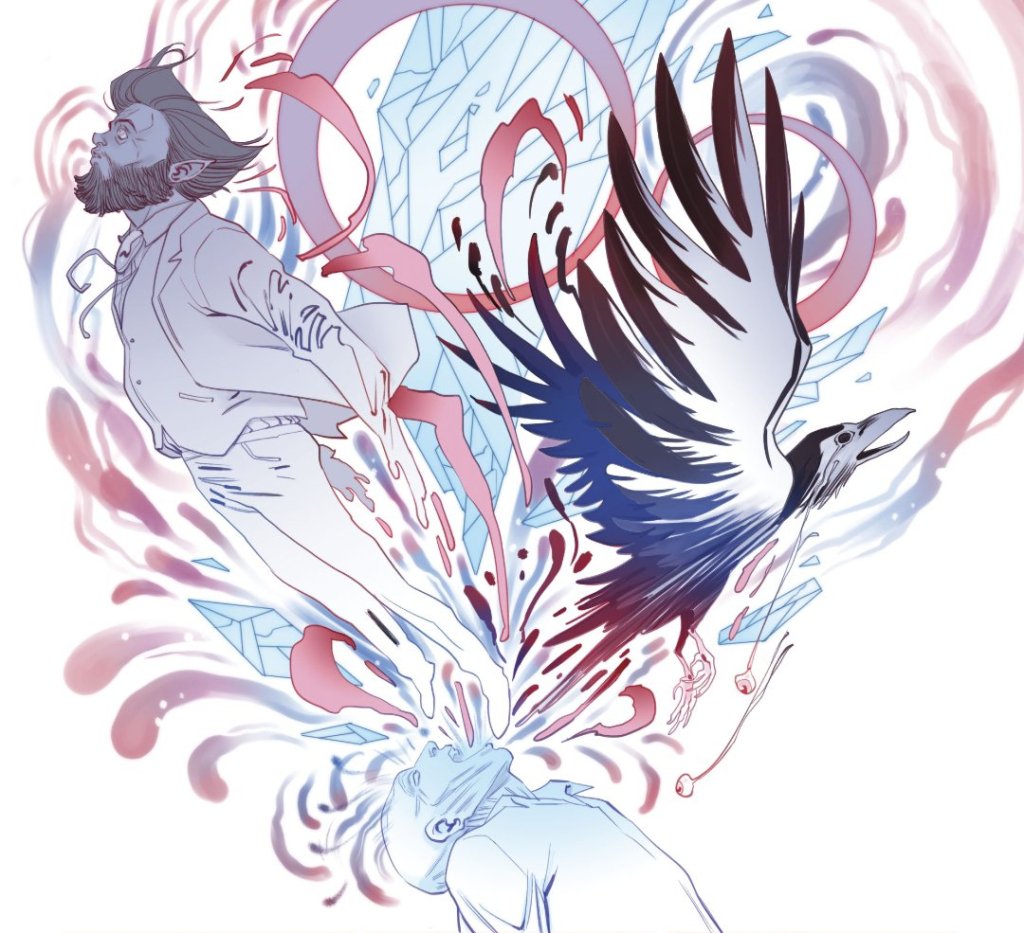
In contrast to the previous pages, Sauvage colors this scene with a deep, but not oppressive red as the facility responds to its creators impending death, giving things a sense of panic as Dora then looks puzzlingly at her translucent hands. Soon after, Keter’s body starts to convulse and a murky plume of light purple and pink pours from his mouth – the background and Keter’s body are white, with his outline and the monitor version of Cain being the only line art for this panel. Abel and Matthew (and others) then burst forth from Keter’s mouth as he finally dies.

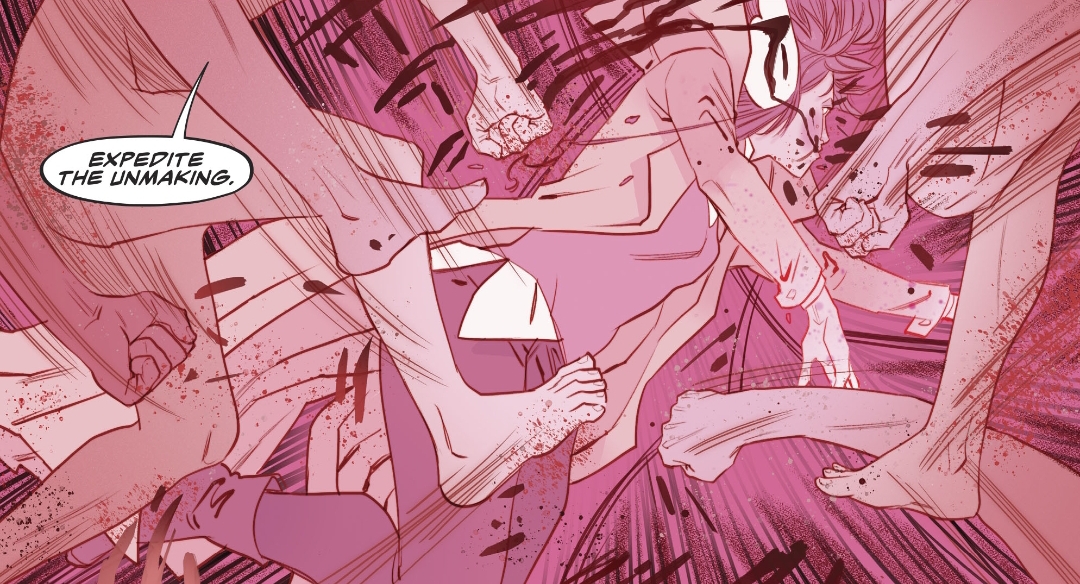
Matthew is one of the Ravens of the Dreaming and he acts as the eyes for the ruler of the Kingdom as they survey the dreams of men. Abel acts as something of an accountant of some kind, but he has been keenly aware of Wan’s other side and chose to escape the Dreaming with Matthew, but The Dark Moth sent blanks to follow them and one of those blanks just so happened to be Ziggy, Dora’s former blank companion. When Ziggy disregards his former identity, his other blanks begin to savagely beat Dora in a flood of oppressive pink colors.

Spurrier tells two tales that Sauvage portrays in nine striking and dynamic triangular panels. On the downward facing panels, Cain lambasts Abel for having the audacity to kill him, but Abel counters with the fact that Cain has killed him hundreds of thousands of times over the millenia they’ve been together. Cain looks on with rage and it only gets worse as he realizes that Abel is mostly right to call him a coward. At the same time, we continue to watch as the blanks continue to assault Dora. These panels are most uncomforting as she pleads for Ziggy to help.
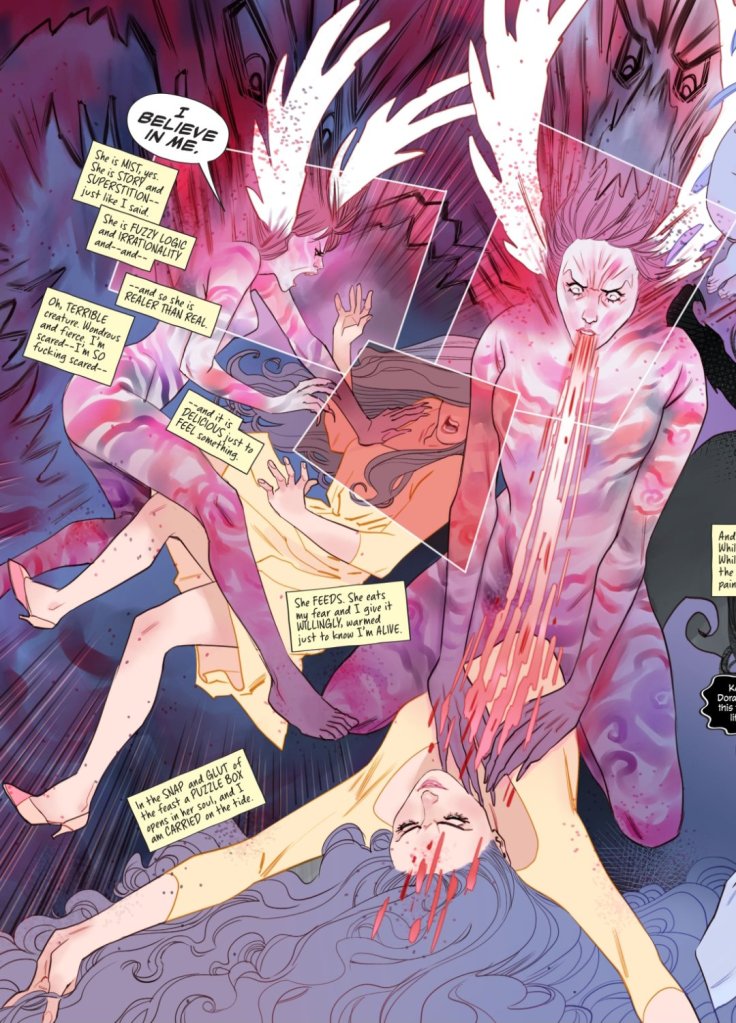
Sauvage does an amazing job of showing Dora’s distress is pained and betrayed facial expressions as she bleeds and cries while a flurry of fists and feet meet her. She continues to fade and is soon dragged away by the other blanks before cut back to Rose Walker and her continued feeling of disillusionment before Spurrier reveals that the unseen figure that lit her cigarette might be the hand of her Grandmother, another being with a strong connection to the Dreaming. She manages to convince Rose to take the bus and find the color of the world again.

One subtle thing that I liked about this issue and the way Spurrier has been writing this series thus far, is the implication that things started to go horrendously wrong when Abel killed Cain and stopped stuttering as a result. Cain was always one of the smartest residents of the Dreaming and would have figured out Wan’s scheme even if Wan himself wasn’t aware of his other half, but Abel was far too nice to think about it like his brother. When Abel is finally reunited with his brother, he begins to stutter a lot more again, symbolizing a return to how things were.

In trying to convince his brother to return to the Dreaming, Abel does he one thing he needed to do make things right with Cain, he recreates his brothers murder by stabbing himself in the neck with a fork while Cain says that he will, but because he WANTS to, not because Abel asked (Cain is a tsundere confirmed).
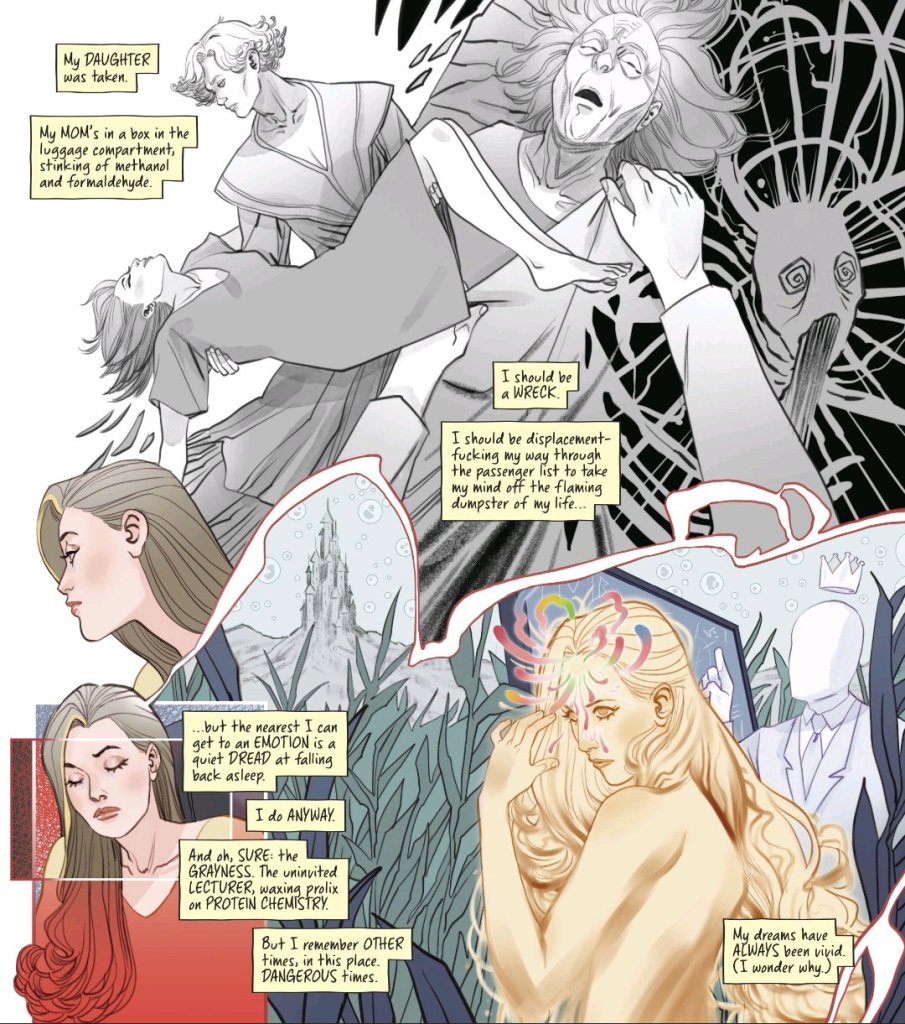
While absolutely brutal and horrific, it’s touching at the same time because Abel does this out of love and sacrifice knowing that the world is doomed without his brother at his side. At the same time, this inspires Ziggy who goes against his order and tells the other blanks to stop the process of killing Dora because she made Ziggy who he was…

Unfortunately, his newfound sentience comes late as Dora is probably seconds from death and True Death by fading. Then suddenly a bus CRASHES through the walls and Rose emerges, feeling the dream energy drifting away from Dora. Sauvage draws their interaction together beautifully as Rose inches closer and closer to Dora, trying to feel something before whispering in her ear and bringing the Night Hag back to life.

The soft colors spring to life as Dora mounts Rose and begins to drain her fear, her ear wings turn a bright white and varied pink watercolors dance across her body as she reaffirms her belief in herself and Rose is in ecstasy of feeling again. We then learn something crucial about Dora and how all of this might have been by the original Dream’s design. At the end, not only is Dora restored, but the keeper of the Dream Library is as well.
The Dreaming is a weird story, but it always has been. One thing that I have loved about this story so far is that it doesn’t completely require you to have read all of Sandman to understand it, but it enriches the experience if you have. These characters are fully three dimensional with their own motivations, fears and thoughts that Si Spurrier has captured so well. I’m glad that he took on this story because it’s equal parts beautiful and dark like the Sandman Universe should be.

This is also in no small part thanks to how Marguerite Sauvage chose to draw, color and ink these beautiful scenes, characters and environments. Everywhere from the human world to the land of the dreaming was distinct and interesting because of backgrounds, color choice and intensity – even the use of white space was striking and amazing to look at.
I think the series is supposed to end at Issue 20, but it already feels too soon, like we need more. Of course there are the other Sandman books out like House of Secrets, Books of Magic, Lucifer and Hellblazer, but everything related to the Dreaming will always have a special place in my heart and I can absolutely say that I have enjoyed this ride thoroughly thus far. High recommend!
Best of Marvel: Week of February 5th, 2020

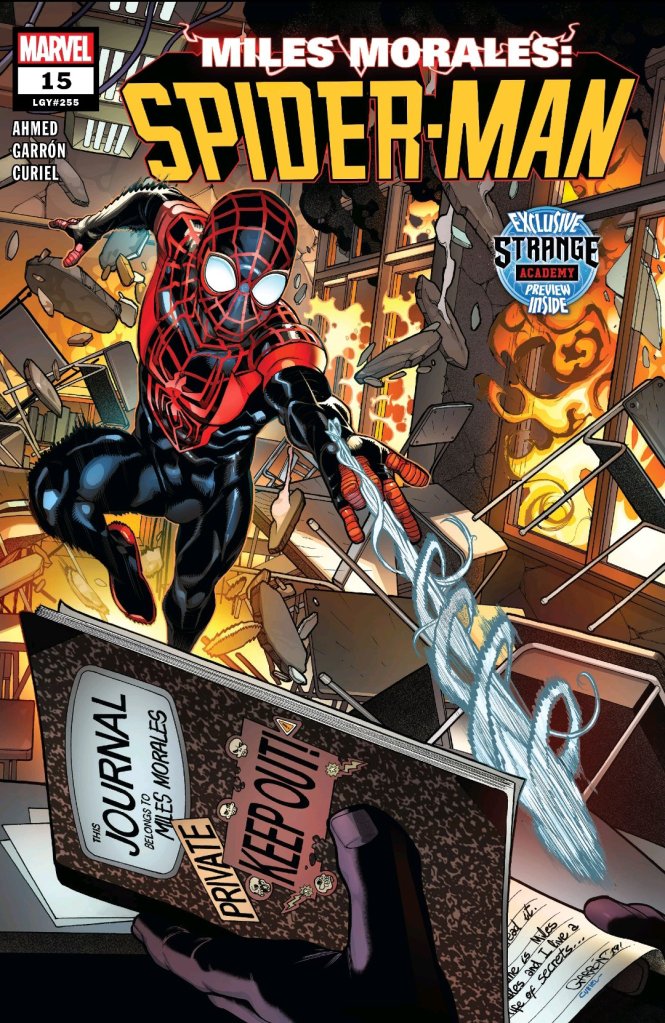
Best of this Week: Miles Morales: Spider-Man #15 (Legacy #255) – Saladin Ahmed, Javier Garrón, David Curiel and Cory Petit 

I had a really difficult time choosing between this and X-Men/Fantastic Four #1.

Both stories were great this week and I was tempted to choose the latter because up to this point, I hadn’t really been enjoying this Spider-Man run very much. Of course, here we are though. There was just something about how this issue pulled everything together that made me appreciate the story that Saladin Ahmed set out to tell and how Miles is finally growing into the hero that fans always knew he was. Everything just felt so right amidst this roller coaster of an “Ultimatum” arc.  Even in the face of tremendous adversity Miles overcomes.

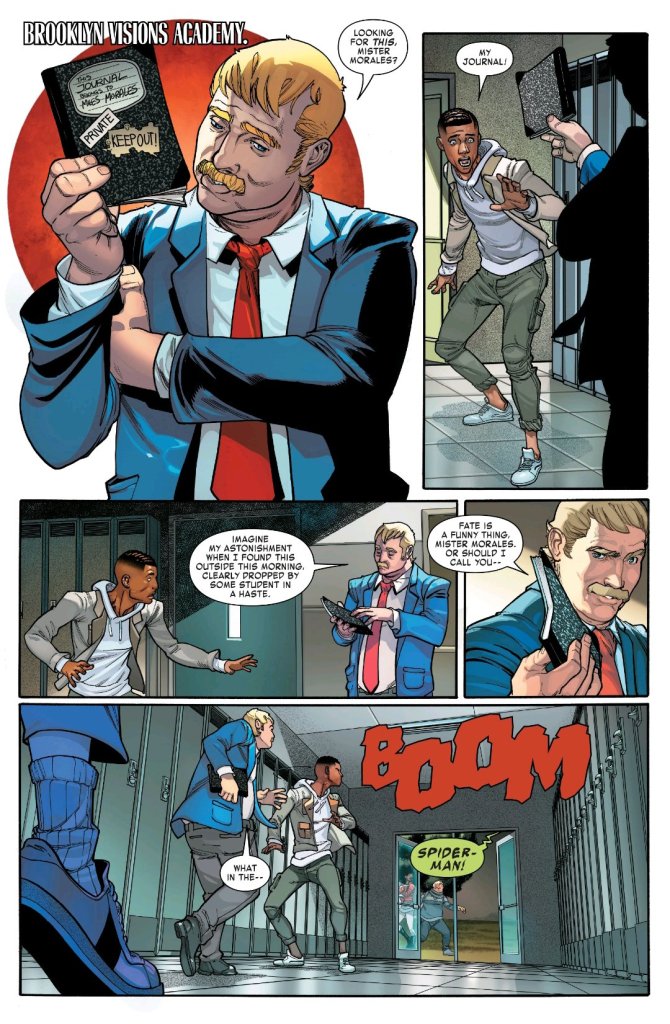
Throughout this series, Ahmed has been sprinkling small bits of an arc to readers with Miles constantly being late for class, tired and even being placed on academic probation by his Principal, Mr. Dutcher. Of course it’s easy to paint Dutcher as potentially a racist due to how much he’s had it in for Miles throughout the story, almost to very ludicrous points in his attempts to kick Miles out of the school. Things seek to finally take a turn when we find out that Dutcher found the notebook that Miles had been writing in with all of his Spider-Man adventure thoughts.

Garrón makes sure to draw Dutcher with the worst, “I’ve got your ass now” looks I’ve ever seen with one hand placed in his underarm while he taunts Miles with his journal. Curiel colors things ominously with light shadows going over most of his face as he prepares to ream Miles, but suddenly Brooklyn Visions, Miles’ school, is attacked by a horde of new Green Goblins. Garrón makes them look threatening as hell as they terrorize the student body and the teachers with destroyed cars and fire in the background.

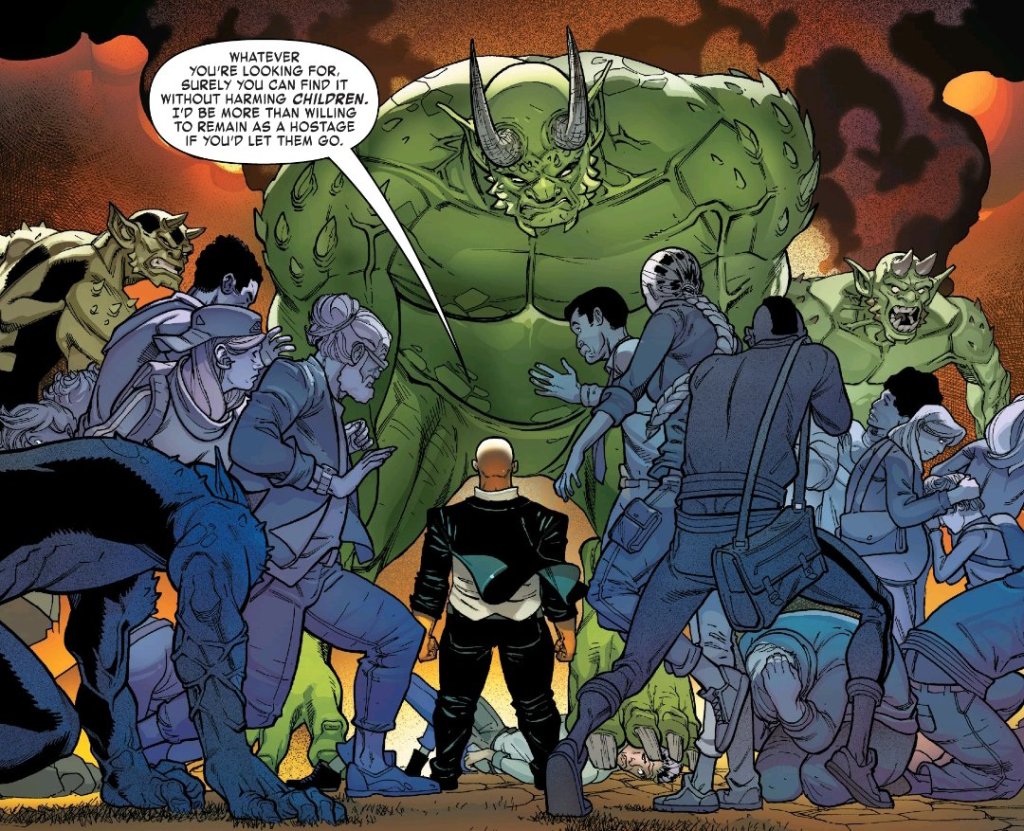
Without hesitation, Miles tries to swoop in and save them, but the Goblins find him and Dutcher, rounding them up with the rest of the hostages. The leader Goblin demands that the school hand over Spider-Man while threatening the staff. Garrón and Curiel sell this by portraying the Goblin as a towering beast with one green foot planted on the head of one of the teachers, his grey toenails curling over him. They’re certainly not as intimidating as the Main Green Goblin of the Ultimate Universe, but their numbers and power do cast as at least mildly formidable foes, at least for this issue.

One of the black teachers steps up and offers to remain the only hostage if they let the kids and other teachers go. I really like this character as I think he’s the one that assigned the journal project and he’s been acting as something of a mentor to Miles throughout. He really cares about his students and colleagues even though he’s terrified and he’s the first of many to inspire courage in this issue.

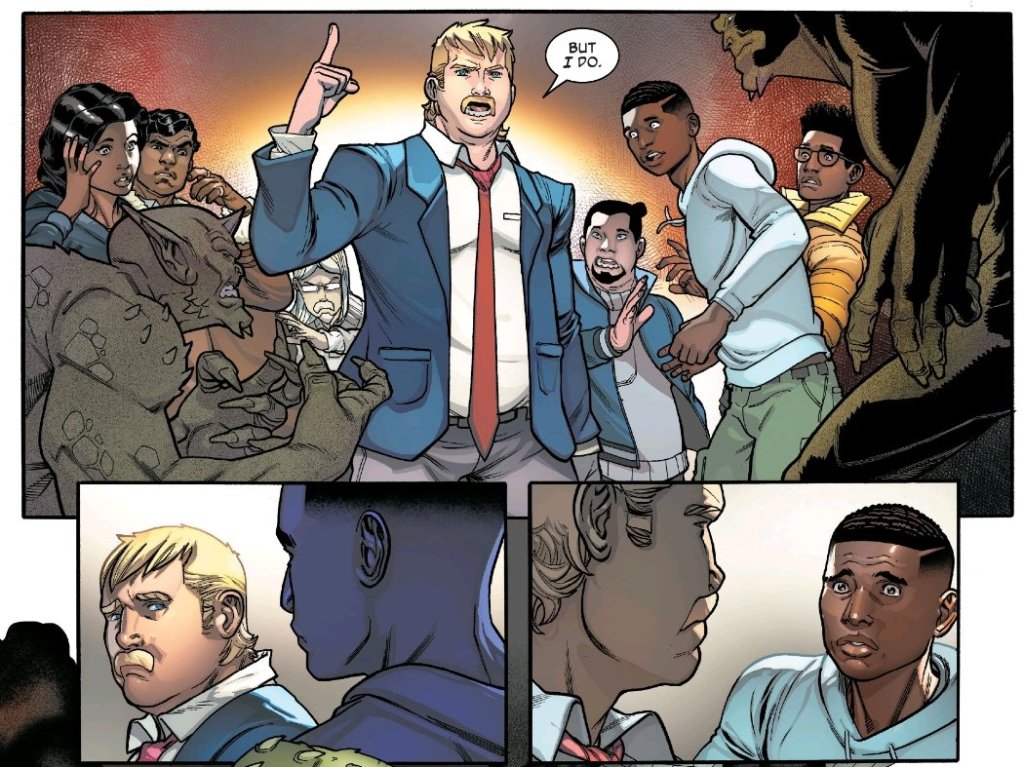
Just as the Goblin is about to absolutely RIP the teacher’s head off, Dutcher steps up and says that his colleague doesn’t know where Spider-Man is and says that he does. Everyone remembers that moment in the first Sam Raimi Spider-Man movie where J. Jonah Jameson risks his life for Peter so that he can escape – well, after giving a telling look to Miles, Dutcher claims that he himself Spider-Man before getting smacked into a wall. This is an amazing turning point for the character as we’ve only seen him be annoying and antagonistic to Miles the entire time that we’ve known him. With one small act of courage, he kinda reverses it all when he could have just given into his worse thoughts.

Garrón and Curiel frame this scene excellently with one shot of Miles looking at Dutcher, with a light shining on his face, almost wondering what the right decision is. He may not like Miles too much, but he couldn’t forgive himself if he gave the boy up. We get another shot over Dutcher’s shoulder, shadows covering the other side of his face and Miles looking at him, afraid that he could have his identity exposed and die right there. With no dialogue these two panels say more than any word balloons could.

Ganke, Miles’ best friend, decides to launch another distraction for Miles to suit up and our hero swings in with an amazing splash page by Garrón and Curiel. The students cheer, the Goblins grit their teeth in anger and Miles takes a dynamic pose as his webs make an excellent line for the our eyes to follow from Miles arms, his heroic symbol and his gymnast legs getting ready to kick the crap out of evil. The black and red suit stands out amongst the mostly greens and browns of the page, putting the focus mainly on him.

For the most part, the rest of the issue is Garrón and Curiel showcasing Spider-Man’s Goblin Slaying skill while they try to take him down. He crashes through the wall of the school and Garrón emphasizes the weight and speed of the fight with debris and skid marks as Miles knocks two of the Goblins out, making them revert to human form. There’s also a really good shot of the leader Goblin chucking dumbbells and gymnast posts at Spider-Man.

Curiel does an amazing job of coloring the action as things move from the brown of the basketball court, to the blues of the indoor pool in which Garrón draws an amazing few panels of them fighting in the water. As per Curiel’s coloring style the water is fluid and beautiful and then gets excellent lighting as Spider-Man Venom Blasts the Goblin in the middle of it all. 

Cory Petit deserves heaps of credit for giving this entire book life with his incredible lettering and even more so this fight sequence. His transparent CRASHes and ZZZZZTs sell both the intensity of Miles and the Goblin going through walls and the power of Spider-Man’s Venom Blasts respectively. I’d be remiss if I didn’t mention the SPLASH as the Goblin falls into the pool or the transparent SLOSH that curves down the villain’s arm as he tries to punch at Miles in the water. 

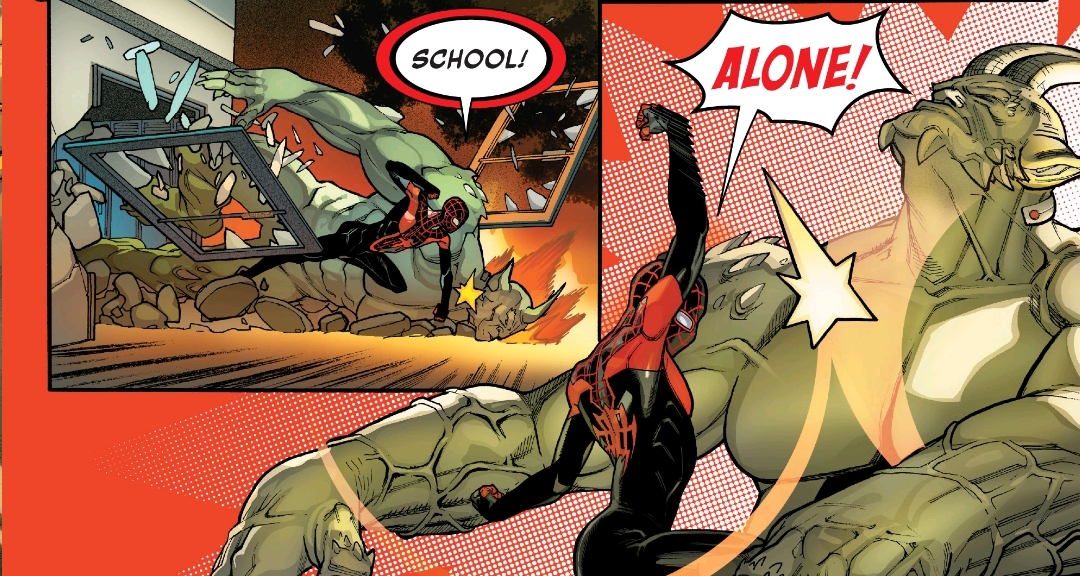
The fight reaches its conclusion after Miles repeatedly kicks the Goblin in the face and finishes with an uppercut (Shoryuken!) over a red, pop-art background that could only have been made better with a POW sound effect. The Goblin, knowing he’s been defeated, jumps away and leaves Spider-Man until their next confrontation. Later on Miles and Mr. Dutcher resume their conversation from earlier and it is a far more tense situation, especially after all of the damage that occured to the school.

Surrounded by Curiel’s dim oranges from the fires raging in the background, Miles tries to explain all the things that he says in his Journal, but Mr. Dutcher calmly hands his student his journal back. Dutcher tells Miles that he “should report students engaging in dangerous activities to the administration,” but all that he read was a “fictional story.” For a moment, Dutcher gives Miles a look like he sees the fear on the young man’s face, but he rationalizes that if Miles hadn’t done what he did, there’s no telling if any of them would be alive.

Mr. Dutcher proves himself to be a trustworthy person because of the bravery that Miles showed him. Miles has saved Brooklyn, if not the whole of the world, many a time and he’s actually one of the more well liked Spider-People. Miles serves as an inspiration to the rest of Brooklyn Visions and the borough as a whole, but there’s also the downside of his presence. Somehow the Goblins were able to find out what school Spider-Man attended and that puts everyone in grave danger, so the question is… what will Miles do now? He did save the day and got taken off of academic probation, but the school is mostly in ruin. Much like Peter’s best victories, this one is pyrrhic.

Saladin Ahmed really knocked it out of the park with this issue. He does a really good job at scripting Miles and his supporting cast, making each of them seem courageous and sympathetic. Javier Garron and David Curiel’s art and colors have been some of the best parts of this run and they continue to stun with amazing visuals, making sure readers get really invested in the art and the story it tells along with the script.

I do also wonder if this story will play into the upcoming “Outlawed” event which sees teenaged superheroes getting banned from active operation after something terrible happens to Spider-Man friend, Kamala Khan aka. Ms. Marvel. The destruction of Brooklyn Visions could act as more fuel to the fire following this issue and it would be interesting to see how this could possibly contribute to that event. Maybe we’ll even see Miles unmask to the world? (Nah, it’s probably gonna be her, but who knows?) But I am excited at the very least for the rest of Ahmed’s run if the issues continue being this awesome.

Best of DC: Week of January 29th, 2020

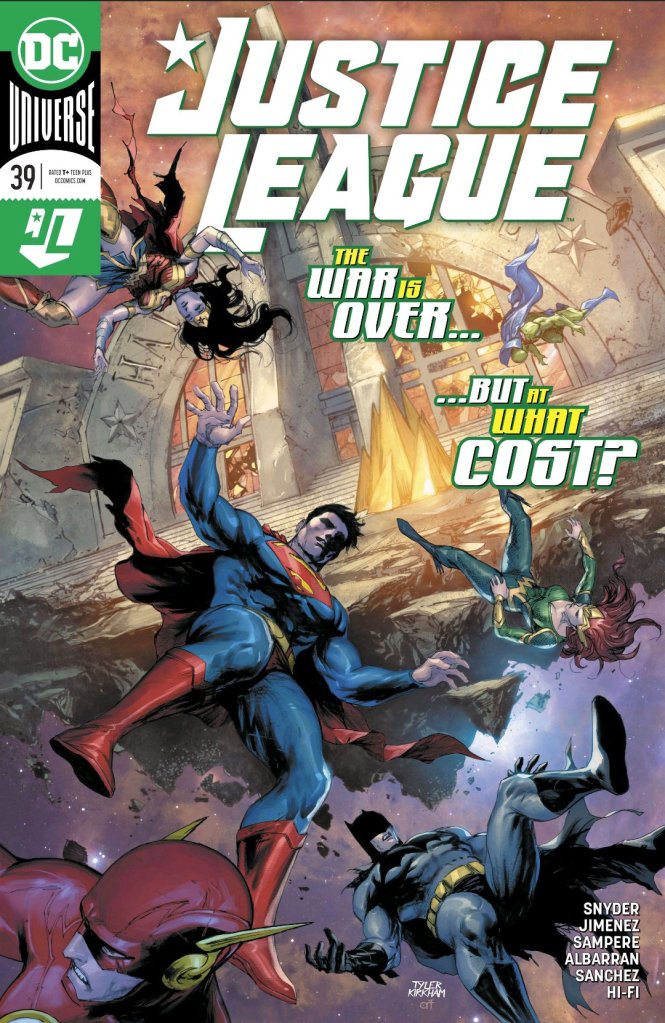
Best of this Week: Justice League #39 – Scott Snyder, Jorge Jimenez, Daniel Sampere, Juan Albarran, Alejandro Sanchez, Hi-Fi and Tom Napolitano

Talk about a Cosmic Sandbag.

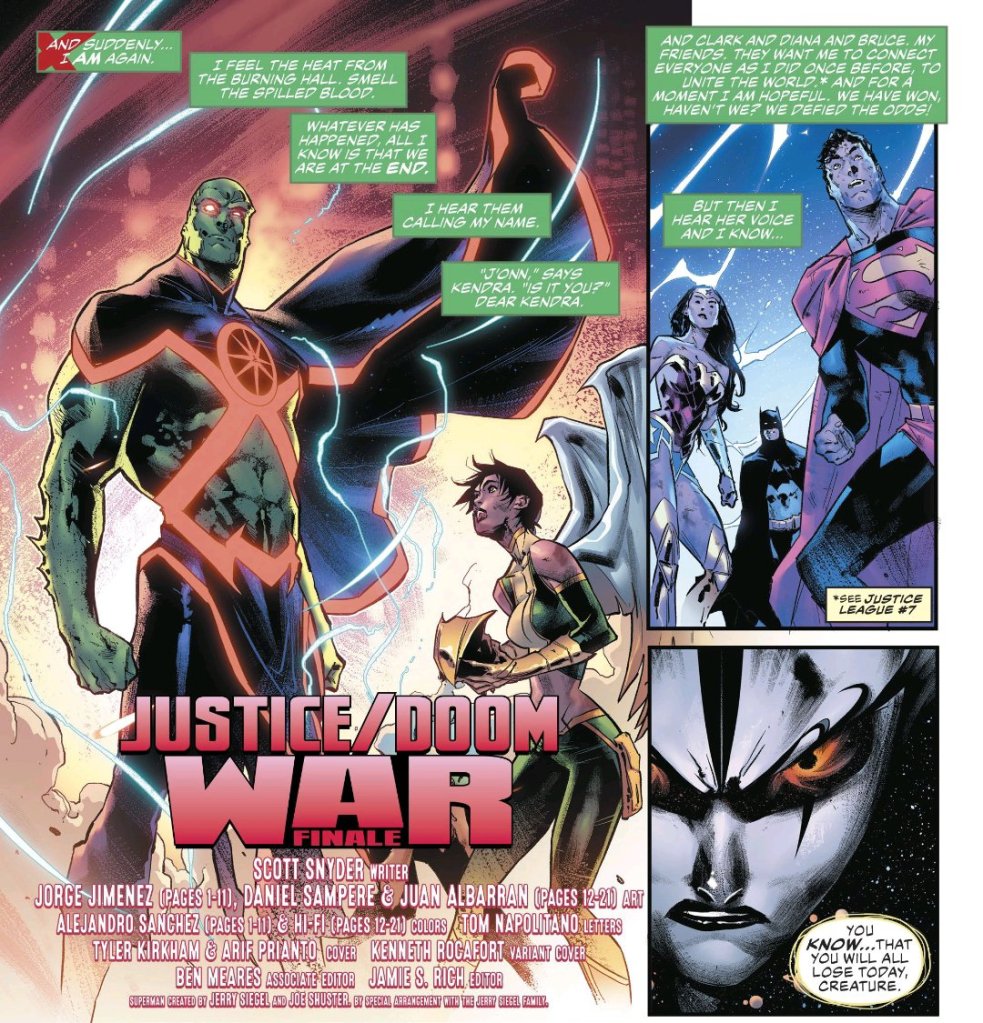
Shayne, the alt-future son of Hawkgirl and Martian Manhunter, gave his life and essence so that his father could return from the darkness. This book opens with the amazing return of Martian Manhunter as drawn by Jorge Jimenez with colors by Alejandro Sanchez. Manhuner hasn’t been seen since Justice League #28 when Lex Luthor absorbed him to become Apex Lex, so this return had a monumental feel, especially as the rest of the League looks upon him with awe. Jimenez makes this moment feel powerful as J’onn stands tall against Perpetua with his reds glowing vibrantly thanks to Sanchez.

As soon as Perpetua takes notice that J’onn has returned, she lunges after him. This is likely due to the fact that Martian Manhunter is legitimately one of the most powerful telepaths in the DC Universe and in the subsequent pages, he makes the choice to connect the minds of the people of Earth with his and the rest of the Justice League to try and swing them all toward the side of hope. 

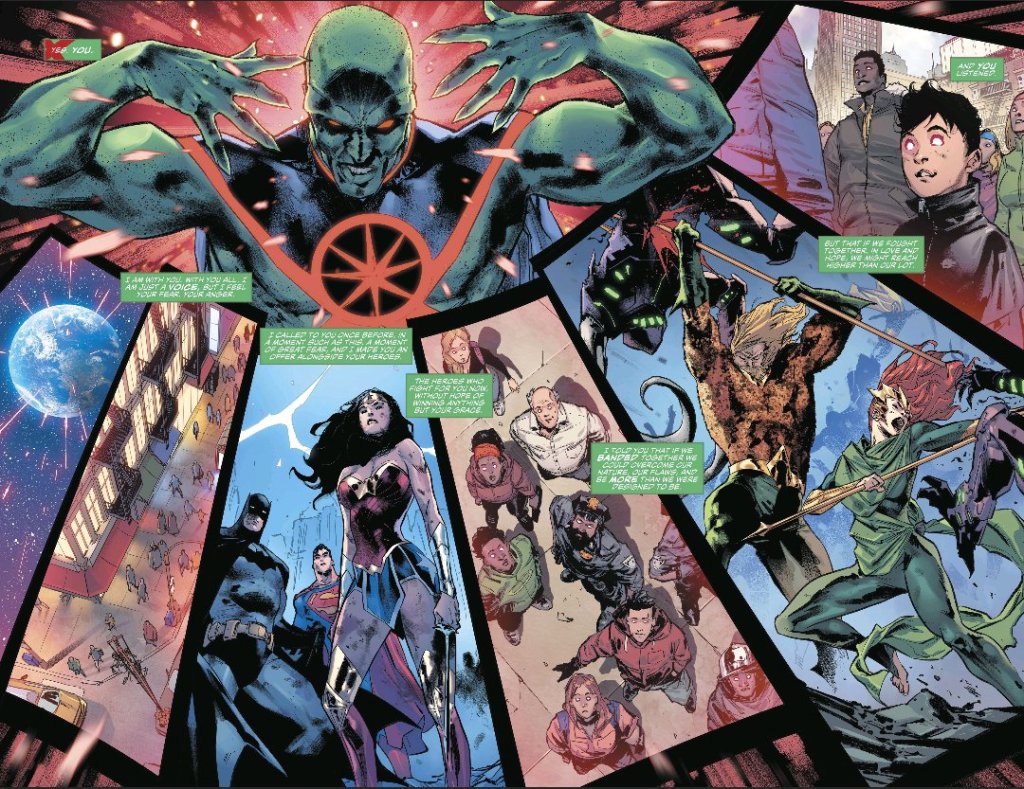
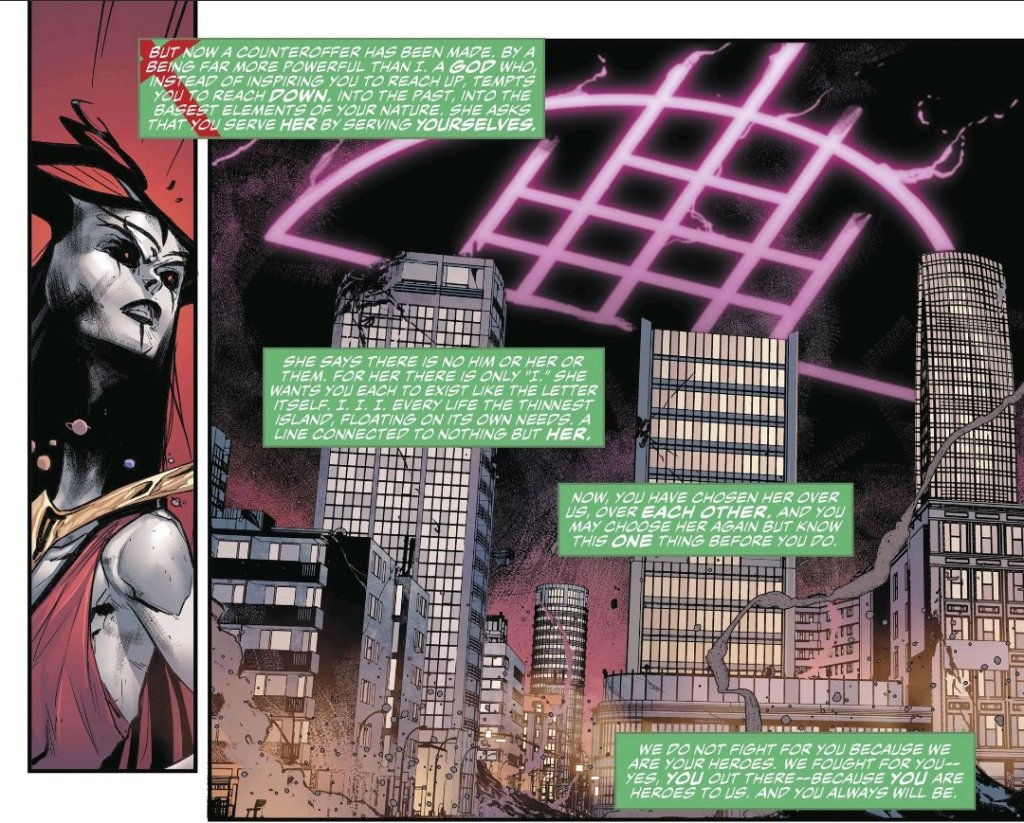
This results in a wonderful double page spread where Jimenez poses Martian Manhunter like he’s about to use the Solar Flare from Dragon Ball and speaks to the people. Jimenez and Sanchez show the people on the streets and various members of the League looking towards the sky with smiles on their faces. Snyder scripts this amazingly by having Manhunter give the rousing speech of goodness and rising above that Superman would normally give. What makes this even better is that Manhunter, who usually suffers disillusionment from living amongst humanity, does an amazing job.

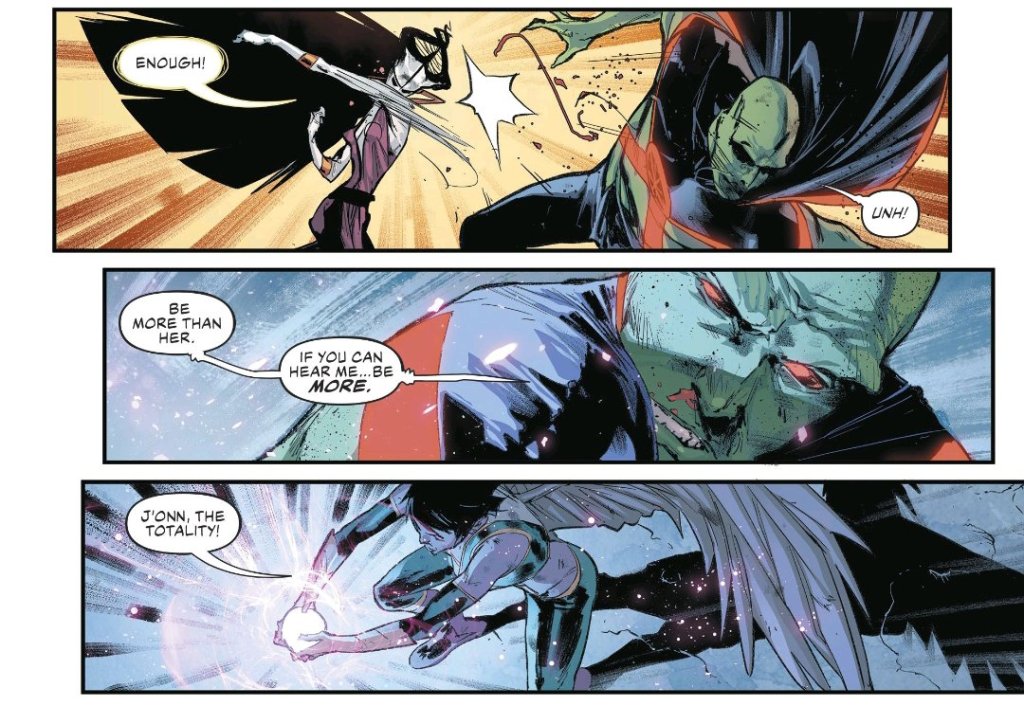
J’onn’s speech manages to rouse enough people that the Totality, the macguffin that could imprison Perpetua once again, begins to glow and surge with energy. Perpetua, starting to feel the fear of loss orders an onslaught of the League. Jimenez emphasizes the anger on her face, the fear on Lex’s and the intensity of the battle happening on the steps of the Hall of Justice.. Sanchez makes sure that the colors almost surge off of the page with flashes of red and blue.

As the hope of the people of Earth continues to grow, the tendrils of the Totality wrap themselves around Perpetua’s spindly body as she screams in anger and hatred. Tom Napolitano places Martian Manhunter’s thought balloons perfectly throughout these pages as Snyder ends J’onn’s speech with the people of Earth joining together in the feeling of heroism and hope. The Sigil of Doom begins to fade away and Perpetua has failed…

And then “KRA-KOOM,” Napolitano’s powerful lettering cracks across the page as Jimenez draws the Sigil of Doom firmly seared into the sky and made even stronger by the overbearing hum of Sanchez’s vibrant green. This is the kinda trope that Scott Snyder does well, but also kinda overuses in his grand scale stories: The Cosmic Sandbag. The heroes were on the very cusp of victory and it seemed like the people of Earth were actually believing in the hope that Martian Manhunter was talking about, but instead they gave into their fear, hatred and base instincts just like Perpetua thought they would.

Snyder utilizes this bait and switch technique to show just how influential Perpetua’s evil is and how at the end of the day it will take more than just a flowery speech to turn people, especially since they watched the Justice Leagues battle the forces of Doom and lose massively. Snyder used this in Dark Nights: Metal anytime Batman thought he had a chance in defeating The Batman Who Laughs and Barbatos. They would just pull nonsense out of nowhere and further plunge our hero into despair because he couldn’t anticipate the villain’s very next five moves. I love it and hate it because it helps to show hopelessness, which I am a fan of, but Snyder does do it a bit too much for my tastes (See The Batman Who Laughs mini-series).

The next thing we see is a Rita Repulsa-esque cackle from Perpetua and honesty this might be my favorite of Jimenez’s panels because he just makes Perpetua look so petty. She’s basically saying, “Bitch, you really thought!” before explaining how everything was by her design. She wanted to give humanity a choice to hear both sides and they still chose Doom. Manhunter tried to hide his mind from her, but he failed to realize that as the creator of the Multiverse, he could never think fast enough to avoid her. Perpetua is far more powerful than these heroes could ever have anticipated.

Jimenez and Sanchez absolutely kill the next few panels as Perpetua casts away the shackles of the Totality, breaking out of the tendrils as her black cape…hair(?) causes a gust of wind to shake our heroes while the background shows varying tones of blue, almost a mockery of their ideals of hope. She stands over the Earth while the void of space appears vast around it and with a flick of her wrist and a flash of yellow she wipes the Justice League from existence. Doom truly has won and she vows to create a new story from the ashes of Hope.

Though, the universe itself has other ideas. In the black of Space, green matter begins to coalesce into a form, then that form takes shape and appears to be Martian Manhunter. Daniel Sampere, Hi-Fi and Juan Albarran take over the art from this point and pose Manhunter as if he’s in a womb, reborn after being supposedly killed by Perpetua and saved by something else. I love that Snyder places such importance on Manhunter and his humanity. Despite the insurmountable odds that the League has faced up to this point, he still does everything in his power to call back to the Earth, to try to win the people back.

He is unable to, however, and it seems as though he’s not the only one unable to use his powers as the rest of the League shows up behind him. In an awesome splash page Sampere and Albarran show everyone as wearing black bodysuits, potentially symbolizing a loss of identity or power as none of them seem to be able to use their abilities. Hawkgirl seems to be the only exception because her wings are a part of her. Superman tries to rationalize that as long as they’re not actually dead then there’s still hope, but then he fails to fly, landing back on the moon.

Another awesome thing about this issue is how it calls back to the very first issue of the run with the Quintessence showing up. The Quinessence are a group consisting of Highfather, The Phantom Stranger, Hera, The Wizard Shazam, The Spectre and Ganthet of the Guardians of Oa. They are some of the most powerful beings in the universe and even they knew that this was how things were meant to be. They saw the same vision of Doom that Martian Manunter did and saved the League in the nick of time to prepare them for what’s to come, not just a war of Justice or Doom, but for Everything.

With everything that’s been hinted at as far as the next incoming Crisis, this is a really good inciting incident as far as things go. Perpetua wins and sets up the next true war for the Multiverse. Given there’s still things to sort out with The Batman Who Laughs, the conflict is set and the Justice League has to give their all to ensure that they can protect the Universe. Superboy Prime is coming back in the pages of Shazam, Wally West has found his kids and Dark Multiverse world of his own creation and this issue even references Doomsday Clock and kinda cements its place as an alt-Universe story, but acknowledges the importance of it.

Scott Snyder has set the stage for everything to come and thanks to his fantastic art team telling the story, he drums up the feeling that there’s still a way to see Geoff Johns original vision for Rebirth through. The hope is there, the League just needs to fight for it. I can’t wait to see what Robert Venditti can do as the writer for Justice League given the amazing work he’s done with Green Lantern and The Freedom Fighters series. Doug Mahnke also taking over as main artist is also a welcome change as he’s one of my favorite of DC’s regulars as well.

This was a high recommend and I can’t wait for the future!
Best of Marvel: Week of January 29th, 2020

Best of this Week: Conan the Barbarian #12 – Jason Aaron, Mahmud Asrar, Matthew Wilson and Travis Lanham

“He will tread the jeweled thrones of the Earth under his sandaled feet.” – The Nemedian Chronicles.

It’s been quite some time since we’ve done a Conan review and this one took a long time to come out, but it was well worth the wait. After eleven absolutely fantastic issues of sword and sorcery, blood and sex, monsters and men, we’ve reached the end of the “Death of Conan” arc and BOY was it satisfying. Jason Aaron, Mahmud Asrar, Matthew Wilson and Travis Lanham absolutely pay off this amazing story, wrap it up in a nice neat bow for the next creative team and even prepare for the next great story.

Razza and Zazella, the children of the Crimson Witch, have been following Conan since the day he killed their mother, waiting for the perfect time to kill him to resurrect their God, Razazel. Throughout his many years of adventuring, Conan has killed and slaughtered and escaped death more times than any man in the history of the Hyborian Age could ever claim and this has strengthened the potency of his blood for his sacrifice. The tenth issue saw the kids bring Conan back to the Temple of Razazel after near fatal injuries and offering his blood to the Old God.

This issue begins with a short flashback to Conan actually saving the twins years before they meet again. Shortly before bandits try to press gang them onto a ship, Conan swoops in and makes short work of the brigands, gaining the ire of Razza in the process. The Kids are “grateful” for his intervention before walking away, but this is a grave insult to them considering their hatred towards the Cimmerian and the fact that he murdered their mother. This is made even worse by the fact that the kids made a vow to not gloat or talk at the altar when they kill him, but they do just that without confirming his death later on.

When we finally get into the swing of things Asrar, Wilson and Lanham spare no expense when giving readers the action they’ve been waiting for. Asrar shows Conan’s speed and strength as he uses a small boulder to knock Zazella’s sharp, jagged teeth out of her mouth with the rock blurring as he swings it down and Razza looks on in shock. Wilson gives the background and Razazel’s blood roots life through vibrant reds, almost as if to make the reader feel them pumping with evil. Lanham sells Conan’s yell of anger as he strikes with a hearty “RRRRGGH!” word bubble and emphasizing Zazella’s words of fear and disbelief.

After that amazing splash page, Conan rips the daggers out of his chest and faces off against the now monstrous children and the mostly revived Razazel. The fight is dynamic with Conan doing his best to avoid the many mouthed horror that is Razazel. The otherworldly demon could be absolutely horrifying for those with trypophobia as his many mouths look like a cluster of holes, but Wilson gives him a deadlier, darker red to make him amongst the background. Conan, as always, isn’t afraid of the monster and gives him hell throughout the fight.

Conan isn’t just a man, he is an extraordinary man. As stated in a previous review, Conan has fought lesser demons from the depths of hell, beasts of all kinds and monsters that dwarfed him by GREAT margins. He has slain them all and even spat in the face of his own God, Crom at the precipice of death. So Razazel is just another walk in the park for the King of Aquilonia. He thinks nothing of slicing at the fingers of the Old God and even when he’s grabbed and the many mouths are biting and gnawing at him, he just slices at the veins on the walls.

Of course, even Conan still falls prey to the numbers game and with grievous injuries, the Twins begin to overpower him after a good fight. Asrar frames their fight with a fleeting sense of hope as the shot pulls away with each successive panel and more blood is ripped from Conan. Wilson emphasizes this with the backgrounds seemingly getting more red as Conan’s death nears and Lanham excellently places Aaron’s narration of the importance of Conan’s blood out of the way of the action, but still easily readable as you navigate the panels.

And the importance of Conan’s blood cannot be understated as it plays a vital role in the outcome of this battle. One of the better aspects of Aaron’s run thus far is that it has built on Robert E. Howard’s mythos of the character and his amazing feats, but he’s also added something more unexpected in the form of…a legacy, a son: Conn or Conan II. In one splash page, Aaron and Asrar turn the tables as we’re greeted with this child/teenager that’s the spitting image of his father, sword in hand and highlighted amongst his flanking soldiers as they all stare down the monstrous children and their King wounded on the ground.

Now, of course there may be some complaints that Conan having a child ruins his nomadic and loner image, but I argue that this adds a new depth to the character. We’ve seen how fatherhood adds a new layer in characters like Superman and Kratos, improving their stories for the better, so I’m fully on board with it. We’ve already had hundreds of stories of Conan being alone with his throne so exploring a newfound relationship with his boy, teaching him how to be a strong Cimmerian, is something that I didn’t know I wanted until I’d gotten a taste.

Asrar and Wilson continue to sell the horror of things as Conan’s Black Dragon Knights take the fight to the Twins and Razazel. Razza and Zazella make pretty short work of a few of them; Ripping them apart, crushing their heads and even tossing one of them into one of the mouths of Razazel’s forearm in a gruesome display. As they viciously kill and maim Conan’s men, Razza takes pride in his sister and their “soon to come” victory until Conan brutally decapitates him in the middle of his speech. Much like their mother, he survives this and hilarious asks Zazella to throw his head at Conan.

The great Warrior King wastes no time and dispatches Zazella as well, tossing them both into the hole. Conn instructs the soldiers to cut the veins, but Razazel is still hanging on. So Conan does what he does best and leaps into danger. Asrar makes him look like a madman with anger in his eyes, two gaping chest wounds where the kids stabbed him, and his sword in hand about to cut the vein that Razazel is hanging from. Victory is finally at hand when we see Razza, Zazella and Razazel falling into the abyss, defeated by the blood of Conan.

I have to say that there was not a single bad issue in this entire run and this one itself as beyond spectacular. One of the main things that I love about Conan is the simplicity of the character and how anyone can write him, but it takes a REALLY GOOD writer to make you care about him. Throughout the entirety of this series, Jason Aaron held the swinging axe over Conan’s head, dangling it closer and closer with each subsequent issue and victory. At points, I actually thought Aaron might actually do it and end the life of Conan, but deep down we all knew that Conan would emerge victorious.

Mahmud Asrar and Matthew Wilson worked amazingly together on the many issues that they had, capturing the feel of the Hyborian Age with intensity in fights, strong colors and solid inks throughout. I thought Marvel would tone down the violence of the character, but their art and the other artists throughout this book never shied away from the sheer brutality that Conan was capable of. They made sure that this felt like a genuine Conan experience like Dark Horse did during their tenure with the character and much like Marvel did in the 80s. Conan never looked weak and even in defeat he was still a terrifyingly powerful sight to behold.

All in all, I’m excited for more Conan stuff after this. Jim Zub and Roge Antonio take ver the main Conan series after this issue and both of them are very good with writing and art, but Aaron is continuing his story with a King Conan book later this year. Not only that, we’ve got Battle for the Serpent Crown to look forward to, more Savage Avengers and a Dark Agnes miniseries on the way… 2020 is looking like a good year for Conan.

Best of DC: Week of January 22nd, 2020

Best of this Week: Far Sector #3 – N.K. Jemisin, Jamal Campbell and Deron Bennett

I was once told, “If we all think the same, then are we truly living?” 

That’s the question that the story of Far Sector centers around thus far as Green Lantern Sojourner “Jo” Mullein has to operate as the protector of the planet sized City of Enduring where the three dominant races, the Nah, the @At and keh-Topli, are kept in line by having their emotions stripped from them. After a murder occurs on the planet after 500 years of peace, Jo has to investigate a drug called “Switchoff” that turns off the emotional inhibitors of its users. After dancing with the handsome Councilor Marth, she discovers that the issue of Switchoff use goes far deeper than she expected.

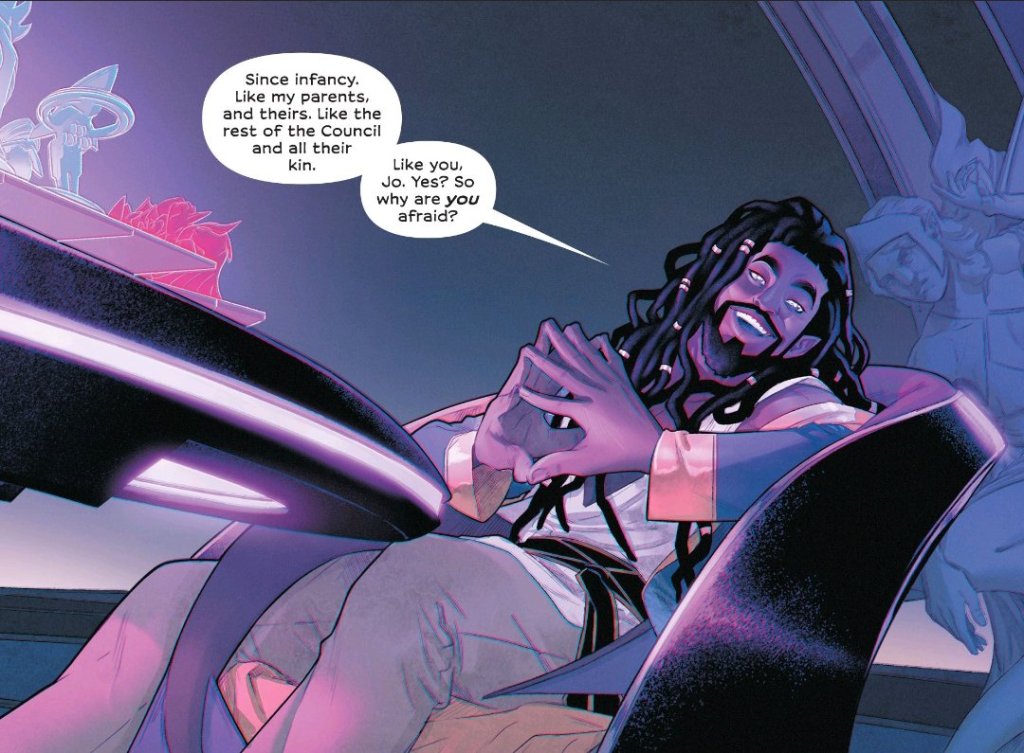
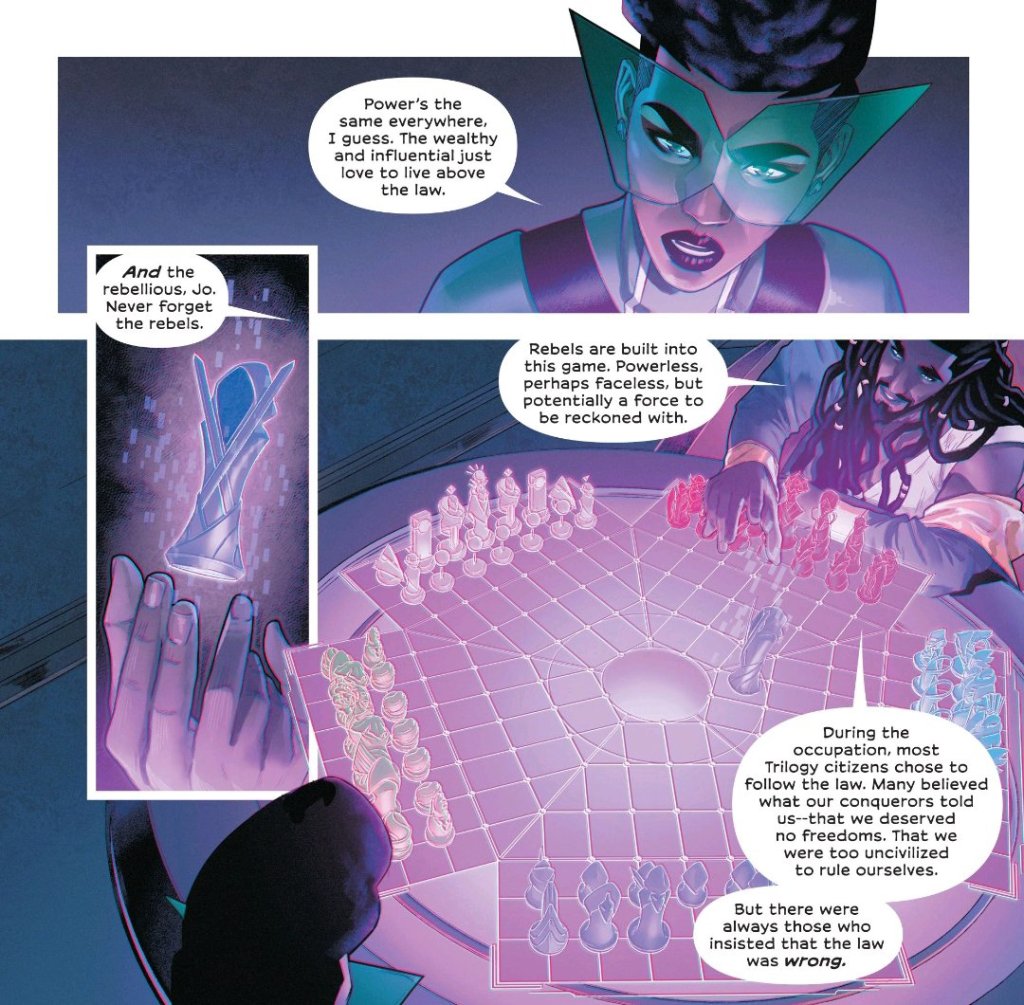
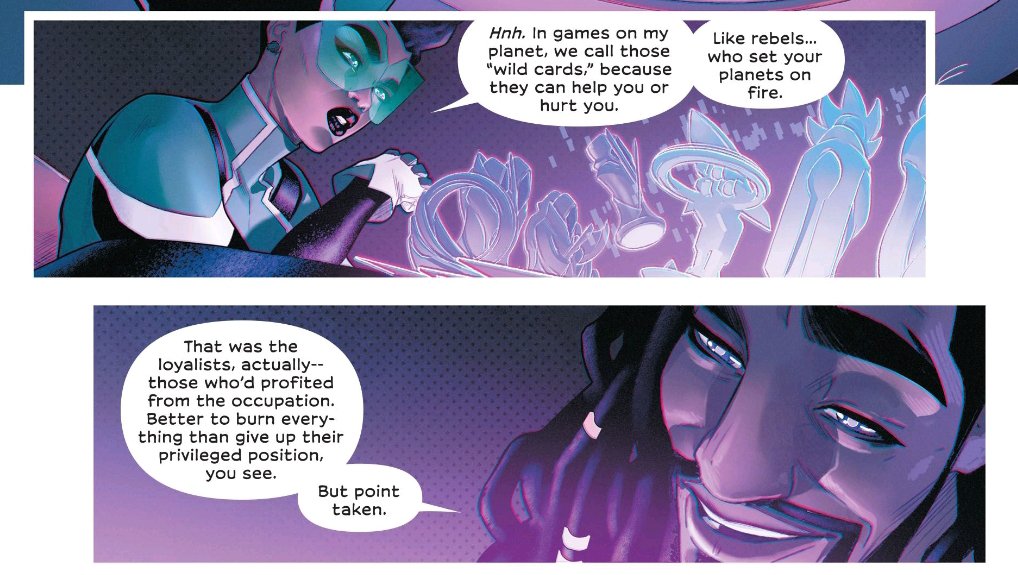
In a brilliant scene drawn by Campbell, we see how Switchoff affects Marth and turns him from a monotone man with natural charm to a sexy, dreadlocked, high elf before our eyes. He’s a lot more relaxed and muses of his people’s past with Jo as they play a game similar to chess. He’s drawn with a wide grin that hides his inner pain and lamentation over the loss of emotional connection his past. He is lit in purple lighting signifying his higher status and he even notes that he’s not the only Councilman that’s using Switchoff.

Two of the biggest themes of this issue, compared to the others so far, are centered around the ideas of memory and the past. After Mullein leaves Marth’s presence, she heads to her home on Enduring and receives a chapter of a book from Earth that she’s been reading and confirmation that her father sent an email reply to her. This is especially strong as while she’s lying in bed, she cries while reminiscing of her childhood on Earth – watching westerns and Saturday Morning Cartoons. These are the things that brought her joy, especially hearing that her father sent her a reply. She’s so far away from home kinda misses it.

At the same time, her duty is to the City of Enduring and those in charge of it, so when she’s called to pull a little bit of crowd control, she’s a bit annoyed but accepts the task. Things are different in the City than they would be on Earth. Two sides have decided to protest against one another and the solution of the Peace Division is to kill them all in order to keep the peace. Mullein is understandably shocked, but the Peace Officers look pretty nonplussed, keeping with the idea that their emotions are heavily suppressed as no one would want to slaughter so many.

Mullein is given a choice to stop both sides before the kill order is given and she takes it. Campbell gives us many great shots of Mullein doing heroic poses before separating the two angry mobs with shields of green and looks of annoyance. It’s a great way of showing us her personality without vocal exposition. Jemisin contributes to this by showing us Jo’s thoughts on peaceful resolution, saying that her dad talked about two kinds of peace in her youth: temporary peace by shutting conflict (with a note asking readers to look up Martin Luther King Jr.) and peace made when people get what they want and need.

I take a small bit of umbridge with her thoughts because Dr. King’s methods did eventually lead to widespread change if not also due to his martyrdom, but I might be reading Jo’s words wrong or taking them to heart when I need not.

Mullein actually tries peaceful conflict resolution by asking both sides what they’re arguing about with one side saying they’re against Switchoff users because emotions caused the “Burnover,” a war between the three races. The other side argues that emotions aren’t the problem, aliens are. Neither side wants to acknowledge that it’s the races themselves and their inability to take personal responsibility that’s the real problem. When one of the aliens complains about the Switchoff users being criminals and wanting to respect law and order, jo flashes back to racial injustices that she potentially witnessed on Earth.

I have to hand it to Jemisin for how she chose Mullein to handle the situation. Instead of saying that both sides have points, her thoughts lead her to asking the Switchoff users to make demands to The Council, saying that the emotionless way had been tried for thousands of years so it’s time to give the other side some shine too. Mullein comes off as someone that wants to promote real change instead of being a fence sitter and it’s actually kind of inspiring. She acknowledges the dangers of following the law and order as they have been forever and wants to protect the people of Enduring from the same.

Unfortunately for her, the time to get the crowds to disperse ends and the kill order is given. Jemisin and Campbell do an amazing job of showing how frantic Mullein is as she tries to get the Peace Officers to stop, with Deron Bennett’s lettering the emphasis of certain words are made paramount as Mullein rushes to reach the Officers. Shots are pulled in close to her face to show the frustration and fear in her eyes as she realizes there’s nothing that she can do to stop it after hearing who ordered the firing.

Campbell ends the issue with two amazing pages: One showing the Peace Officers firing indiscriminately into the crowd. The page is colored with intense red hues from the weapons. The faceless Officers stand firm in their actions and the people are screaming and cowering as the beams violently blast through them. It’s a horrifying scene, even more so as Lantern Mullein watches on in horror before it turns to absolute rage. Earlier she mentioned how she can’t and won’t fight cops, indicating some traumatic incident in her past or her currently being a space cop, but that is thrown out of the window after seeing this injustice.

Campbell then gives us a taste of Mullein’s willpower as she slams down in the middle of everything and prepares to fight. 

This was a really strong issue and showcased a little bit more of Mullein’s past while also expanding on the social unrest on the City of Enduring. Even though emotions are supposed to be stripped from the people, the tensions still run high between them all, suggesting that things might not be as on the level as even the people believe. I definitely want to learn more about Marth and the other Councilmen given the new knowledge that  the aren’t even following their own laws. N.K. Jemisin has crafted a very interesting story with a compelling lead that I can’t wait to get more of, especially with Jamal Campbell drawing her every month.

Absolutely high recommend.

Best of Marvel: Week of January 22nd, 2020

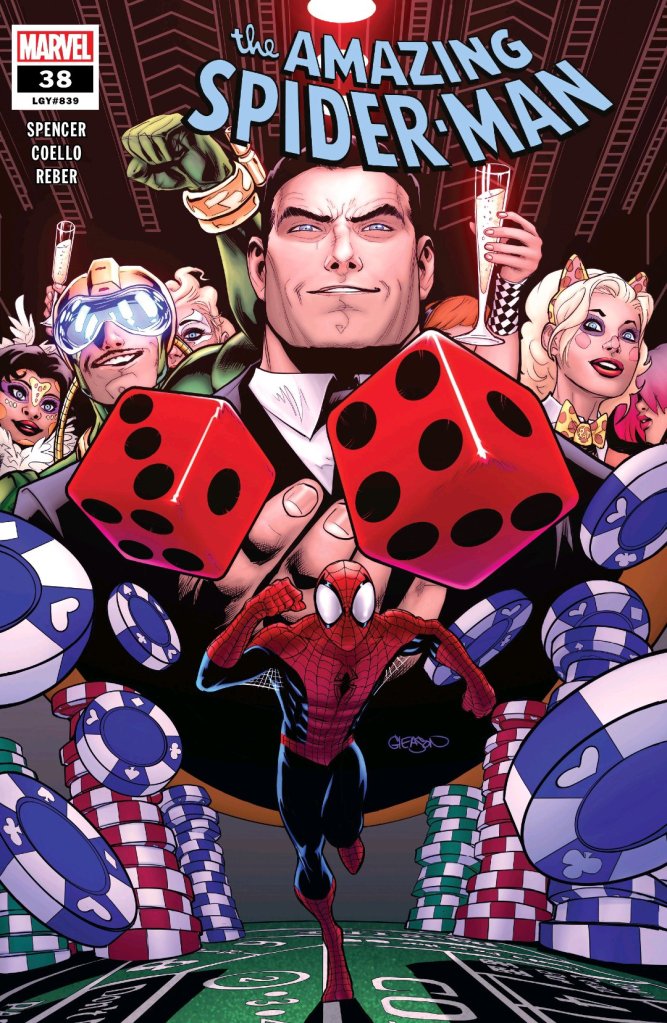
Best of this Week: Amazing Spider-Man #38 (Legacy #839) – Nick Spencer, Iban Coello, Brian Reber and Joe Caramagna

I can read the headline now: Spider-Man vs. Fake News.

At least that’s what it seems like this next Spider-Man arc will be about as the titular hero has to deal with his “biggest supporter,” J. Jonah Jameson, and his new job as a clickbait hound in the age of modern online journalism. Who knows what hijinks will ensue?

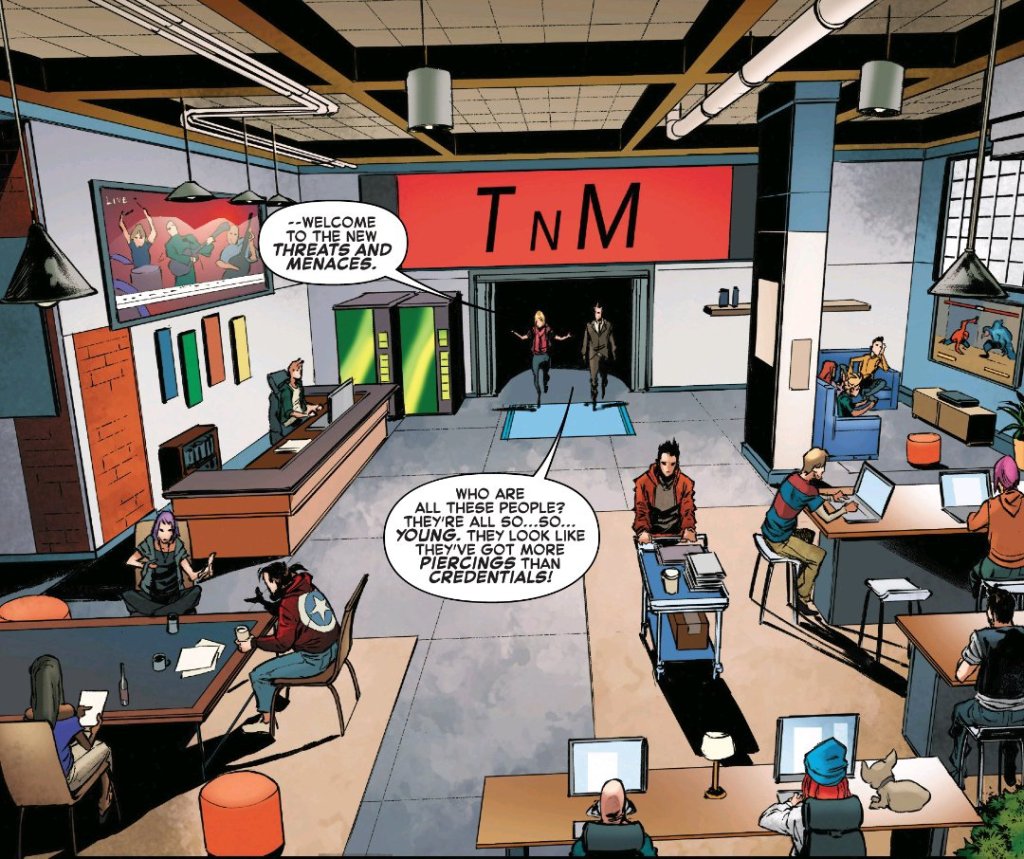
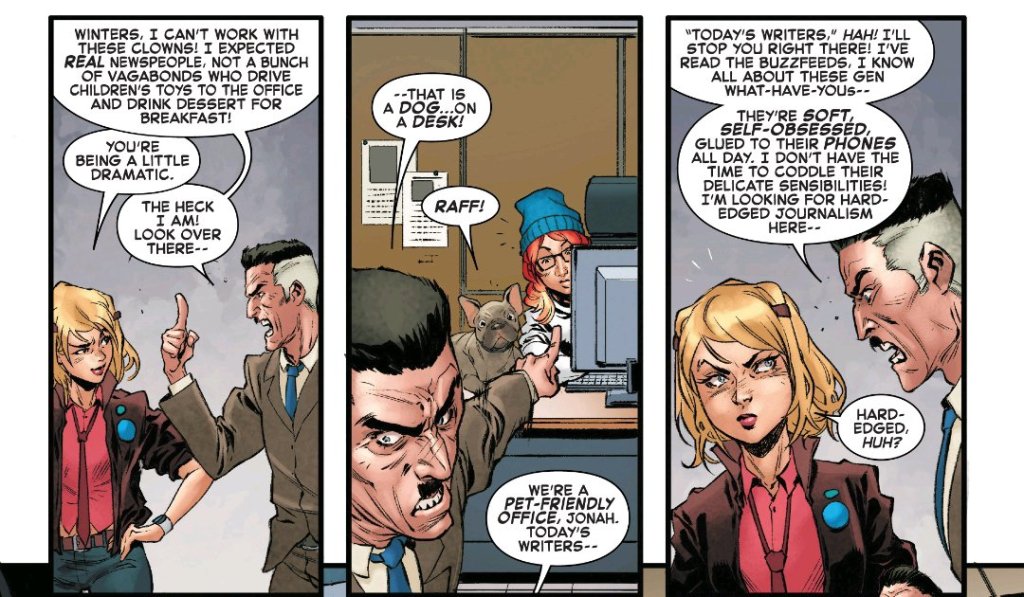
This issue exemplified the kind of humor that Nick Spencer excels at: the hilarity of hypocrisy when it comes to some of Spider-Man’s supporting cast. This was best shown in Spencer’s hilarious Superior Foes of Spider-Man (2013) as Boomerang did everything in his power to create a new Sinister Six while selling them out at every turn and not learning from his actions as everyone in his sphere suffered the consequences of his betrayals. Spencer channels that same energy as Jameson has to face the fruits of his journalistic practices in the form of Norah Winters and the new Threats and Menaces blog office.

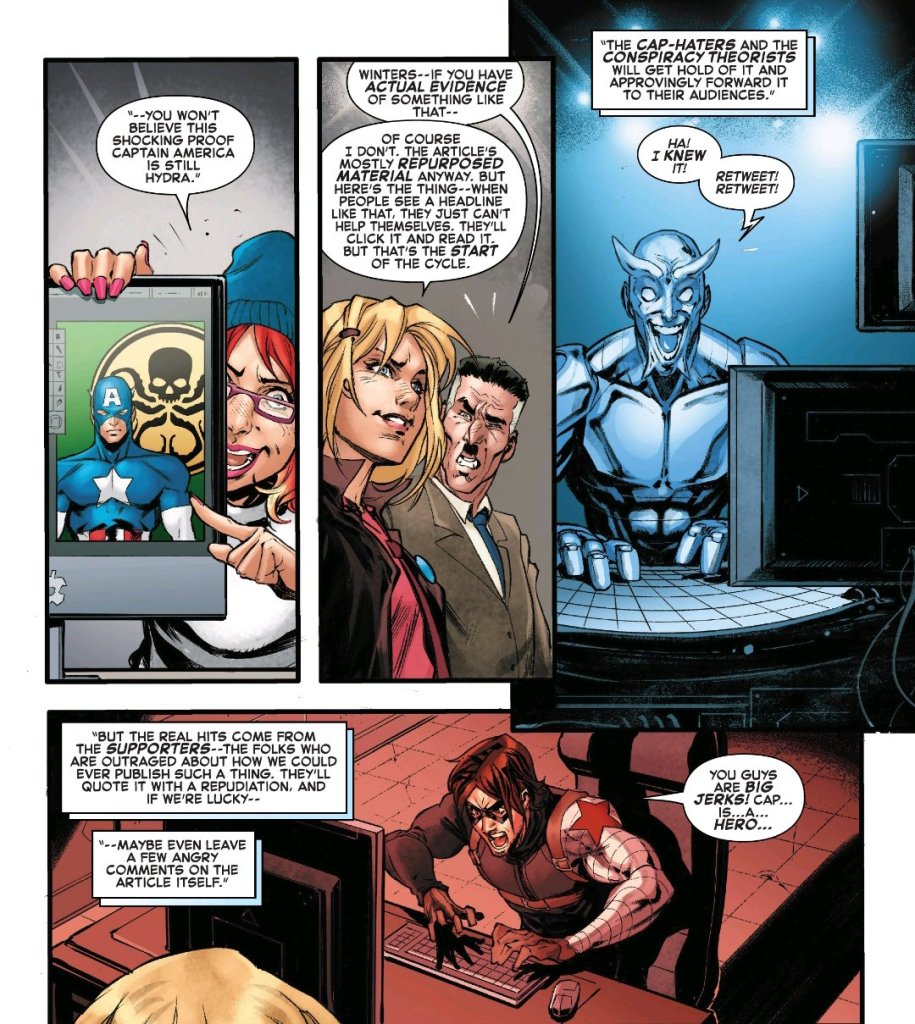
After Jonah launches into a (Boomer) rant about today’s journalists, calling them soft, self-obsessed and lacking the edge that made him what he is, Norah tells her team to sound off about the stories they’re working on. Without missing a beat and with faces of malice, thanks to Coello, they tout their intentionally misleading headlines.

Norah explains that in the age of the 24-hour news cycle, they need to get those clicks by any means necessary and that Jameson was the inspiration for this because of his past headlines calling Spider-Man a menace usually without real evidence. She expects villains to repost it to their audiences and heroes to quote it with malice, giving them more clicks.

Everyone likes to take the piss of millennial journalists and can often come off as cringy, but somehow Spencer, Iban Coello and Brian Reber manage to really capture the essence of modern open architecture office spaces filled with young kids and their kooky hair colors. Coello draws a really good shot of this with the addition of a space for video games, two bright green vending machines and tables full of people either on desktops without dividing walls or on personal laptops. Of course, all of this comes after Jonah is nearly hit by a douchebag riding an electric scooter.

Reber colors everything in contrast to Jameson who wears a professional brown suit. The office itself is brightly lit, all of the freelancers and employees are given brighter clothes with striking reds, pinks, blues and purples. Even the basic Threats and Menaces banner is a bright red, kinda signalling how bad this company might be. It’s really fun to see how out of his element Jonah is among these kids and how much more awful they are in comparison to him… aside from creating supervillains.

As all of this is going on, Spider-Man is robbing a bank. One can see how this might be a problem as Jonah is doing his best to defend Spider-Man to Winters who wants him to write a smearing headline about the crime. Coello and Reber introduce us to the act with an amazingly dynamic splash page of Spidey zipping into the sky carrying bags of cash. The webs are slung so hard that they blur, laser gun blasts almost fly off the pages with vibrant red and orange colors and Spider-Man’s posing makes him look like he’s avoiding danger with ease.

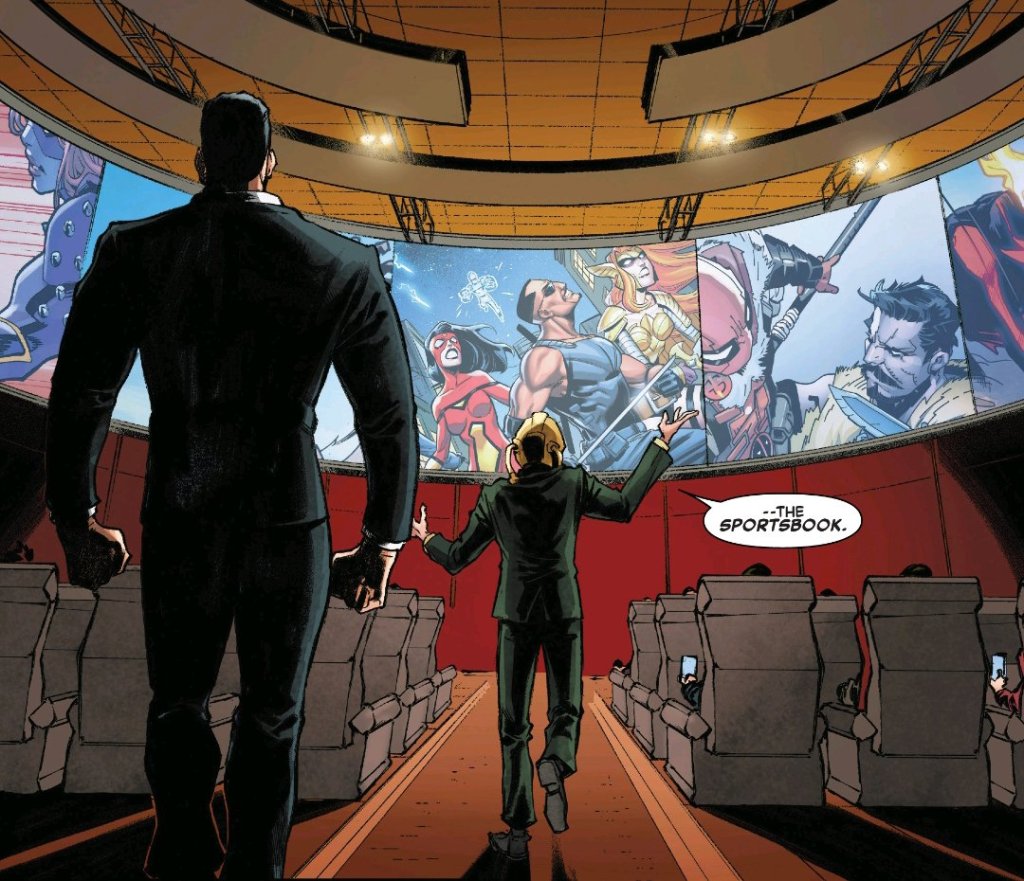
We get a sidestory with Silver Sable trying to regain her strength with the help of (former?) Spider-Man villain, Foreigner, as the two are now lovers. After helping her, Foreigner goes to a secret casino where the use of superpowers is encouraged and there’s betting on the battles between superheroes, villains and everything in between. Foreigner still maintains his supervillain connections, but he seems to be using it towards helping Sable.

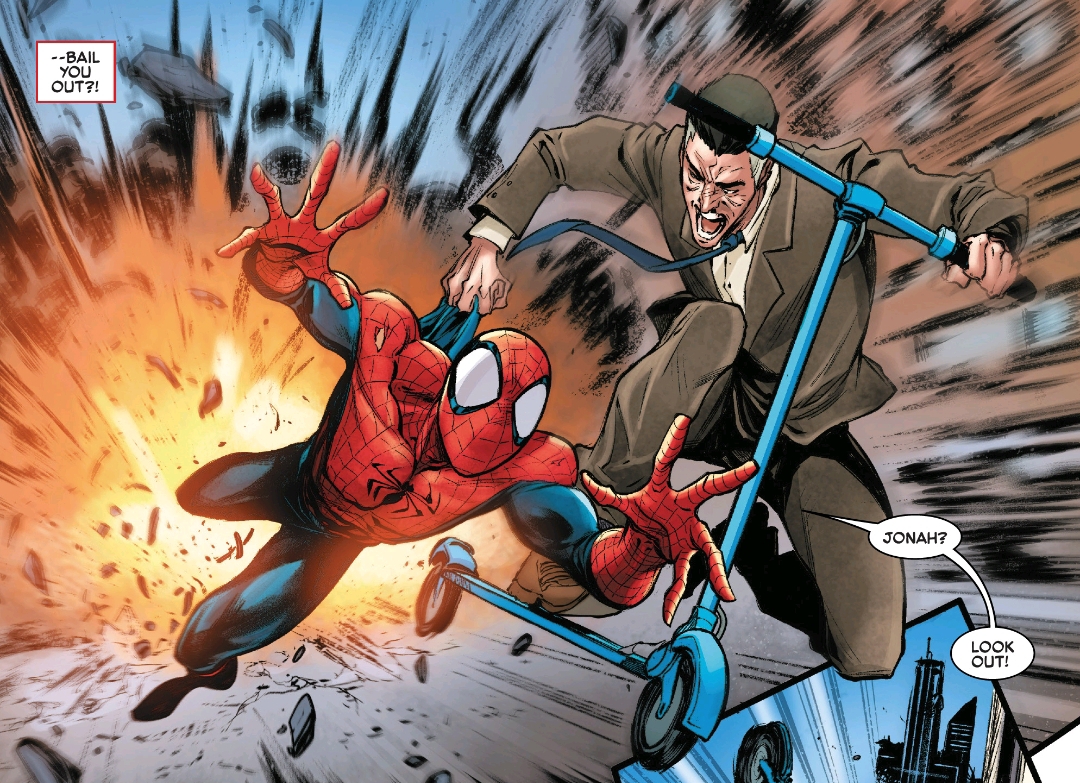
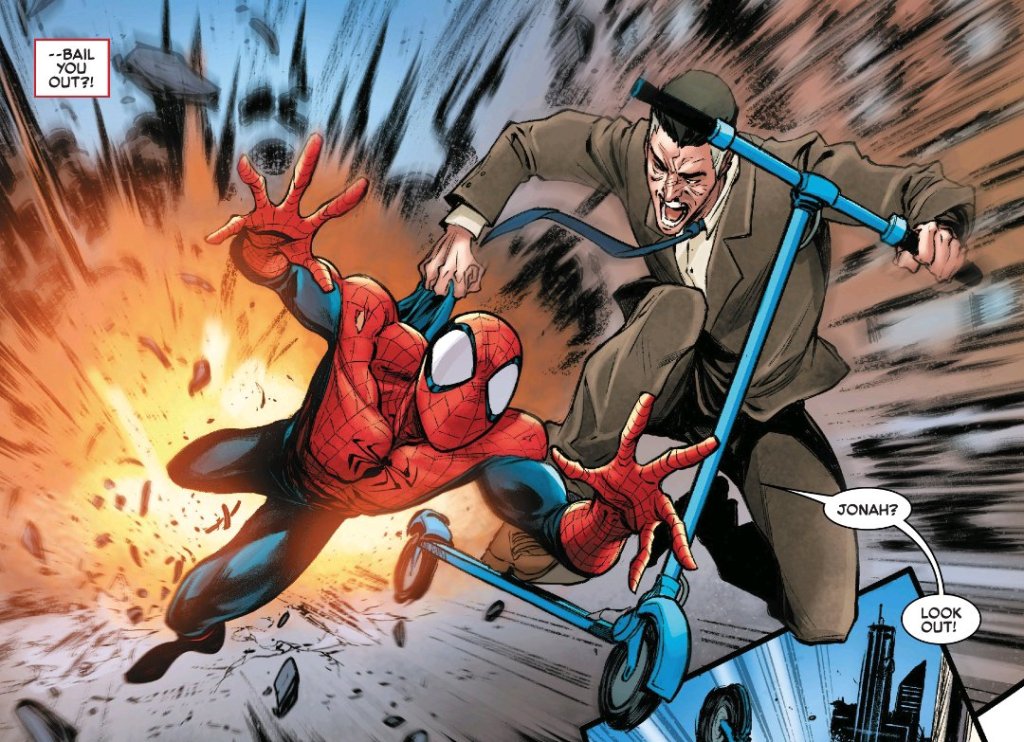
Minor supervillain and assassin, Chance, has set up the robbery and casino in order to place bets on Spidey’s performance and potential property damage. Of course, he also rigs it so that surprise drones appear to make things harder. As things begin to get hectic, lo and behold we get the best shot in the entire book: J. Jonah Jameson riding in to save Spider-Man on an electric scooter.

Coello and Reber make Jonah look like an absolute mad lad as he rushes into danger without a second thought to save Spider-Man. Fiery explosions ring out behind him, his pose makes him look like he came straight out of a Tony Hawk game and Spider-Man is absolutely shocked at all of this. Legitimately, it’s a really badass panel and one that should go down as one of the best out of context shots in comic history. 

Spider-Man reacts as we would expect, chastising Jonah for putting himself in danger. Jonah retorts that he and Spider-Man were supposed to be a team after Jonah owned up to his some of his worst actions after a gang of supervillains confronted him and Spider-Man earlier in the series. Though he was supposed to keep it secret at the request of his sister, Teresa Parker, Spider-Man reveals to Jonah that the bank he robbed was a front for a criminal organization and that he needed to run because there were too many bad guys. As Jonah flees, he vows to Spider-Man that he’ll make his life easier one way or another.

Soon after, we get an amazing double page spread of Spider-Man taking down these nameless villains as Chance counts down. He thwips, kicks and smashes these clowns over the head with his signature Spidey style before Chance announces that the house wins after Spider-Man takes them all down.

As far as art showcasing goes, Coello, Reber and Joe Caramagna smash it out of the park here. The panels flow as the action moves between Spider-an acrobatic antics and Chance’s excited facial expressions. Colors are rich and switch between explosive oranges to dynamic blue skies. The lettering is truly amazing as every sound effect is emphasized and given proper placement for effect.

Spider-Man wins, but soon gets a call from Teresa, asking him if he knows what Top Secret means. He questions what’s going on and then sees the headline from J. Jonah Jameson exposing the plot and why Spider-Man is a hero for it, accompanied by Jonah raising his arms into the air with childlike excitement. This is gonna be a wacky adventure.

This book was a lot of fun and I’m glad Nick Spencer is writing it. He’s able to bring the funny and really works with his artists to give each issue and story its own identity. None of them feel exactly the same and that’s commendable.

With much thanks to Chip Zdarsky, Nick Spencer continues to build on the relationships established in the Spectacular Spider-Man series with Jameson doing his best to repay Peter for all the times he’s called him a menace after revealing his identity to his former biggest antagonist. At the same time, it’s nice that Peter’s also keeping in contact with his sister Teresa, a character that absolutely has a lot more going on that people might expect.

Iban Coello is an amazing artist and makes every page look so dynamic and fun, combined with Brian Reber’s coloring, this is an awesome looking Spider-Man book. Joe Caramagna as always does a stellar job by placing each balloon so that the dialogue is easy to follow without cluttering up the pages, emphasizing words to give every character a unique voice and placing sound effects so that one can almost hear the pages as they turn. I enjoyed all of this immensely.

If there’s any criticism I could level at this book, it would be the drawing out of the eventual conflict between Spider-Man and Kindred. I know Nick Spencer is playing the long game and he’s very good at it, making me anticipate it with every issue the creepy villain appears in, but there has to be substantial storytelling in the mean time. Hunted was an amazing story from start to finish, but the 2099 crossover left a lot to be desired.

In between, there hasn’t been much to rave about. Even the Absolute Carnage crossover and the Sinister Syndicate storyline have been on the lower levels of Spencer’s stories during his time on Spider-Man. Sure they were fun, but unlike the absolute hilarity that is the storyline with Boomerang, they feel a bit disjointed from the rest of the stellar story that Spencer is telling. I get a similar feeling from this issue despite how fun it was.

But don’t let my impatience stop you from buying this book

Best of DC: Week of January 15th, 2020

Best of this Week: Flash Forward #5 – Scott Lobdell, Brett Booth, Norm Rapmund, Luis Guerrero and Troy Peteri

Wally West was the hope of the DC Universe… until he wasn’t.

When DC rebooted after the New 52, Wally West was posited as the man who would be the hope that the dreary universe needed after five long years of depressingly dark and gritty stories. Wally’s return was also a return to a lighter, more heroic universe for a short while. Even though he and his wife, Linda Park, were no longer together and his kids were lost SOMEWHERE, potentially in the Speed Force, Wally never gave up hope of finding whoever messed with the universe and bringing them to justice. 

That is until Tom King (and maybe corporate interference) got in the way.

I’ll never waste an opportunity to rant about how bad I thought Heroes in Crisis was and how much of a great disservice it did to Wally and the other heroes he killed in the story, especially Roy Harper. The story turned Wally into an accidental killer and kind of a sociopath after he repositioned the bodies, made a speed force double of himself, murdered the double, placing its body among the dead and framed Harley Quinn and Booster Gold after releasing the private tapes of other heroes in the Sanctuary center in an attempt to say that heroes needed help too. The message, while good, was absolutely lost in bad storytelling and an utter derailment of what was supposed to be a hopeful character arc.

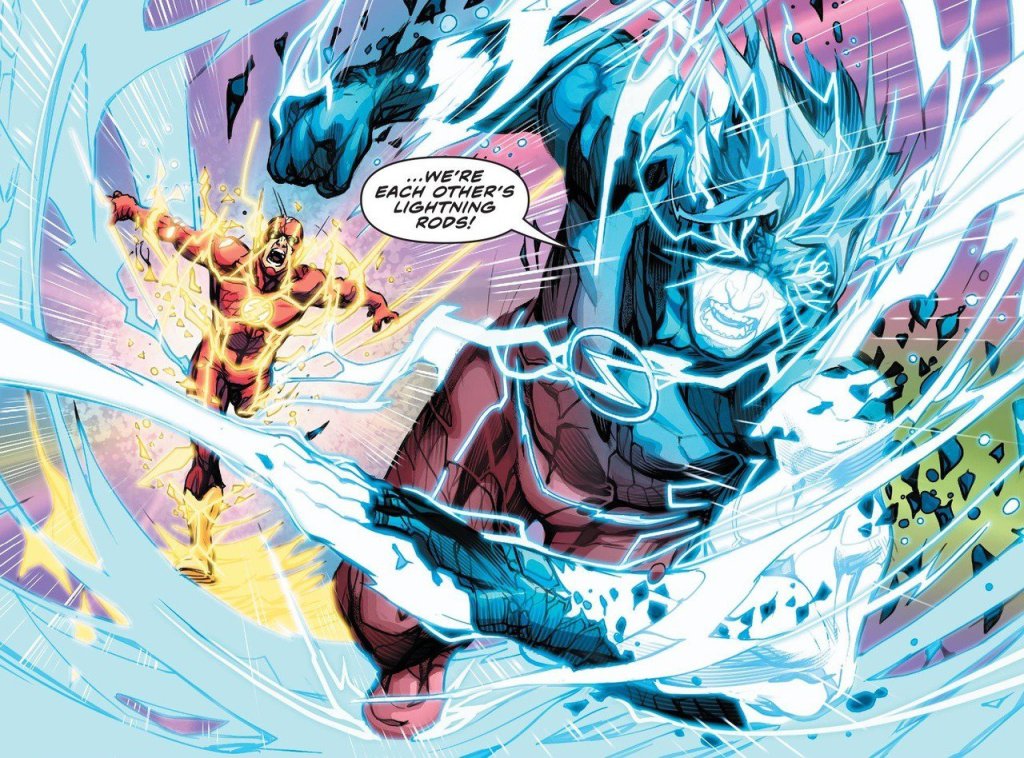
Flash Forward, thankfully makes the first steps in attempting to fix all of that without completely absolving him of his crimes. Over the course of the story so far Tempus Fuginaut, a cosmic character similar to Marvel’s Watcher introduced in the pages of Sideways, has been tasking Wally with fixing the spills of Dark Multiverse energy throughout the main Multiverse. Wally, not really being given much of a choice, accepts his new mission and becomes hero again and has been saving these various Earths from utter destruction. The last issue was absolutely spectacular as he met a version of Linda Park who was the Flash and finally reunited with his kids.

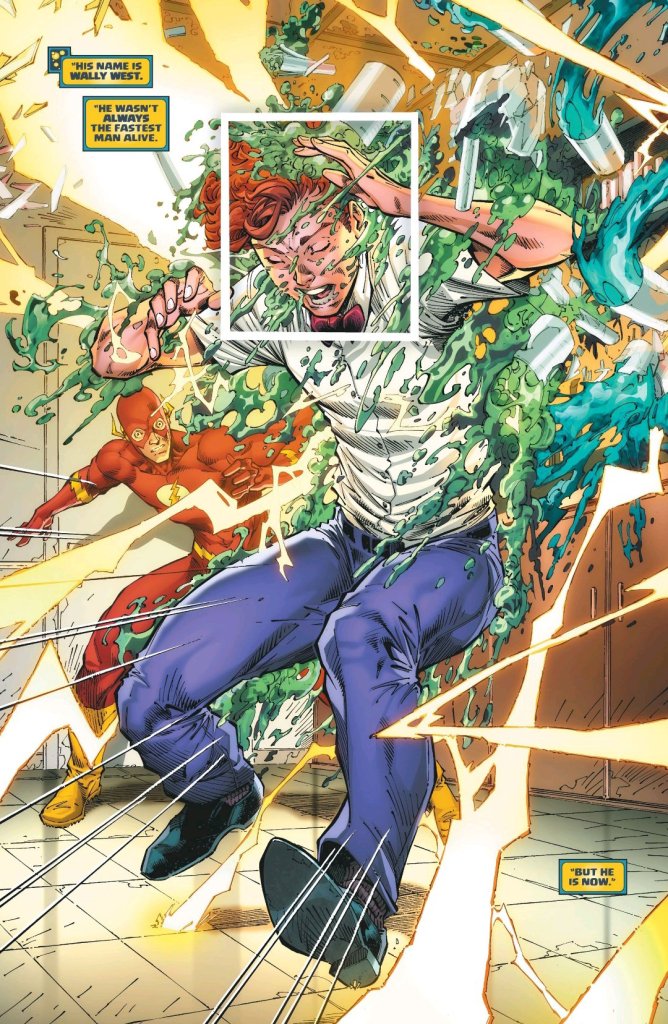
The book opens with Fuginaut giving a run down of Wally West’s history from being Flash’s sidekick to the Titans and finally to becoming the Flash himself. Brett Booth draws an amazing splash page of the chemicals falling onto Wally in a beautiful slurry of liquids accentuated by Luis Guerrero’s greens and blues and Norm Rapmund’s inks. The trio then burst through with an amazing double splash page with various shots of Wally’s career. Tempus stands in the middle of the fractured images of The Flash and narrates on his successes and failures.

Booth gives these pages an amazing sense of frenetic energy with the borders between each image looking like streaks of lightning. Rapmund and Guerrero color and shadow Tempus amazingly, making him look like an arbiter of justice through his dark blues and gold. Though this is contrasted when we reach the end of the character recap and Fuginaut kneels to the Mobius Chair and addresses the reader (really his unseen masters), calling us the Keepers of Knowledge in the Universe while looking pretty regretful of his actions and how they’ll test Wally.

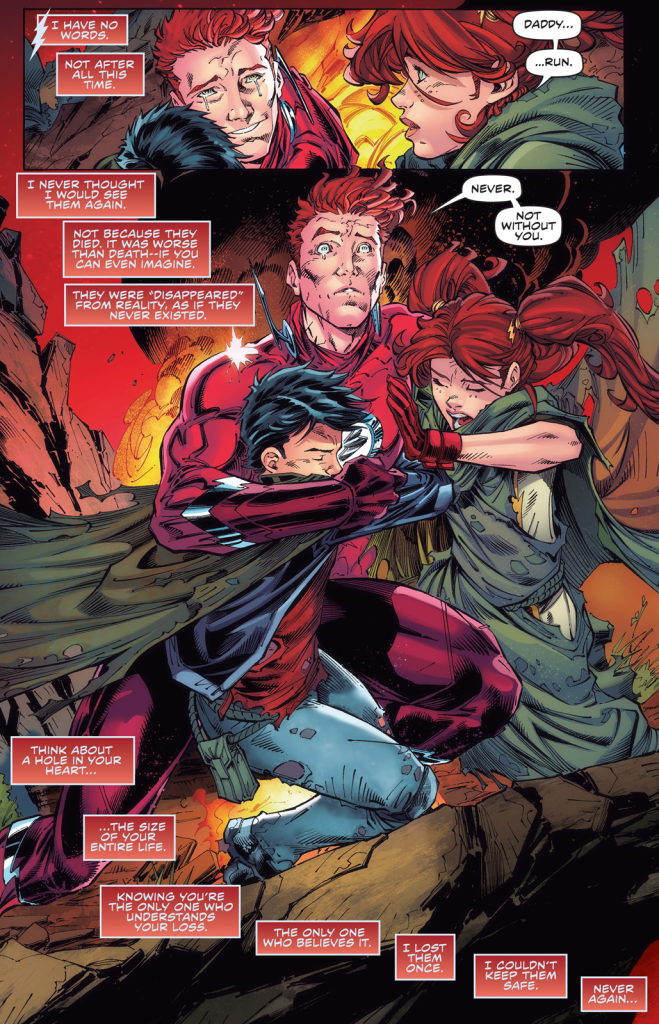
When we finally do get back to our hero, we find him warmly embracing his kids. Lobdell, Booth and Troy Peteri sells the emotion of the scene through caring dialogue, happy facial expressions and awesome lettering as Wally’s fatherly thoughts fill the emptier space on the page. However, the happy feeling doesn’t last for long as a mass of Dark Multiverse energy threatens to consume them all. Jai and Iris reveal to their father that they’ve tried to leave many times, but the energy just keeps them there. Booth, Rapmund and Guerrero strut their stuff in this vast scene as a wave of excellently inked black goo threatens them like a tidal wave. There’s so much detail, especially as the stone statues of those killed at Sanctuary are swept away.

We then get an excellent scene of Wally, Jai and Iris running away from the energy. It very much reminds me of the later years of The Flash series started by Mark Waid and then Geoff Johns on Flash: Rebirth (2009). Lobdell absolutely captures the essence of the kids with their joking dialogue of insults to each other and that childlike care for siblings as Iris has to share her power with her brother. Booth gives us another double page spread which gives us an appreciation and hope for their family dynamic even as they fail in their escape.

Unfortunately, they do not end up escaping as Jai and Iris end up being caught by the black energy and Wally is absorbed into it as well. We then get a flashback to soon after the kids were born. Guerrero shows their skill as these pages are given calm and cool blue hues because of the night time setting. After the hectic action of the escape attempt, this flashback slows things back down and builds up the emotional tension as Booth shows Wally embracing his children as a happy father before all of that is ripped away as he comes back to reality.

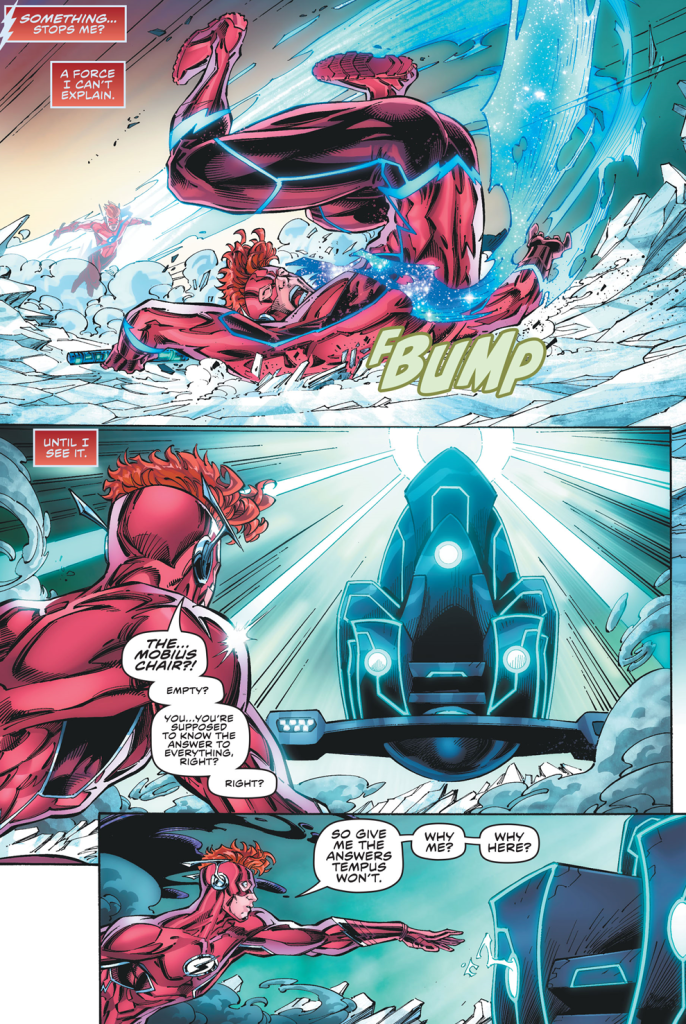
Tempus attempts to tell Wally what his grand purpose on this planet is, but in his anger Wally attacks him like a gnat and then proceeds to try and ride the planet of it’s Dark Multiverse energy. Wally is the Fastest Flash Alive and the art team stresses that as they show the planet and then show streaks of blue where Wally has been, crossing the planet multiple times until he’s stopped by something unexpected: The Mobius Chair. The Mobius Chair was created by the New God Metron and allows the user to see all of the secrets to the universe. With Metron having been killed by a mysterious entity (Doctor Manhattan) in DC Rebirth, the chair lies empty.

Wally, knowing about the chair’s possibilities, touches it.

Wally West has always been a hopeful hero. In the face of insurmountable odds and utter destruction he’s always kept his head up high. He learned that from Barry Allen, he learned that from The Titans, but even the most hopeful heroes have fears and the Dark Multiverse is created from those fears. One of the things that Tom King, Joshua Williamson, Geoff Johns and Dan Abnett have focused on since Wally’s reintroduction has been his feeling of loss and displacement after losing ten years worth of history. 

That’s why the revelation of what this planet is is so heartbreaking. I’m sure my hints are enough to give away what happens and how Wally’s fears and the arc he’s been given thus far have been some of the better long term storytelling that DC has done despite some missteps. With this being the penultimate issue of Flash Forward, it delivered on the emotional impact that we’ve been waiting for and walks back some of the more dour elements of Heroes in Crisis, but paints Wally in a more sympathetic light. The art team does an amazing job in giving this book the life and excitement to a character that absolutely deserved it.

From: The Flash: Flash War #49

Wally West was my first Flash and seeing the big things planned for him go off the rails absolutely killed me, but thankfully this story exists. While it can’t undo ALL of the damage done to Wally and might actually result in his death at the end, it has served as a slow return to form and definitely a story that I appreciate being told. This deserves a high recommend.

Best of Marvel: Week of January 15th, 2019

Best of this Week: Iron Man 2020 #1 – Dan Slott, Christos Gage, Pete Woods and Joe Caramagna

This shouldn’t work, but oddly enough it does.

Machine life forms in the Marvel Universe have a complicated history in terms of their status as sentient beings and whether or not they feel as humans do. Ultron has always displayed a rage and hatred towards humanity and the Avengers in particular not dissimilar to any number of human or alien enemies of these heroes. On the flip side of that, Machine Man, since his original comic series and until his newfound prejudice against meatbags, has always sought to show just how human that he is in the face of anti-robot discrimination. (see Machine Man, 1978)

This conflict was on full display in Tom King’s amazing Vision (2015) series which saw Vision feared for building a robotic family and trying to live a human life. While robots and AI based beings aren’t nearly as hated and reviled as mutants, Dan Slott’s Iron Man series has been building to this – a human/robot war spurred on by Tony Stark’s brother Arno. Though he’s not quite the Arno Stark from 1984’s Iron Man 2020, he still sees a future in peril from an as of yet unknown technological threat.

Pete Woods opens this book with Arno having a nightmare in the form of a planet sized being that looks like they’re composed of circuits and death. Woods colors the lights of the creature with an eerie purple tone that accentuates its darker purple-ish exoskeleton. Arno appears almost as an insect by comparison as he floats towards this. All of this is made even creepier by Joe Caramagna’s use of stilted, robotic lettering to give the creature a cold and calculated voice of doom. When we do get a close up of Arno’s face, he is stricken with fear.

Arno’s been up to a lot in the background of Tony’s adventures in the Tony Stark: Iron Man series from the last year. He’s resurrected his dead parents sing the same method and technology that Tony did after Carol Danvers killed him (and she DID kill him), he’s taken up the mantle of Iron Man after Tony revealed himself to have been an advanced AI in the form of Tony Stark and he’s found himself a partnership with the money hungry Sunset Bain, who’s now in control of Stark Unlimited after Tony’s revelation. Arno’s been a busy man.

On top of all of this, spilling out of The Ultron Agenda, there’s a crisis among the people over the uprising of machines which Arno eggs on by calling even the most advanced ones lifelike simulations.Janet van Dyne tries to quell the fears and James Rhodes can’t be bothered to talk to the press as he also has robot matters to deal with. One of the first conflicts that Slott and Gage present us with is a hostage situation in which Life Model Decoys of the original Nick Fury try to liberate construction bots. Woods frames it as a dangerous situation with one of the LMDs holding the site manager as a human shield. The numbers of the LMDs look intimidating until Iron Man appears.

Pete Woods does an amazing job in revamping the original 2020 armor for the modern day. Arno looks like a terror with his almost Ultron like faceplate and even more ridiculously oversized gears as shoulder pieces. He retains the standard Iron Man colors and even homages the original golden legs by placing armor over the front of his legs. I would have preferred that all of the leg be gold, but Woods still does well with the redesign and the pose that he gives Arno when he appears – blowing the head off an LMD with lethal force.

Arno quashes this rebellion easily enough, but somehow all of the robots manage to escape. Tensions continue to rise and the same thing happens when anti-robot forces invade a secret robot bar and they manage to escape again. We then find out that one of the heads of the Robot Rebellion is Machine Man (Aaron Stack). Both Machine Man and Arno Stark were the feature characters in the original Iron Man 2020 story so it’s great that Slott and Gage recognized that and revitalized their history in this new story. The potential for their eventual conflict to end in much the same way is pretty tantalizing in my eyes as Machine Man defeats Arno at one point in that original story.

Though, I have to admit that both sides in this story have some NEFARIOUS ways of taking the fight to one another. In an effort to draw out the Robot Resistance, Sunset Bain and Arno blow up a robotics factory after buying it out. Woods draws Aaron with genuine shock and anguish as he watches the explosion on the screen and it really sells how much pain this is causing. After the broadcast, Sunset and Arno look at the rubble as a necessary evil to stop Stack and his followers.

In retaliation, however, Machine Man WIRES A BOMB TO A MATERNITY WARD. I’m usually on board with Robot Rights, even advocating for better AIs in sex dolls, but this is the thing that people are afraid of and Aaron is only stoking the flames of fear here. It’s a reckless move that won’t garner support for the Robot Rights Movement, if anything Arno is just going to fight back against Machine Man and the Resistance even harder out of fear of his nightmare. 

Woods draws an amazing stare down between Machine Man and Arno, neither of them really having eyes to blink with. Machine Man gives Arno an ultimatum; either let him and the poor bomb disposal robot escape or the bomb goes off. In five panels, we see the character of both. We get ne close up shot of Arno’s plated eyes with rain pouring down on him and similar shot of Machine Man, then we get a third person perspective with the bomb on one side and Machine Man on the other. Arno takes the bomb and Aaron taunts him as he flies away. It’s tense and the lack of dialogue makes it far more serious than expected from the mostly comedy character that Machine Man has become.

Arno also tried to warn Aaron of what was coming, but I understand why he didn’t want to listen. For whatever reason Slott gave Arno a sudden-ish character change either in a recent Iron Man annual or a little while before a rogue AI invaded Tony’s eScape (2019?). Arno was initially helpful and supportive of his brother and robots like Jocasta, but then all of a sudden he became withdrawn and kind of a dick. This version of Arno had been locked away, unable to move without machines until Tony found him and tried to reintroduce him into the world (Iron Man, 2013), so maybe Slott and Gage are building on his use of the Extremis virus for movement to explain the change?

Alternatively, this is all just a way to retell the original Iron Man 2020 story as Arno inadvertently created the threat he went back in time to stop in that story because he refused to take a moment to see how damaging his actions were and that same recklessness is on full display here with Arno 2.0.

All in all, this story was pretty weird and fantastic. I doubt it will reach the heights of the philosophical masterpiece that is Nier: Automata in regards to it’s “can machines feel human too” themes, but Slott and Gage are doing their best and that gives us a fan story with lots of callbacks to the past. Pete Woods pencils, coloring and inking are phenomenal here and make this book visually appealing. His style and heavy hitting action give the proper weight that an Iron Man story needs and his updated 2020 Armor isn’t bad at all. This one is absolutely a high recommend.

Best of DC: Week of January 8th, 2020

Best of this Week: Batman and the Outsiders #9 – Bryan Hill, Dexter Soy, Veronica Gandini and Clayton Cowles

Ra’s al Ghul wins when he’s able to convince you that his methods are the right ones.

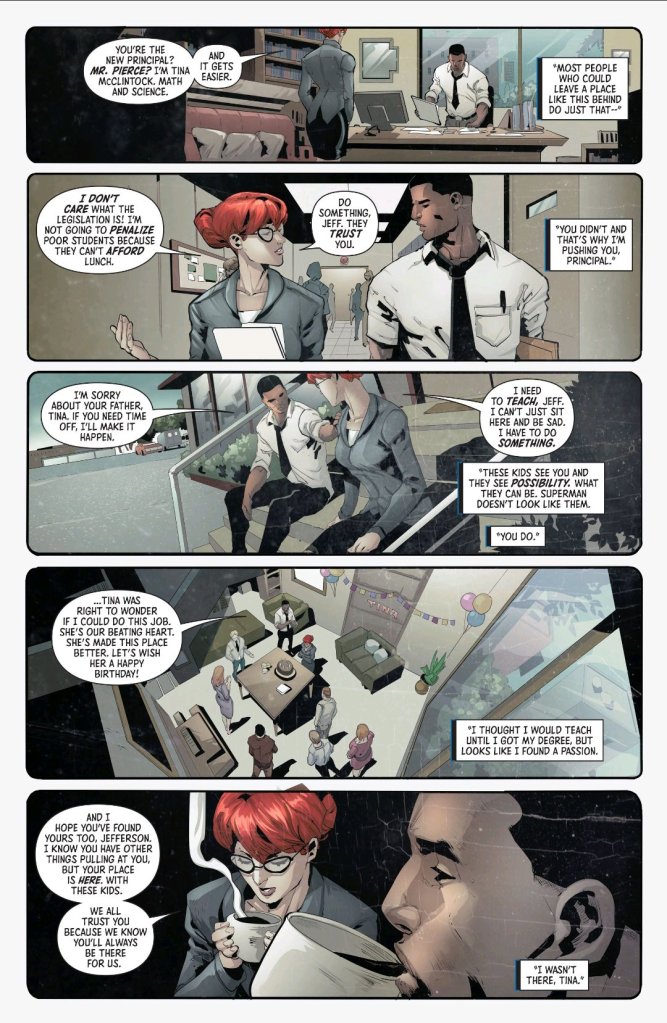
That’s the unfortunate lesson that Jefferson Pierce, Black Lightning, is forced to learn when one of his closest friends is killed at the behest of Ra’s al Ghul. The book opens with Jefferson thinking back to when he met his professional colleague, Tina McClintock. She was one of the first people to welcome him to his position as Principal in Metropolis, sticking by him even after he leaves to work Gotham. Dexter Soy draws these scenes with friendly intimacy, showing them growing as friends and colorist Veronica Gandini mutes most of the colors in the flashback, but emphasizes Tina’s distinct red hair.

We then cut to a somber splash page with Jefferson standing by her half burned corpse with his head down in despair. It’s a powerful scene as it’s the first time he’s experienced such a close loss because of his superhero identity and with it being so close to home, his anger and sadness is palpable through the page. Dexter Soy does an amazing job of inking shadows for effect and Gandini makes excellent use of lighting to show the gravity of the situation.

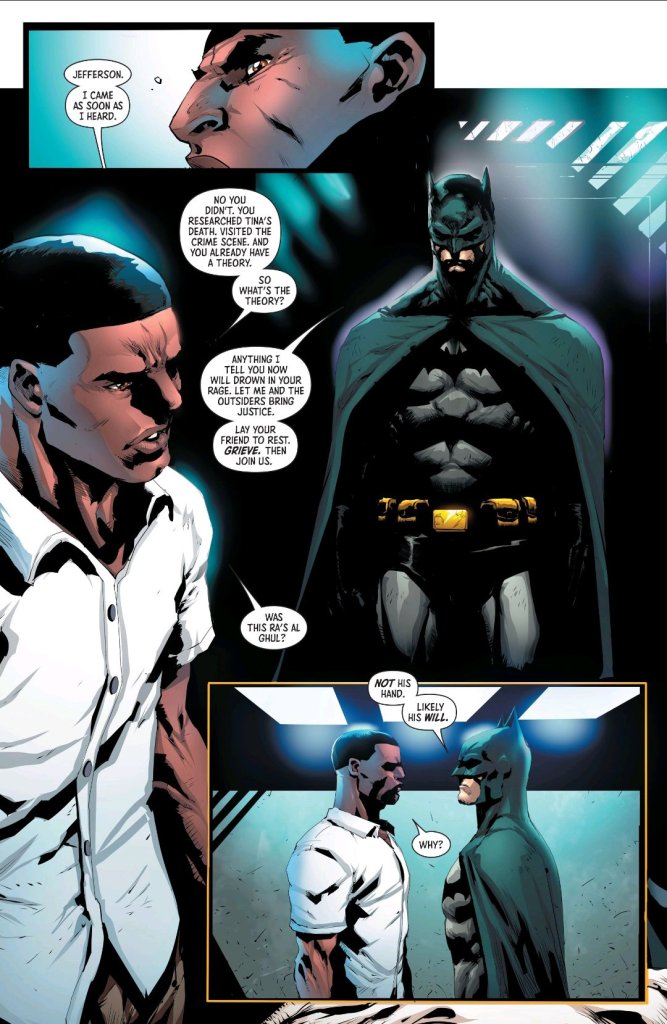
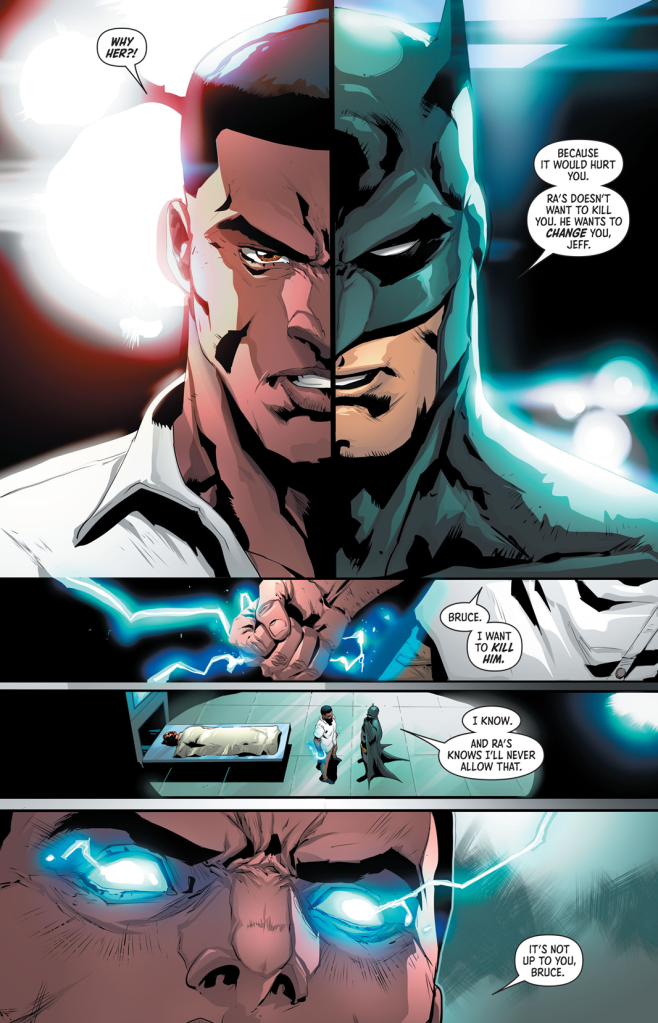
Batman shows up soon after to inform Jefferson that it might be the work of one of Ra’s people and tries to ease his allies anger, but Jefferson isn’t having it. Jefferson acknowledges his anger and how much we wants to kill Ra’s for what he’s done, but this causes him and Batman to have a small clash. Instead of being firm with Jefferson about things, Batman tries to console him by repeating what Jeff told him in an earlier Detective Comics arc; That “It’s not his fault.” Jefferson abdicates leadership of The Outsiders team to Katana before taking some time off to clear his head.

One of the best things about this story is the continuing friendship being built between Katana and Black Lightning. As soon as he leaves the hospital, she is there waiting for him to get a feel of his headspace. Gandini colors the afternoon sky with a simmering orange, as if to emphasize Jefferson’s bubbling rage. Katana understands his anger, his want to kill because, unlike Batman, she has no reservations about it. She knows that Jeff is the glue that holds the team together and does her best to keep him from turning to the dark.

The two walk and talk for awhile and Jefferson explains how he’s tried to avoid violence all of his life.That’s always been one of the core aspects of Black Lightning’s character – the idea that he wants to be a positive influence on his community when there’s been so much violence in and around him for years. That’s why he decided to go into teaching, to help keep the youths of his neighborhoods from falling into the darkness that he’s now slowly being consumed by. Katana doesn’t even disagree that Ra’s deserves to die, but clarifies that Jefferson is the best of them and if he falls, then they all do. She reminds him that The Outsiders will be there to stop Ra’s and whatever he has planned.

Meanwhile, Orphan and The Signal, Cassandra Cain and Duke Thomas respectively, are testing out Duke’s new powers over darkness in Metropolis. They manage to take down a local drug dealer together, but then Batman confronts them for keeping secrets, something he does all the time. Soy and Gandini do a lot for this scene as far as possible symbolism goes. One single street light shines down on Batman insinuating he’s right, but his face is covered in shadow. He’s also positioned above Duke and Cass with a bit of distance between them, showing a divide as he talks down to them.

As Bruce is in the middle of dressing down his kids, Superman appears to talk about everything going on with Jefferson. This is pretty cool as it’s not often that we see Superman involvement in Batman stories like this. Bruce tries to tell Superman that none of this is his business, but Superman counters that he’s heard everything and they both know that Ra’s is far more dangerous than Bruce is thinking right now. Superman asks Bruce to change how he goes about things, just this once as to not hurt Jefferson or the kids before flying away.

Unfortunately for Batman, the rest of his Outsiders are already thinking about changing things up as Bruce’s methods aren’t working out as well as they expected. Duke and Cass decide to seek Shiva out for a final confrontation and to stop trying to live up to Batman’s ideal. I kinda like this shift for Duke as it shows him taking a route that Dick Grayson did many years ago. At the same time, Katana and Jefferson finish their talk and also want to take the fight directly to Ra’s.

This issue of Batman and the Outsiders was heavy on the emotion. The last time I’d even seen Black Lightning even close to as angry as this had to have been in the mid-2000s Justice League of America. I’m glad that Bryan Hill is giving him dimensions other than uplifting and determined.

It’s okay to be angry, especially after a tragedy like this. The same can be said for the puberty analogue of Duke’s changing powers and Cassandra’s want to not be treated like a broken kid anymore. With Dexter Soy’s amazing art and Veronica Gandini’s expert colors, this book is an absolute high recommend. 

Best of Marvel: Week of January 8th, 2020

Best of this Week: Excalibur #5 – Tini Howard, Marcus To, Erick Arciniega and Cory Petit

There are monsters in the streets, Druids under the Earth and only Excalibur can stop them.

After the last issue, the Excalibur team are split up and handling separate issues either, under Britain, in Britain or at the groups Lighthouse base of operations. Everything is hectic after Shogo, Jubilee’s adopted son, accidentally weakened the barrier between Otherworld and England. Unfortunately, this allowed creatures from the ralm of magic to flood into the Earth, causing nothing but destruction in their wake. This issue was a ton of fun with all of the locales, action and dramatic character moments within. 

Rictor, who hadn’t had much control over his powers as of late, ventures with Gambit to find a power source for Apocalypse that could be used to help awaken a comatose Rogue and open the Krakoa gat to Otherworld. The pair discover the power source, but then have to try to escape from a group of Druids underground. Unfortunately while the druids worship Rictor for his powers over the Earth, they cast Gambit into a chasm and the Earthy mutant has to save him.

Marcus To does an amazing job of capturing the absolute terror on Gambit’s face as he falls into the hole and couples that with comedy as Gambit hits many walls on his way down with Rictor making jokes. Soon enough, Rictor has to make use of the power source crystal to channel his powers, as they’re still on the fritz, to save his Thief friend. Arciniega struts his coloring skills as most of this section of the book has a green hue to it from Rictor’s cloak to the bubble of energy he creates to make strutures. 

At the same time, Captain Britain, Betsy Braddock, is oin the streets of London and defends her people from multi-headed, fire breathing dragons with MI-13 Agent Pete Wisdom. What I found to be best about this bit of the book is how believeable Betsy could be as a solo hero with a normal guy foil in Wisdom. They bounce off of each other well and Marcus To draws Captain Britain to look like an absolute hero, blocking the dragon fire with only her shield and whatever psionic ability Wisdom himself has. Wisdom’s flirtations and Betsy’s sense of duty adds depth to both and an intriguing dynamic for both.

In the middle of everything, however, we also get a glimpse into the dreaming mind of Rogue as she travels her dreamscape, on the cusp of waking from her magic coma. It’s a strange scene as it’s not quite what I expected from Rogue’s mind, but the imagery given implies that Apocalypse absolutely had some part in her incapacitation as part of some larger plan – this is especially true as a giant statue of him appears amongst the Easter Island-esque statues of Sentinels and blasts her with blue light.

Apocalypse had been working on getting all of Excalibur back to the Lighthouse where he and Jubilee had been defending as part of his plan, but those plans make an unexpected change as Gambit reveals that he knows that Apocalypse was up to no good of some sort. The two begin to argue as the monsters attack and this leads to a fight between the two as Rogue slowly awakens with the help of an adorabe orange pup and an emerging sword and throne.

The bad blood between Gambit and Apocalypse goes back for years – back to Gambit’s days as one of Mister Sinister’s Marauders and his time as Apocalypse’s Horseman of Death. With Rogue being his wife and seeing her being used by Apocalypse as some sort of power conduit, it makes sense that Gambit would be understandably pissed off. To and Arciniega do a gret job of making the short fight seem spic through dynamic posing and epic lighting. Both of them cock their fists back, Gambit’s glowing with his kinetic energy and Apocalypse being the regal blue giant that he is, however Apocalypse ends the fight in an instant by planting Gambit into the ground with one punch to the head.

With his plans in shambles and Captain Britain being the only one to defend his actions, he chastises Rictor before being attacked by a reawakened Rogue who seems to have been roused by Apocalypse’s attack on Gambit. In a fury, she begins to drain Apocalypse of his power and he encourages her to do so. To and Arciniega work in tandem to show the intensity of the situation. 

Rogue gives a pained expression as she takes on the energy from Apocalypse and the Mutant God kneels before her with a smile on his face, submitting to her as his plan comes to fruition anyway. All of this causes a surge of purple energy to wash over the panels. The colors are intense, especially in one of the best panels focused on half of Apocalyse’s smiling face as the Krakoa gate to Otherworld is transformed in a bright flash of purple and a faraway shot showing just how powerful Rogue’s absorption is. 

She ends up killing Apocalypse in the ensuing moments and learns of his plans and we get one final page stinger that I don’t think anyone would have expected. I’ll give a hint: Anna Sabah Nur.

I have always been a fan of sword and sorcery stuff, so this series is a bit of fun love letter to that wihout being quite as oer the top or violent as Conan, but still with some of my favorite mutant characters. Marcus To and Erick Arciniega make for a dynamic duo of artist and colorist as they bring these pages to life with fantastical scenes of heroism and drama. Tini Howard also has a great feel for every character involved and makes this such an awesome series to get into because of it, even making me enjoy Betsy Braddock better as Captain Britain than as Psylocke.

This book is absolutely worth the time and money, high recommend!