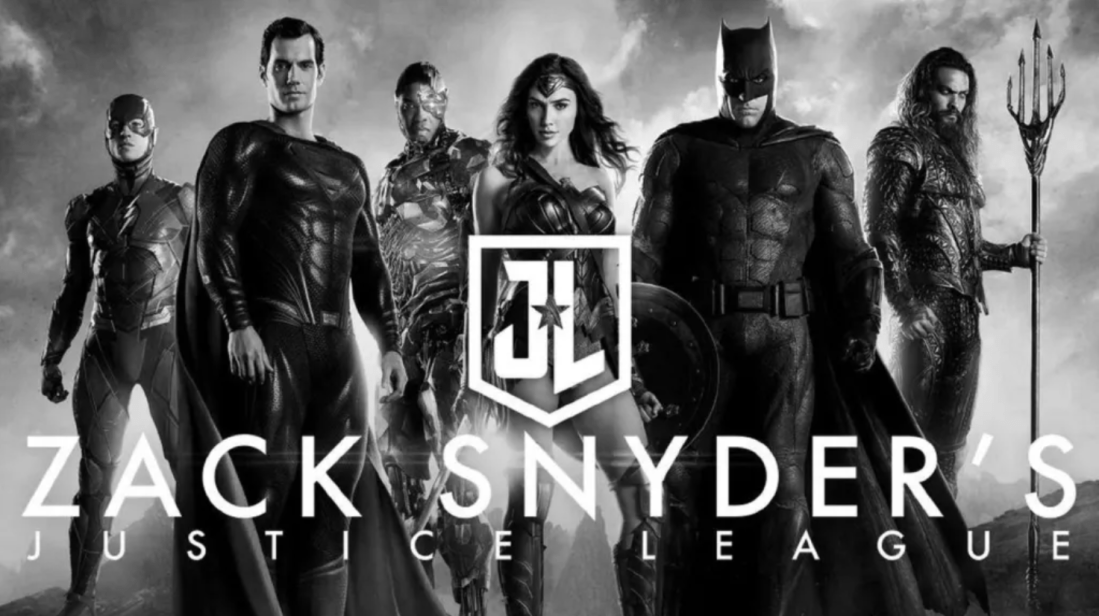
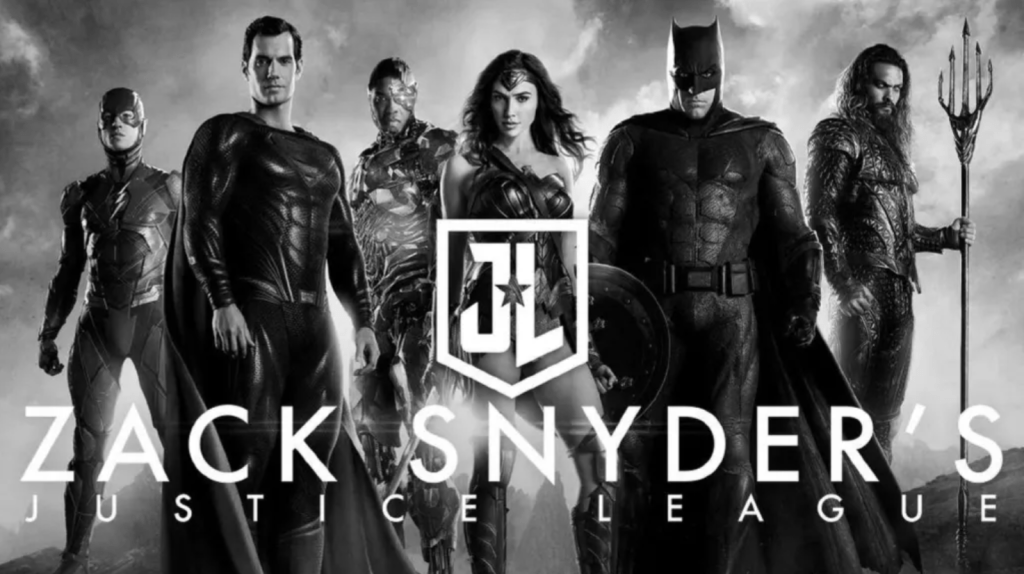
Ty Talks Comics Reviews: The Snyder Cut

What a strange position to be in.

Initially, when the groundswell of support for the Snyder Cut began, I found myself in full support of a filmmaker that I had been crapping on for his bad movies since the end of Batman V. Superman. I felt sympathy for the reasons that Zack had to leave the original Justice League project and even lightened up my criticism of the aforementioned BvS. Justice League under Joss Whedon turned out to be a mediocre mess of tonal dissonance and try-hard humor from a guy that, in retrospect, should never have been put in the driver seat after his actors’ criticism of him after Age of Ultron. I didn’t expect the Snyder Cut to actually exist, but the sliver of hope was there.

Then one after the other, the actors in the movie began to voice their support and tell of its “existence” and slowly, the sliver of hope became more real. The pressure was on Warner Brothers and then after years of speculation and cries from the fans, we got an announcement. It was vindication. Blog after blog, website after website said that it wasn’t real and that it would never happen. We would finally get Snyder’s original vision – and then he started tweeting and I remembered why I hated the man in the first place: He’s a giant, goddamn, edgelord.

Granted yes, Chris Terrio and David “She Hulk was a Giant Green Porn Star” Goyer, wrote the screenplay for BvS, Snyder still defended the murderous nature of Batman, the Martha moment and in general his love for the flawed Batman of The Dark Knight Returns and there’s a lot of bias coming from me going into this movie, but I tried my best to be as fair as I could and well, here we are.

The Good.
One of the biggest criticisms that came out of the original movie was how underdeveloped and forgettable Cyborg was. He had no arc to speak of clearly the director had no amount of care for the character at all. Thankfully the Snyder Cut vastly improved on Victor, not only as a character, but as an integral part of the team that had a lot to contribute. Watching him struggle with the pain of being mostly a robot and his own issues with his father before coming to terms with his new life and relationships was refreshing to see. Granted, Doom Patrol handled the arc a lot better, Zack Snyder did his best to show what his overall vision for Victor would have been and given how great of a character Cyborg is, it was much appreciated.

I love that Snyder actually made use of the awesome football scene that was a big part of the original movie’s marketing, but never made it into the final theatrical cut as it serves as some of the better character work as we’re able to see what a star football player Victor was. In many ways it reminded me of the animated Justice League War movie where his story played out in much a similar and more explosive way, with both of them acting as the eventual conduits to the defeat of the main villains through their understandings of the Mother Boxes.

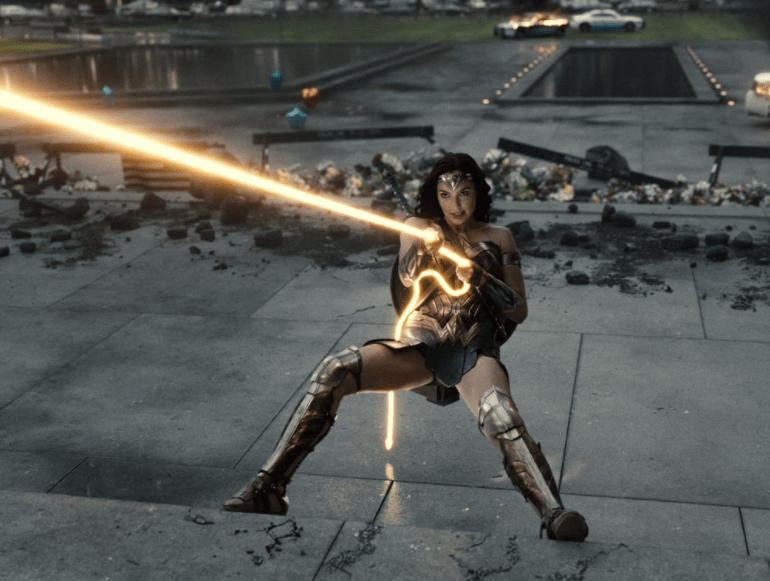
Wonder Woman and the Amazons were filmed with an uncomfortable gaze of disrespect and oversexualization in the theatrical cut. Wonder Woman’s opening rescue scene deemphasized her heroics and the invasion of Themyscira portrayed the Amazons as being weak and ineffective when Steppenwolf set foot on the island and just wrecked them without regard. The Snyder Cut allowed all of these women to breathe, be leaders and warriors in every scene that they showed up in and I was much more hyped to see them on screen. If there was one thing that Snyder knew how to do, it was portray historical warriors as buff, badasses that didn’t flinch in the face of danger. The music during the scene was good, the camera shots were always well placed to get the most out of the Amazons and surprisingly the color wasn’t awful! They took the fight to Steppenwolf and Diana even made the final blow in the movie’s climax. 
There’s not much I need to say about Superman’s resurrection scene that I haven’t said in the past review of this project. It remains one of the most epic and powerful scenes of Superman in a movie as he just systematically takes out each member of the League. It’s still fun and brutal and sort of sets the stage for how his mind would be susceptible to the Anti-Life Equation that would bring him to Darkseid’s flock if Snyder and Geoff Johns’ terrible sequel ideas ever came to fruition. I also liked the addition of the black suit, though of course he didn’t have a mullet, so this was really nothing more than fanservice.

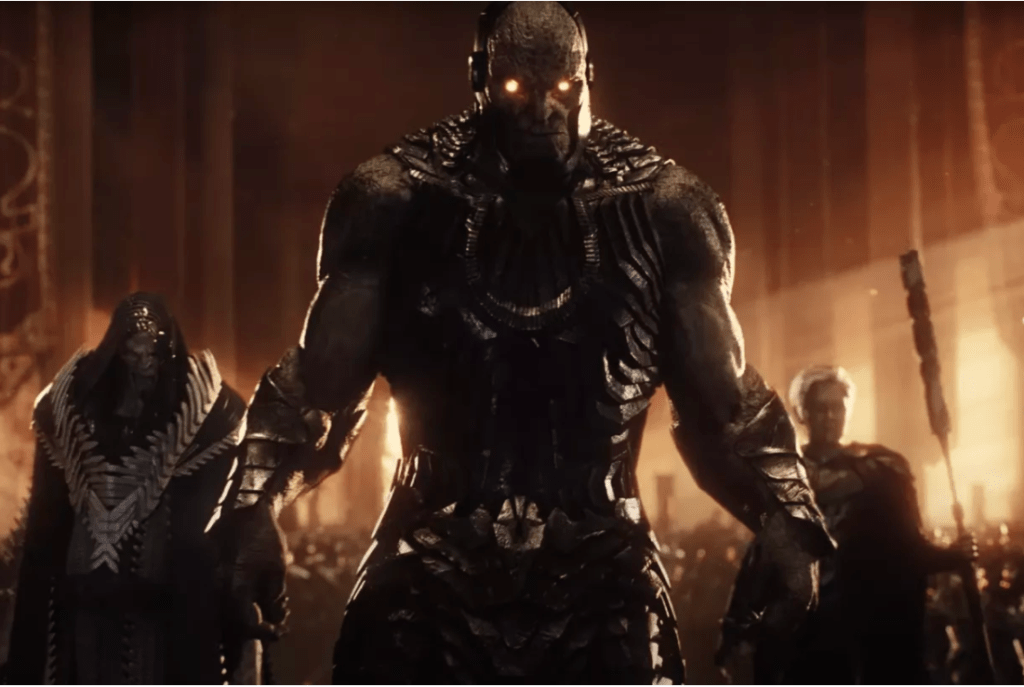
Finally, the reshot War for Earth was definitely one of the coolest and best scenes of the movie overall as, instead of Steppenwolf getting his ass kicked by the warriors of Atlantis, Themyscira and Humanity, it showed a younger Darkseid (or Uxas as he might have been known then) leading the invasion. This scene worked out well because it showed just how united the armies of Earth were, alongside a surprise Green Lantern while at the same time showing just how viscous and effective Darkseid himself was as a younger conqueror. The battle also looked really good from a filmmaking perspective as well since the CG blended well enough with the color so nothing looked too fake while also looking grand and bombastic. This scene was especially great as Darkseid was allowed to be defeated, giving viewers the idea that he wasn’t completely invulnerable and could be defeated by a powerful enough force.

The Bad.

Oh. There was so much. 

One of the biggest criticisms I have with Zack Snyder is that he takes his artistic expression to the nth degree and comes off as an edgelord looking to make all of his works dark and serious. His form of film directing values more style over substance, best exemplified with his version of Watchmen, which mostly stripped away Alan Moore’s criticism of fascism in superhero comics and Cold War era politics. His version placed value on how cool Rorschach was as hero that had a “code” once and then realized the world was too grim for it, as well as how COOL Moore and Dave Gibbon’s heroes were instead of the dark impact their existence had on the world. Granted, I do love his version of Watchmen because I’m capable of having nuanced opinions, but that doesn’t mean it shouldn’t be criticized. 

Zack Snyder’s Justice League is dripping with his style and while that style made this movie a lot more cohesive than the theatrical cut, it is still plagued with the same problems that the rest of his movies suffer from, which is artistic over indulgence, awful color grading, and terrible dialogue in some parts (oh we will get to the Knightmare, don’t worry).

First off, I think Sucker Punch is one of the worst movies I have ever seen. It was the film that awakened me to what Zack Snyder wants all of his projects to be like if he were given full creative control of things and it wound up being a confusing mess of interconnected music video moments and Justice League has most of that, but with a tighter focus. There is one scene in particular where a bunch of Icelandic women sing a song of lamentation as Aquaman is leaving their town after providing them with fish for the winter; for someone who proclaims their movie is supposed to be realistic, I don’t think that’s something ANYONE would do out of nowhere and not induce a cringe reaction.

Aside from that, a lot of the scenes that establish characters personalities in the beginning are, as previously stated, just music videos with water splashing, rain falling or something else happening in the background, all in slow motion while melancholic tunes play in the background. While I did manage to enjoy them for what they were, there were around four of these moments and soon wore out their welcome. Very easily these could have been shown as them committing heroic acts, but in Barry’s case (which is coming next), heroism is treated more as a joke than anything else.

Barry’s hot dog scene, second only to the Knightmare, infuriated me to no end. I love Ezra Miller with a passion. He’s a fantastic actor and, for the most part, steals the show in every movie he’s in! However, his Barry Allen is the most annoying, creepy and grating version of the character I have ever seen. He makes me question my tolerance of people with ADHD because he just never stops and his interpersonal skills are almost non-existent as while he’s in the middle of saving who I presume to be Iris West in slow motion, he just stares right into her eyes, almost brushes her skin, steals a hot dog and then proceeds to save her and get back to his job interview. It’s unsettling and that’s on top of his already bad humor during the rest of the movie.

As far as the color grading goes…yeah, it’s a much darker movie than it was before. There are so many scenes that either have their colors washed out or are simply far more shadowed than they need to be, giving the movie a much more bleak tone. One of the clearest examples was Wonder Woman’s first heroic rescue scene in which there was a light layer of blue over everything. I much preferred the colorful nature of the theatrical version given that Diana is one of the more hopeful heroes of the DCU. The color change seemed needless and seemed to want to fit more in line with the look that Snyder favors in his movies. I understand cohesive presentation, but one should also tailor scenes to each individual character and their respective personalities. 

That’s not the only instance of this, however, as Snyder somehow manages to get the editor to grade Batman’s trip to Iceland in search of Aquaman to be darker and that takes place in the snow, one of the most reflective and white surfaces possible. The contrast does work well in the end, but it almost has a stubbornness to it, like everything HAS to be darker to be cool. One of the things that I was looking forward to from the original trailers was the bluish tint of night during the final stand against Steppenwolf, but somehow even that gets made EVEN darker and my buddy Matt Dennis of the Fan of Everything Podcast (of course I had to plug him) explained that it might also be because of a Dolby Picture filter that they apply to their movies to give them more of a cinematic quality, but how hard is it to consider the audience that may not have larger TVs or the time to watch the film at night?

And finally, the dialogue of this movie is…something to behold. 

I honestly don’t believe the movie got its R-Rating from the violence within the movie itself because it is heavily tame in comparison to move other comic book properties like even the recent Invincible, but rather the R-Rating comes from its three (?) uses of “Fuck.” One when one of the Wonder Women terrorists just uses it to portray an air of “maturity,” another where Victor says “Fuck the world” as he laments his robotic transformation and finally when Batman says “I will fucking kill you,” to the Joker in the Knightmare scene. I love a good fuck every now and again, but either when they have meaning or are as gratuitous as a Share Size of “M and Ms” for one person. Breaking Bad had ONE fuck per season and they made use of it for full effect, The Boys has several fucks in each episode almost as a transition word at this point. The Snyder Cut has three and each of them just made me cringe and recoil with laughter.

From Flash asking Cyborg if Diana would go for a younger guy and Cyborg replying that because she’s 5000 years old, everyone’s a younger guy to Steppenwolf proclaiming that “the Great Darkness begins” there are a number of cheesy and bad lines, but most of them can reasonably be contained to the Knightmare itself. 

Not only do I hate Jared Leto, the fact that he’s a cult leader and possibly one of the worst Joker performers I have ever seen only makes me hate the final scene of the movie so much more. From his offering Batman a reach around to not so clever lines alluding to the fact that he murdered Dick Grayson in this universe, Jared Leto hams up his lines so much that it almost feels like he’s part pig. He wants to seem intimidating and crazy, but all that I can see is a cringe mall goth from the height of Marilyn Manson’s popularity. What makes matters even worse is that he even alludes to some of the plot that would have been part of Justice League 2 with Bruce and Lois being a couple after Clark died (remember those pregnancy tests in her drawer next to her Press Pass?)

This whole scene is clouded in a shit brown and Jared Leto is still the biggest piece of shit in it. If you look closely enough, you might be able to see two other turds in the form of Zack Snyder and Geoff Johns as their crap ideas just waft away in the billowing wind.

And there you have it. It has taken me a full week to collect my thoughts and put it to paper for this mediocre mess of a movie. Not everything was bad and it did have some quite enjoyable moments in it. Zack Snyder, Chris Terrio and David “I hate Green Characters, so why did I include Martian Manhunter in the Script” Goyer did manage to pull everything together back from the horrid state that Joss Whedon left it in. They are all talented in their fields and I applaud the crew of the movie for getting those additional shots, the long hours of editing and everything else, but fucking hell this movie was overhyped and underdelivered on both its cringe and possible goodness. Here’s to hoping Snyder and co. move on to better films after this and Johns continues to do well with Star Girl and comic projects…but after Doomsday Clock, who really knows?

Best of DC: Week of December 18th, 2019

Best of this Week: Doomsday Clock #12 – Geoff Johns, Gary Frank, Brad Anderson and Rob Leigh

It’s finally over.

Doomsday Clock started in November of 2017. I remember the Wednesday when it came out. I chose two copies, the main cover for a friend and the Superman Variant cover by Gary Frank for myself. I even received a button that I still wear, faithfully on my signature hat. I was excited for this crossover – this confrontation between Alan Moore’s greatest creations (in my opinion) and the bright and colorful heroes of the DC Universe. At first, everything started off so well. The book came out monthly and it was amazing…for all of two or three issues.

Soon after, the book switched to a bi-monthly schedule so that Johns, Frank, Anderson and Leigh could tell the story right. I was willing to wait and every single issue was worth it…up until more delays. If the math were correct, the story should have finished in December of 2018, but here we are in December 2019…at the end of this long ass journey and I can honestly say that it was all worth it.

By God, was it worth it.

It’s hard to discuss what goes on in this book because I feel like it’s less about what happens in it and more about the meaning behind specific actions, reveals and reappearances. One of the things that we were sold on during this series was the inevitable confrontation between Superman and Doctor Manhattan and Geoff Johns manages to subvert our expectations n a good way in that the fight never quite happens, but is more of an ideological debate between cynicism and hope, something that’s been at the heart of this story and DC Rebirth since the beginning.

*ENTERING THE SPOILER ROOM BRAWL*

Finally confronting each other, Superman asks Doctor Manhattan who he is Manhattan explains that he is either the one who will destroy Superman or be destroyed by Superman. Before they can delve deeper into that conversation, Superman is beset on both sides by the forces of Russia with Markovia and those of Khandaq. Pozhar and Geo-Force order Superman to answer for Firestorm’s supposed crimes against Russia and Black Adam tells them that he will be held accountable in Khandaq. Tensions rise and the battle is on as Manhattan looks on at the powder keg that he has created.

Because of his curiosity and meddling with time, he has created this timeline where hope is fleeting and the Metaverse, as he calls it, is fighting back with Superman caught in the middle. Because of him, the Superman Theory has caused a palpable amount of distrust between the various nations and his causing Firestorm to explode only made those tensions worse. In an effort to understand his final visions of the future, he staged everything in an effort to get in front of Superman.

He has a monologue in his mind where he states that he is caught in a question of two answers, the answers he gave Superman earlier. Superman fights back against both sides as they fight each other. Meanwhile in Gotham City, Reggie Long, the new (former) Rorschach, is saved from an attack by a red hat wearing man by Alfred. Alfred tries to get him to don the mask of the man who killed his father again and Reggie violently pushes Alfred against a wall and decries his former hero and says that he sees no future, no hope, much like Doctor Manhattan. 

Gary Frank makes excellent use of the nine-panel grid to show the emotion on Reggie’s face  and how much all of this is affecting him. Interspersed between these panels are shots of Superman fighting before we get an AMAZING double page spread showing the block wide battle between the forces of Russia-Markovia and Khandaq. Vostok-X is thrown into a building, Black Adam fires lightning at Tara Markov, Giganta fights another giant hero, even the Batman and Superman of China make appearances as a past panel noted that heroes from around the world have gone to help Superman or oppose him in Washington.

In the middle of Reggie’s breakdown, Batman shows up and offers him encouragement, apologizing for not believing him earlier in the story. He tells Reggie that even if he hates what the mask stood for, he can give it his own meaning, become his own Rosrschach. This is when the theme of hope begins to build up more as in the middle of the big brawl, Superman does everything he can to save people. As a car is about to crush a family, Superman steps in to save them, he then pleads with Doctor Manhattan to do the same.

Up until this point, Doctor Manhattan had been operating on the idea that there were only two possible options to end his fight with Superman, he even reveals that he’s the one who erased Superman’s friends, mentors and killed his parents. Frank and Anderson then draw four amazing panels. Superman cocking his fist back, eyes full of rage, Doctor Manhattan closing in as to accept his fate, Superman lunging forward with the fist outstretched to the reader and concluding with one punch to an attacking Pozhar, saving Manhattan.

Manhattan is almost left dumbfounded and asks why he’s done this. Why did he save him? Superman replies that there’s a third choice to be made. Superman takes note of the pictures of Janey that Manhattan leaves around when he appears and questions that maybe the darkness that he sees is a result of him using his powers to save the universe like he wishes he could have saved himself and his world.

Doctor Manhattan raises his hands and says that he understands, releasing a surge of energy that makes everything fade away. One of the most powerful shots of this entire book are of Superman’s logo slowly dissipating and then thirteen panels of darkness before we see the Rebirth of everything and Clark’s place in the Metaverse. The fight goes on, but as Superman begins to fall, he receives help in the form of…Everyone. The New Legion of Superheroes and the Justice Society of America bring up the rear in quite possibly one of the most beautiful double page spreads in the book.

It’s easy to understand what Hope is to Geoff Johns. He’s a classic man. He sees hope in the DC Universe as the old heroes. The ones who aspired to do good and be good for reasons above themselves. The JSA inspired Superman to become a force for good and in turn, Superman inspired the future Legion. There’s a reason he wanted this series to reintroduce them in the wake of the darker, grittier New 52 and reinforce that darkness isn’t the only way to find the light. At the same time, Johns uses this book as an opportunity to explain the structure of the Metaverse, Superman’s place in it and inform future stories, crises and timelines for the DC Universe.

When Superman lifted that car in 1938 it was just the beginning, but when Barry Allen created the Speed Force, the universe had its first divide and Superman’s timeline shifted up. This split created Earth-2 where Golden Age Superman still resides. The first Crisis divided the Earth again, creating Earth-1985 and at the center of that is still Superman. After Flashpoint and subsequently Rebirth, Earth-52 was spawned.

*SPOILERS MOSTLY OVER*

Superman is the glue that holds everything together.

Superman is the quintessential hero that everything revolves around and he will always show humanity the way. He’ll appear on many Earths at many different points in many different timelines to inspire hope where none can be found. That’s why I love this story so much. Even though Superman and Manhattan didn’t appear in it very much in the first half, their presence was still felt throughout. There was always this air of hope versus despair and we see who won out. The Watchmen Universe served as the perfect deconstruction of superheroes, but what we’re witnessing with Doomsday Clock is the reconstruction.

It’s the returning of the ideal that’s been lost to so many following endless gritty reboots, terrible political conflict in the modern day and lack of truth, justice and the American – no, Human way. In an age where people don’t know how to write a Superman movie, Doomsday Clock should be the example. Against all odds, Superman managed to inspire a being that has shunted away their humanity for the black and whites of logic instead of focusing on all possible options based on hope.

Doomsday Clock may not exactly stand on the same pedestal as the story that inspired it, but it absolutely should stand high. Gary Frank is an amazing artist that gave this book the weight, scope and respect that it deserved throughout. Amazing faces, body language, scene framing, use of visual motifs such as the Carnival picture puts this story above and beyond in terms of art quality. The way he managed to cram so many heroes on only two pages with insane amounts of detail for each is a testament to his ability and similarity to Watchmen artist Dave Gibbons.

Brad Anderson’s colors gave each individual issue their own unique feel with this one making good use of Doctor Manhattan’s blue light in the form of being a new symbol of hope in the face of the dark inks and oranges of the destruction taking place. Even when the mass of characters appear, no one gets lost in the pages because their colors are so distinct and recognizable amongst each other.

This story also couldn’t have been told without Rob Leigh’s amazing lettering. The way that we can distinguish between Manhattan’s dialogue, feel the weight of every character’s words and the bubble placement shows a level of skill that allows us to enjoy the flow of dialogue without losing any of the art.

It’s been a long journey to finally get here, but it has been worth the wait. Even if the current state of the DC Universe has either gone past this story or if it’ll need to be retconned to have been before the current events of Year of the Villain, there’s still a place for it in the overall landscape. I loved all of this and this is the kind of story that makes me glad to be a comic book fan. There’s nuance to everything, a good few messages and amazing art. Better yet, it ensures Geoff Johns future legacy will be one of hope and inspiration thanks to the time that he loved so much and hopes to get back to.

I welcome the return of the Legion of Superheroes even as I’m not the biggest fan of Brian Michael Bendis. Even more so for the Justice Society of America whenever they get a new series announced. It’s great to see the classics again and I’m interested as to how they’ll do in this new modern age.

As for Doctor Manhattan and the rest of the Watchmen characters, without a doubt I think we’ll be seeing some of them again at different points. They didn’t overstay their welcome or absolutely destroy everything like I thought they might, but we know that they’re around and we know there’s still stories to be told despite Alan Moore’s own feelings on such things.

This isn’t the perfect sequel to Watchmen, how could it be? But it is an amazing Watchmen adjacent book that builds off of the themes of that story and injects the DCUs vision of hope and justice into these characters. For that, I am glad to have read it.

Doomsday has been avoided and we have several hours before midnight, at least for now.

Best of DC: Week of October 30th, 2019

Best of this Week: Tales from the Dark Multiverse – The Death of Superman – Jeff Loveness, Brad Walker, Drew Hennessey, Norm Rapmund, John Kalisz and Clayton Cowles

We all know the story of the Death of Superman.

It was one of the few times that Superman fought a threat that pushed him to his limits, ultimately meeting his “end” before a triumphant return after he had been presumed dead. However, what would have happened had Superman not come back as soon as he did? What if someone wanted revenge for his death and saw his passing as a failure on the part of his friends and allies? What if that person were Lois Lane, fueled by the anger of losing her loving husband, enraged enough to become the change the world needed without its greatest hero?
The book begins with Tempus Fuginaut questioning why the darkness keeps returning, why it seems to keep attempting to poison the rest of the multiverse and he is at a loss. He breaks when he mentions worlds that are already dark because of tragedy and get darker still. We then cut to Superman’s battle with Doomsday and his eventual death right up to Lois cradling his body. Where the original story sees her crying and appreciating all that the rest of the heroes were doing while the fight was going on, this book sees her turn to them in fury. She asks why none of them were there for him, why none of them helped him fight.

Brad Walker does an excellent job of conveying Lois’ emotions. Here, she is shown to be far more angry, her eyes showing a pain that honestly, I don’t think we’ve ever seen from her character. Her tears are well detailed, dripping down her cheeks with maybe some bit of mascara mixed in for effect. Her brow furrows and she lashes out at Batman in particular once he tries to comfort her.  

What’s most interesting about this take is the idea that those closest to Clark had been shunted to the side in favor of the League who Lois saw as attention seekers with no regard for his real family. In the original story, Lois and the Kents were in the forefront and were absolutely devastated at the funeral. In this story, Lois is barely able to see the proceedings as the crowd blocks her and some members of the League stop for photos (maybe, Hal Jordan stops and waves at someone). Lois is further disgusted as Lex Luthor (with luxurious long, red hair) unveils a golden statue of the Man of Steel and promises to “live up to the hope” of what Superman believed humanity was capable of. Lois feels that Clark would have found it all s disgusting.

Time goes by and the world turns back into the cesspool that it was before Superman even lit the sky up with hope. There are headlines that crime has skyrocketed and Lois can do nothing but look at it all with despair. Lois Lane had always been a giant beacon of hope, even before she met Clark, but something about his death and the way that world handled it just broke her. Her body language at her desk and later, Superman’s grave give off heavy feelings of sadness and depression. She can’t even have a good night’s rest without thinking about him and the shoddy state of the world after his passing. Superman gave so much to humanity and they’ve all just pissed it away from her point of view.

She visits Ma Kent and comforts her as the Kents couldn’t even go to their son’s funeral to say their goodbyes. As they embrace, Martha tells Lois that Jonathan fell into a coma after a heart attack and you can feel her brokenness as she laments that “her boys are gone.” It rips at the heart to see, a testament to Brad Walker’s emotional art and Loveness’ amazing script. She stays with Ma Kent for an unstated period of time before making her way to the Fortress of Solitude to deliver Superman’s cape back to his Kryptonian home. 

She puts herself in a fetal position before the statues of Jor-El and Lara Lor-Van and suddenly the form of Eradicator appears before her. John Kalisz is given a ton of space to shine as this is one of the most visually dynamic sequence of pages in the book. Eradicator shimmers with a bright and vibrant shade of red accentuated by a white form. Energy surges around him in the form of circular marks, like bubbles as one exhales while swimming underwater. Even without a mouth, his eyes emote for him. Showing his own anger and lament after failing to save Superman in time. 

Lois, with tears in her eyes, offers her body as a vessel for his power as he cannot sustain it in his current form. He is reluctant at first, thinking that her body wouldn’t be able to take it, but upon seeing her resolve and want to finish Superman’s mission, he allows her to take his power. She is then showered in his energy in a bright blast as he dissipates into her. The Fortress of Solitude is destroyed with the red of the explosion contrasted by the blues and whites of the ice. Things simmer down for a moment before another single beam of light shoots out from the ice, revealing Lois in her Super-form. 

Her costume is amazing. Mirroring the bloody logo that made the Death of Superman story feel so visceral, she already feels like a different “hero” altogether, choosing to forego bright colors in favor of a black bodysuit and Superman’s torn cape. She vows to make the world better, to make it a world that deserved Superman. The way that she goes about it very similar to Injustice Superman’s approach, but instead of raising an army, she is the army. She takes down predatory banks, ends wars, feeds the hungry, kills the corrupt and does so without a hint of remorse. She begins to wonder why Clark never used his power in that way. The questions swirl around her mind as she wonders if Clark was truly naive or if he was just afraid of truly Saving humanity for whatever reason.

Many have asked similar questions over the years with the only real answer being that Superman wants humanity to advance on their own with him being a guiding hand, but not a firm one. Lois, only fueled by revenge, doesn’t have the same restraint. Eventually she finds Lex Luthor, knowing that he’s been the cause of all of the world’s troubles since Superman’s death. He doesn’t bat an eye as he admits to his heinous crimes; funding wars and conflicts, struck down climate regulations, created child soldier and even murdering his secretary just because he could. He expects Lois to bring him to justice, claiming that he owns far more judges than she could stop.

In a terrifying moment, she bursts through the glass window separating them and grabs him by the throat. Luthor is unable to speak, unable to stop her at all and the motif of tears continues as she tells him that Superman was Clark Kent. Luthor’s face, abject terror mixed with the loss of breath is both horrifying to see and absolutely gratifying considering his actions. She flies him past Earth’s atmosphere as quickly as she can, burning him to ash and bone in her hands before continuing her mission.

These are my favorite pages in the book. Loveness wrote it in such a way that all of the emotion is able to be carried by with little dialogue and the few words that are spoken were powerful. Walker made sure to draw these pages with an amazing amount of depth to them. Lois’ boiling anger is painted on her face through her tears, her body language indicates that she feels her actions are righteous and the ease that she’s able to keep hold of Luthor as she destroys him shows a level of control over her new powers and it is amazing. Kalisz makes no bones about showing how Lois’ inner darkness has taken over, showing her shrouded in fire and feeling nothing about what she has done.

The training wheels are taken off by this point as Lois has seemingly gone on a tear through the rogues gallery of almost everyone; burning Intergang, Cadmus, Ra’s al Ghul, Ares, Black Adam, Deathstroke and finally the Joker which draws the ire of Batman. He confronts her about what she’s done, leading to them having a fight. Batman does his best, but she tells him how much Clark actually held back against him, even going so far as to say that Clark pitied him and wished that he would stop being Batman. Bruce looks at her with a seething rage, saying that “he doesn’t stop” to which Lois says that she knows. While we don’t see the aftermath of their conflict up close, we do see her heat vision make a hug blast before she flies away.

This stuck out to me because, unlike Injustice that went out of its way to show all of the brutality that Superman inflicted upon the heroes of the world, we can interpret similar actions from how she was able to easily kill Batman alone. We don’t need to see what happened to know that it was heinous and that she likely had cut a swath through the other “glory hounds” as well. As she looks out to the vast emptiness of space, she sees her own truth. Humanity can’t be saved because they don’t want to be. Batman was the pinnacle of that and now that he’s gone, she’s finally realized it. Batman was one of the greatest humans to exist, but he was too wrapped up in his own emotion and damn anyone that tried to stop him.

What would a Death of Superman retelling be without the “pretenders?” Granted, I think this bit of the story took some liberties, but it was still horrific to see. She goes after Cyborg Superman and immediately sees through his ruse. They have a tussle and as it appears that she’s about to lose, Steel and Superboy show up only to be crushed and heat visioned to death. I suppose Superboy’s clone DNA doesn’t make him as invincible as Superman, but I don’t think Cyborg Superman has the power to control metal at will to crush Steel either. Lois proceeds to fight Cyborg Superman for God knows how long, not caring about property damage or the amount of people killed.

She looks around, seeing all of the damage and suddenly, in a black suit, Clark returns. He apologizes for how long it took and sees that she’s been fighting Cyborg Superman, then he takes a look at the crowd of people and sees that they’re afraid of her and he questioned why. Unfortunately, this leaves him distracted enough for Cyborg Superman to blast the pair with a ray of Kryptonite Energy, killing him and leaving his face frozen with terror at Lois. She kills Cyborg Superman and cradles his body again, this time knowing that she’s the one that kills him.

I loved this book because it was absolutely masterful. Lois Lane is such a great character that rarely gets stories of her own these days, aside from her current ongoing series by Greg Rucka and Mike Perkins. She is always portrayed as a strong character and seeing her succumb to a weakness like rage is refreshing in a dark way. One criticism I could draw is that this story focused very little on her journalism, but in contrast, how often do we get a super powered Lois Lane? 

Brad Walker, Drew Hennessey, Norm Rapmund and John Kalisz absolutely killed it in the art department. It was brutal without blood and the motif of tears and fire was a nice addition. Waller has such a distinctive and sharp style that is accentuated by Hennessey and Rapmund’s inks and elevated by Kalisz’ colors. This book was high quality and beautiful. 

High recommend!

Best of DC: Week of October 2nd, 2019

Best of this Week: DCeased #5 – Tom Taylor, Trevor Hairsine, Stefano Gaudiano, Rain Beredo, Saida Temofonte

You can almost hear the sound of hope fading away.

After the explosion caused by Captain Atom decimates the cities of Baltimore, Washington and Metropolis, Superman and Wonder Woman are left in shock and horror. They stand in the ruins of Washington, gathering their thoughts on what they’ve just witnessed when they suddenly remember everyone in Metropolis. Clark rushes off to his city, expecting the worst possible outcome, only to find the top half of the Daily Planet safe: protected and saved by a distraught Lex Luthor.

Trevor Hairsine’s art paired with Rain Beredo’s colors create this brutal air of bleakness initially.. The initial few pages are drawn in wide shots, making Superman and Wonder Woman look small amidst the sheer destruction. The pages are colored in a cold grey with a gust of smoke wafting in the distance. The first color we see outside of their costumes is the green from Lex’s protective dome. Green sort of becomes a hopeful motif through the book as it’s presented a few times as the color of saviors.

In the darkest hour, even devils turn to the light.

All things seem amazingly hopeful from that point on. Superman finds his family safe and sound. Damian, Dinah and Ollie enlist the help of Harley Quinn and Poison Ivy in establishing a safe zone for other living people among the newly growing forests of Gotham. The Hall of Justice acts as a refuge for other heroes and regular citizens, they even start making plans for arks to escape the Earth. They destroy everything that’s able to mass broadcast and even make new land on Themyscira.

Throughout all of this, however, you still never get the feeling that everything is all right. While the League are doing harrowing feats to save the planet, backgrounds are still colored in a washed out manner while the colorful heroes are juxtaposed against them. Even the greener backgrounds in the Harley/Ivy scenes have this dark twinge to them despite the green of Ivy’s new forest refuge being so prominent. Beredo likely does this on purpose to slowly sew the idea that not even the goodness of green is guaranteed, this being backed up by an infected Killer Croc showing up during.

Things seem hopeful until they all hear a buzzing in their minds, distracting them just long enough for something invisible to cut Lex in half and scratch The Flash, Barry Allen. Martian Manhunter somehow managed to get infected at some point and through the combined efforts of the heroes, mostly Firestorm, he is killed, but not before Barry is infected and runs away. Superman stops Wallace West from going after him and chooses to stop Barry himself. He knows he’ll never be able to catch Barry, so after confirming with Cyborg that Barry’s dead, Superman runs into him head on, obliterating his body.

Martian Manhunter’s sudden appearance is the exact moment when the motif is betrayed. J’onn is one of the most powerful heroes in all of the DC Universe and he’s almost always seen as a figure of goodness and help. To see him as a monster and the brutal way in which he kills Lex is a shock. The only warning we get is everyone feeling the buzzing before Lex’s torso is removed from his legs. Hope is shattered in an instant. 

Barry’s scream of agony, J’onn’s dead eyes of rage and the look of horror on Ollie’s face sells the sheer terror of all that’s happening. They allowed themselves to relax a little and it’s cost them everything. 

*SUPER SPOILERIFICS AHEAD*

Unfortunately for Clark, he finds two of Barry’s infected fingers impaled into his abs.

It’s unexpected, distressing and unreasonably cruel as we watch Superman say his final goodbyes before the infection takes him too. He tries to fly away from Earth, but succumbs to the infection when he nears the moon.

*SPOILER SWIM IS OVER*

DCeased does everything that it can to build up the idea that maybe there’s a way out of this situation. The heroes do everything that they possibly can to ensure that the Anti-Life Virus doesn’t spread any further than it already has. It’s decimated the Earth through its initial spread, Captain Atom and there’s no telling how much damage the Flash was able to cause by himself. I had high hopes that maybe Superman, Wonder Woman and Mera could be a beacon of light in this time of utter darkness. Hell, even seeing Harley and Ivy do their part filled me with joy.

But I loved it even more when that sense of hope was ripped right away from us. 

I hope there are even more stories like DCeased in the pipeline because even a few one-shots from the perspectives of outer space heroes like Adam Strange or the rest of the Green Lantern Corps at large would be amazing. I know I’ve trashed Marvel Zombies for doing much the same thing in the past, but It’s been a long time since then and we need new zombie media to sate our own rabid appetites.

Best of DC: Week of August 21st, 2019

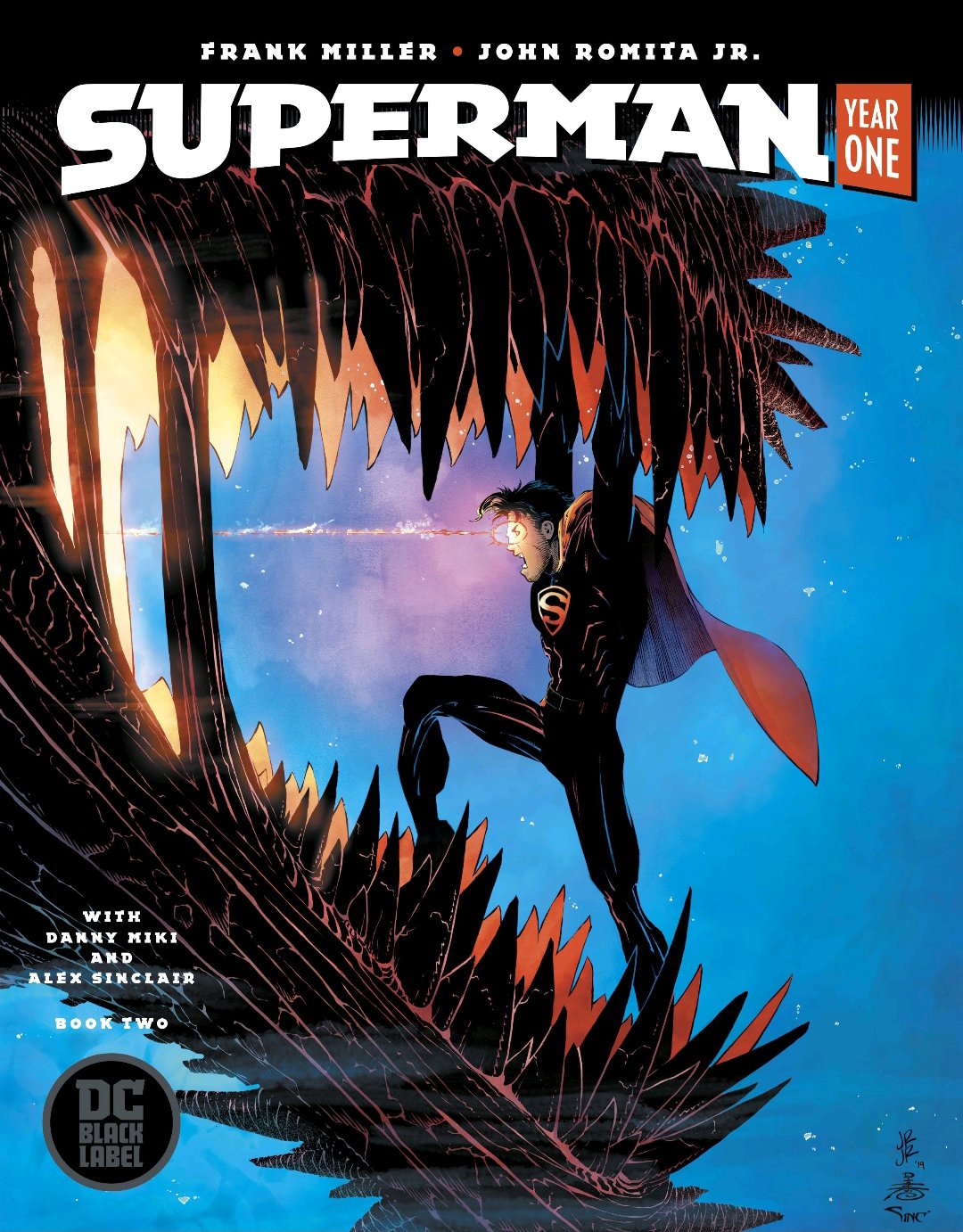
Best of this Week: Superman: Year One – Book Two – Frank Miller, John Romita Jr., Danny Miki, Alex Sinclair and John Workman

Superman has always stood for Truth, Justice and the American Way. 

This has never been more true (arguably) than right here in Superman: Year One, where Clark Kent becomes a US Navy Sailor. I briefly touched upon it at the end of the last issue, but this one really resonated with me in a way that no comic has in a little while. Other books have made me feel feelings of fear, disgust and elation beyond compare, but this one makes me feel the bittersweet memories of my own experience.

I remembered my first haircut, carrying my seabag across the base, marching and all of the PT (physical training) that I had to endure for those grueling two months. Clark isn’t fazed by any of it. It takes a few clippers to cut his dense hair. He breezes through the PT, noting how hard it is for everyone else to do and when he has to qualify for using a pistol, he hits the mark dead center every single shot. There were a few superstars like Clark when I was in boot camp and seeing that written and excellently drawn by John Romita Jr., made me feel something of a kinship to one of my favorite heroes.

You can see the struggle in his shipmates faces as they sweat and heave with Clark monologuing in his mind that he can hear their lungs about to burst or their legs about to give out. That shit was me. Every single PT test leaving me winded, marching at a double time… I hated every second of it. But through all of it, I felt proud. I wanted to get through, to push myself harder than I ever could. 

Clark doesn’t feel that. How could he? He’s an alien from another planet with abilities beyond compare and he could do anything he set his mind to. But what does he choose to instead? He answers the call of duty, he chooses to serve his country and his fellow man. It’s ridiculous, but at the same time absolutely commendable and inspiring. If I were to level criticism at the first two acts of this book, however, it would definitely be the lack of real feeling of camaraderie that Sailors feel together in Boot Camp. Never once do we see Clark interact with his shipmates in any meaningful way, aside from his Captain later on. The feeling of pride is there, but the friendships and relationships that come with it does leave a little bit of the story feeling hollow in favor of a less than great, but still good subplot later.

Another problem I have is… I don’t know how accurate print media and comics are allowed to be with military rank and titles, but Kurtzberg is supposed to be a Captain, but wears the insignia of a Petty Officer Second Class and Chief Petty Officer at two separate points. It’s a mildly irritating and nitpicky thing, but what can you do?

Of course, Clark’s path diverges greatly from my own. A little bit before the pistol qualification section, he gains the attention of a Captain Kurtzberg and after his perfect scores, he’s allowed to try out his skills further with an assault rifle, which he also excels at. Kurtzberg recommends him for more advanced training and soon after, he trains to become a Navy SEAL. I don’t have a singular clue as to what the SEAL lifestyle is like, but training he’s made to endure is even worse, though you wouldn’t know it from how he reacts to it all.

It’s here at SEAL training that the first seeds of the subplot, later becoming the hook of Act Three are sewn. Clark begins to hear the calling of the sea. It’s something that some deployed Sailors still feel to this day, the Siren Song or Mermaid Call that drives most men mad with how beautiful their voices are. Kurtzberg calls Clark out during one evening of PT and makes him to push ups on the shore of the beach after Clark tells him that the Captain should see how pretty “they” are. Unable to sleep during the night, Clark sneaks out of his barracks to watch the beings on the coast when Kurtzber appears next to him, warning him to not tell anyone about what they’ve seen as Kurzberg too knows of their beauty and the world of wonders that they live in. 

If you’ve been reading Superman stories for a long period of time, things may start to click as what or who may be calling Clark. After our hero accidentally starts a bar fight while trying to defend the honor of a woman, he’s punished by having to use his toothbrush to clean the head (bathroom) and garbage cans. After finishing his chores way into the night, he makes a dummy in his rack (bed) and sets off to explore the sea, taking to the water like a fish since he doesn’t actually need oxygen. 

He follows the sounds of the voices calling and finally see them, Mermaids, laughing at this strange human. One in particular catches his eye, Lori Lemaris, one of Superman’s original love interests from the late 1950s. He follows her as she laughs, until her voice turns to tears, seeing a submarine having crashed into their city. In one of his first of many acts of heroism, Clark lifts the sub off of the city, saves the people and helps them rebuild just before Morning Colors. Lori begs him to stay, to become her husband and King, but he tells her that the people up there need him, but that he will be back. As always, Clark is torn between two worlds, but his first thought is always to honor his commitments because he’s such a good guy.

Romita Jrs art shines best in these few pages for me. Lori is absolutely beautiful, playful and the visuals of the underside of the ocean are stunning. Everything’s a beautiful hue of blue except for the vegetation and Lori, who’s colored with yellow and purple clothing. Clark looks amazingly strong and happily curious as he saves the people of Atlantis. Romita Jrs. lines are amazingly crisp and he makes great use of only a few hatch lines to shade things. Everything is thoroughly enjoyable to look at, even the way that everything flows under the water is awesome.

Clark manages to return back to the barracks just in time as Kurtzberg watches on, knowing where Clark’s been and thinking to himself that the young SEAL better keep those memories clean and pure because he’s witnessed something amazing. He swam with the angels. There’s a three page long training montage where Clark shows just how efficient he can be in combat, embarrassing one of his shipmates so hard that he’s pulled aside and given his first assignment.

Things take a dark turn as Clark and his team are made to infiltrate a ship that’s been hijacked by pirates. During the training, as Clark thought to himself just how easy it would be to kill, he started to get a pit in his stomach. Things weren’t sitting right, especially as Kurtzberg egged him on by saying, “That there is how to kill a man good!” This stuck with Clark as he did his bet to avoid killing any of the hijackers. He saw how monstrously they murdered the crew of the ship and he felt himself getting more angry, but he still couldn’t bring himself to take a life. 

Things reach a head as the team reaches the control deck and Clark still refuses to kill any of the enemies. Kurtzberg lambasts Clark and orders to give him some corpses, until one of the hijackers pulls out a grenade. Everyone starts to panic as the mission goes FUBAR, but Clark utilizes his strength to stop the grenade, subtly, making it seem like it was a dud. 

While he ended up saving the lives of his fellowsailors, his reckless actions reward him with an honorable discharge. Kurtzberg advocates for him, but ultimately Clark has to pack his sea bag and say goodbye to his friends. Before he departs, he has something of a heart to heart with Kurtzberg. The Captain tells him to hone his skills, that he could do amazing things with his gifts and Clark salutes him, walking into the ocean to find his destiny.

The way this scene is framed, with the lighting indicating an early morning, makes everything seem like the future is absolutely bright for Clark. Having Kurtzberg abandon his badass attitude of authority and strength to give Clark advice while shaking his hand like a man is an amazing and heartfelt sight. For the first time, Clark doesn’t have to try to lower his strength, it just comes naturally.

All of this is bittersweet. Clark Kent wanted something different than his life in Smallville. He knew that he would have to hide his abilities if he stayed, he knew that he could do so much more for the world. He chose to serve his country, one of the best things a Patriot can do, but his heart was too good for it. His skill and power raised him to a position that did not align with his own moral code. Clark would never kill, but no good deed goes unpunished.

The third and final act of this book comes with Clark returning to Atlantis, seeking out his new love, Lori. She reacts happily once she sees him again, calling him the love of her life and saying that he should meet her family. Then they… frolic in their special hiding place until the next day. She tells him to wear his best as he is to finally meet her father, Lord Poseidon. He emerges from the shadows in his iconic red and blue with fish swimming all around him and the flora lighting up in his presence. 

Poseidon isn’t amused, seeing Clark as a little standing frog and proceeds to put Clark through impossible tasks to win his daughters hand. Clark begins to find the true scope of his powers as he concentrates and releases his heat vision on one of the enemies. It’s a stellar display of power and control as Clark monologues that this fire inside of him was his and his alone. Alex Sinclair did an amazing job of portraying the ability and powerful it is with intense and vibrant reds.

Poseidon pulls out every stop that he can to try and crush Superman. He sends his best warriors, but Clark doesn’t even acknowledge them trying to crush him. Stone automatons fall to his might. A giant squid swallows him whole and vomits him back up, unfettered by the stomach acid. Becoming increasingly enraged, Poseidon summons the Kraken and uses the fabled beast to try and crush Superman to death. 

As the tentacle lifts and Lori cries, thinking her one true love has died, Clark stands right back up with a smile. Lori jumps for joy, the people are stunned and in a silent rage, Poseidon calls off the Kraken and plots revenge on the frog that he couldn’t crush.

Throughout this entire act, Poseidon monologues to himself about the bug that wouldn’t be crushed or burned or destroyed in any way. Clark just smiled, snickered and mocked Poseidon the entire time. There was no malice in his smirk, just the boyish exuberance of love and youth. Poseidon though Clark wanted his crown, but really he just wanted Lori, a place to finally be himself and a peace of mind that he’s never truly had.

Superman: Year One has been amazing thus far. While it’s only a few peoples take on what would happen if Superman joined the military, I feel like it’s a great and accurate one in line with who Superman would be as a man. Given the lessons that he’d learned from Pa Kent, how could we expect him to be ready to kill at any moment? Instead, we see his compassion for humanity shine through as he’s even willing to preserve the lives of absolute monsters. 

John Romita Jr. captures the apathy of an effortless Clark in his early career, the wonder when hears the beautiful call of love from the sea and the conflict of a man caught between duty and morality. To say that this is some of his best art in years would be an understatement when it concerns this entire story. While the last issue focused heavily on the vast normality of the midwestern United States, this issue feels more tight and focused on the inner turmoil of Superman. The locales feel more linear, allowing us to explore more of Clark’s own inner thought processes. He is surrounded by other strong men, but he is in a league of his own until he meets Lori.

Superman: Year One is a great journey of self-discovery. Other Superman stories have tried similar themes with varying degrees of success. Superman: Earth One went in the hard direction of Superman being an apathetic douche that knows he’s a God and lowers himself to the level of men until someone bigger makes him want to protect the citizens of Earth. Superman: American Alien grounded Superman near as much as this book does, but what makes them different is the journey Clark takes to find himself.

This book warmed my heart something fierce with it’s incredible storytelling and art. With issue two being this good, I can only hope that the next one will be nearly as amazing. Given that the preview of the next one shows Superman holding up the Daily Planet globe, we are absolutely going to be in for a treat. 

Highest of recommends.

Best of DC: Week of July 3rd, 2019

Best of this Week: DCeased #3 – Tom Taylor, Trevor Hairsine, Stefano Gaudiano, Rain Beredo and Saida Temofonte

Hope is dead. 

Tim Drake, Dick Grayson and Bruce Wayne lie dead on the floor of the Batcave as Alfred makes his way to the Batwing, unable to mourn their deaths and wanting to help stop the zombie threat. Harley Quinn finally gets the catharsis that’s she’s been looking for by pumping an infected Joker full of lead. With her face full of glee, it soon turns into a look of determination as Batgirl, Catwoman, Huntress and Batwoman are set upon her, bloody and rabid with infection.

These first few scenes are horrific and shocking to the extent of which this infection is spreading. The Batfamily is normally the most prepared for things like this to happen, but in one fell swoop, they’re almost all gone. That’s the brilliance of Tom Taylor’s plotting with this story, the inability to know what the hell is going to happen next. Batman would have come up with a cure, a plan, but with Tim and Dick being infected and him unable to fully prevent himself from succumbing to his wounds, the world’s greatest planner is no longer a factor. Barbara would have been an excellent second, but any hope of that was lost the moment she showed up covered in blood.

The world has turned to hell and even Superman can’t bring himself to smile or be hopeful as he looked into the faces of friends and companions, their eyes replaced with the rabid rage of infection and none of the love that they once had. He removes the infected from the Daily Planet office and shores up defenses on the outside before promising Jonthan that everything will be okay before he flies back home to Smallville.

The best way to describe Clark’s emotions as he makes his way through the Planet is hope being replaced by despair. The captions say it best, the hardest part of dealing with the infected is dissociating. These people are no longer Clark’s colleagues. They’re rageful monsters bent on killing, thankfully none of them can make a scratch on him, but the internal scars are far more painful than anything on the outside. Even when he promises that he’ll be back to his son, there’s this underlying feeling of doubt. We don’t know that he will, he doesn’t know that he will, but he’s Superman, right? He has to have hope?

Elsewhere, Garth and Mera are working to make his magic stronger before noticing the sky grow darker, dark with blood. They watch as Aquaman tears through Atlantis’ warriors, infecting and spilling their blood as it flows through the water and gets Garth. Mera barely escapes, but the fear on her face is palpable, she knows that all is lost. 

Even Atlantis isn’t impervious to all of this, granted it’s because Aquaman was attacked by infected diving out of a boat, but that doesn’t make things any less terrifying. This also helps us to learn that the infection can spread through blood and given how fast Aquaman and Tempest can swim through water, and how far spread the infection already is, nothing is safe.

On his way to Smallville, Superman does his best to save anyone not infected along the way. He catches up to Jefferson Pierce, aka Black Lightning, and his daughters, telling them to head to the planet before reaching the home of the Kents. Martha is okay, but Jon… Superman makes one final act of kindness before flying his mother to safety, leaving any hope that he might have had in the barn with his father.

That’s what I loved about this book. It is hopelessly nihilistic because of how tragic everything is and how all of it can even break Superman. Hairsine’s art invokes the feeling of terror that I felt the first time I watched 28 Days Later, seeing these ridiculously fast and violent killing machines tear through everything in their path. The shading on everything makes the inkers inks feel even more dark and bleak especially as Aquaman is slicing through Atlantis in a nice double page spread with a black background.

DCeased is definitely much better than I initially gave it credit for. With Hairsine’s art and Taylor’s bleak writing, this is definitely worth checking out, high recommend!

Best of DC: Week of June 19th, 2019

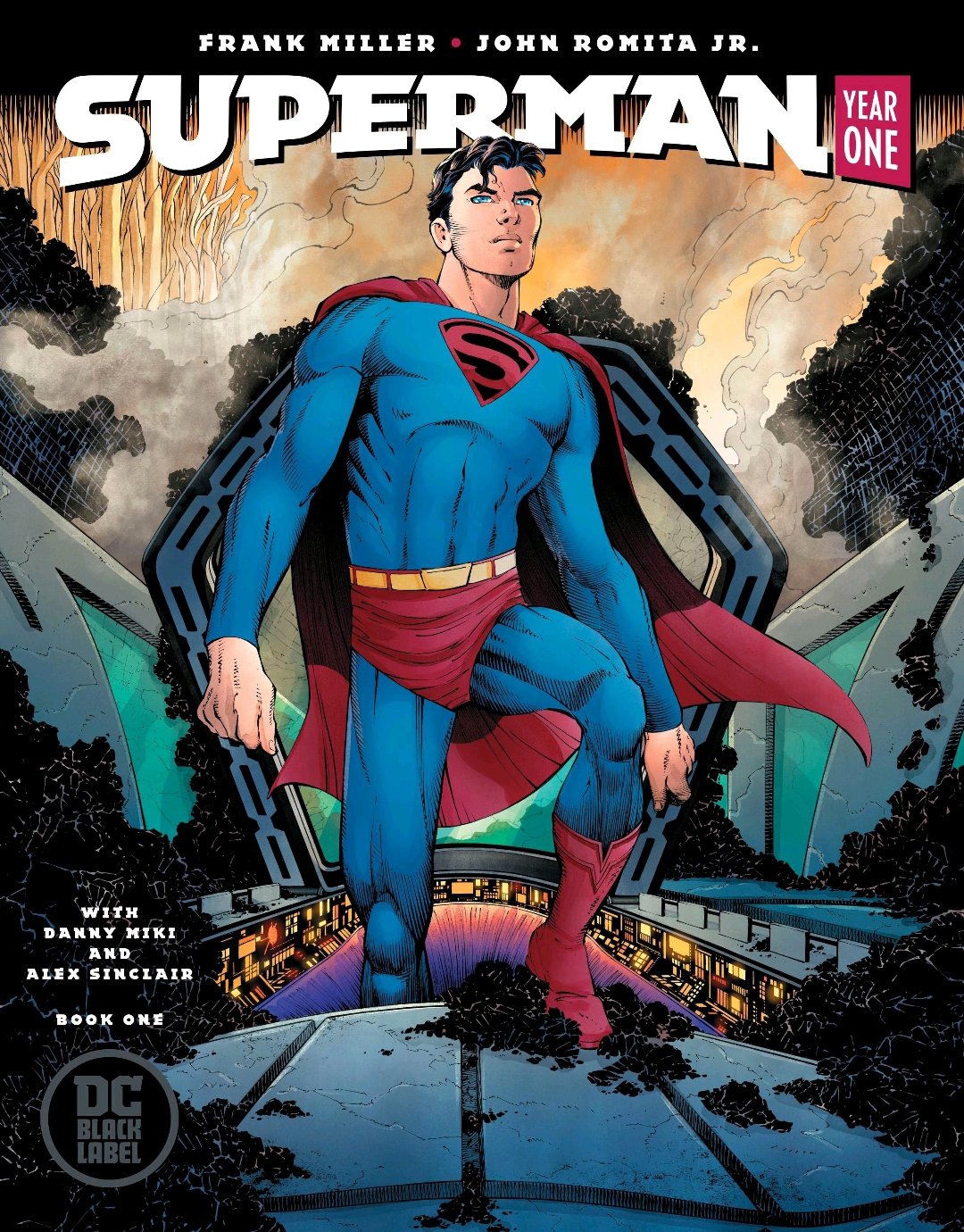
Runner Up: Superman: Year One #1 – Frank Miller, John Romita Jr., Danny Miki, Alex Sinclair and John Workman

Trigger Warning: Attempted Rape/Sexual Assault

Slow and steady wins the race.

That’s the approach visionary writer and sometimes crazy person, Frank Miller, took when writing the great, but flawed, Superman: Year One. The book is a masterwork on the slow burn that builds excitement and tension for a character that has all the potential to be exciting, especially as a young child.

Beginning with the destruction of Krypton from the toddler Kal-El’s point of view, the boy is rocketed from his dying home. He watches as his parents get further and further away, engulfed by the fire and explosions of the dying Krypton, scared and alone until he reaches his new home; Earth.

This presentation feels a lot more personal through his eyes. Though his inner monologue is a bit jarring for a toddler, it speaks volumes that he doesn’t know what’s happening. He’s terrified that his parents are leaving him alone, that he may never see home again. His hands press against the glass in fear.

Pa Kent just happens to pass by, noticing the rocketship land with this strange child in it. The baby Kal exhibits a strange telepathic suggestion ability and makes Pa Kent think that taking him home is all his idea. Ma Kent is introduced as the ideal small town mother and the majority of this book expands on Kal-El’s life in Smallville.

This comic acts as the absolute ideal in what Superman’s life as a kid could have been. It’s hokey in a way that the Kents are just simple farmers and the perfect parents with Clark learning the values of how to be a good person. He defends his nerd/outcast friends from bullies and gains the love from the always awesome Lana Lang.

The books flaws, however, are as awful as the entire thing is good. Things get a bit jarring as the bullies go from simple name calling and egging to physical violence and attempted rape after Lana takes pictures of their actions. If anything should have been cut, it should have been this gross depiction of near violence against a teenager.

This and the fact that there’s no real comeuppance after the fact, aside from Clark just beating their asses, and leaves a bad taste in my mouth and the plot is dropped from there. It shifts to his relationship with Lana Lang after he reveals his powers to her and gradually makes up his mind about his future. In his late teens, instead of going to college or to Metropolis for his common origin of becoming a reporter, he decides to join the US Navy.

I am a little biased because his experience was much like my own from people questioning the decision, to telling my girlfriend at the time that I’d come back and what not and the teary goodbyes. Of course everyone who joins may have the same story. It just felt very personal to me and stood out as the most glaring change to how Clark Kent becomes Superman. I felt kinship and traumatic flashbacks when seeing John Romita Jrs. representation of RTC Great Lakes.

Speaking of the amazing artist, his art for the book is absolutely stellar. Capturing the vibe of the dry heat of the American Midwest, Romita Jr pulls you into every scene. The sense of scope is grand in space, it feels home-y in Smallville and the road to Illinois feels desolate and empty and yet full of hope and joy.

The line between adult and children’s faces, however is very thin. Clark’s faces run the gamut of emotions from joy, to surprise to near rage, but between each time jump, it’s hard to tell just how old he actually is. Ma and Pa Kent age with the subtle graying of hair and maybe a few wrinkles, but Clark is forever having the face of his three year old self.

Despite covering ground that’s been trodden millions of times, Frank Miller’s found a way to inject a bit of interest into a familiar origin story. I love the new angle of Clark Kent becoming a Sailor and fighting for America, not exactly knowing what kind of person that it will change him into. Though I hope we get a more focused and less Crazy Frank Miller in the next issue. Attempted rape is disgusting as a simple storytelling device and depending on what kind of accounts he’s gotten from Sailors on boot camp, things could go either way.

I am excited for the future of this series, however, and can’t wait for the next one. High recommend!

Best of DC: Week of June 12th, 2019

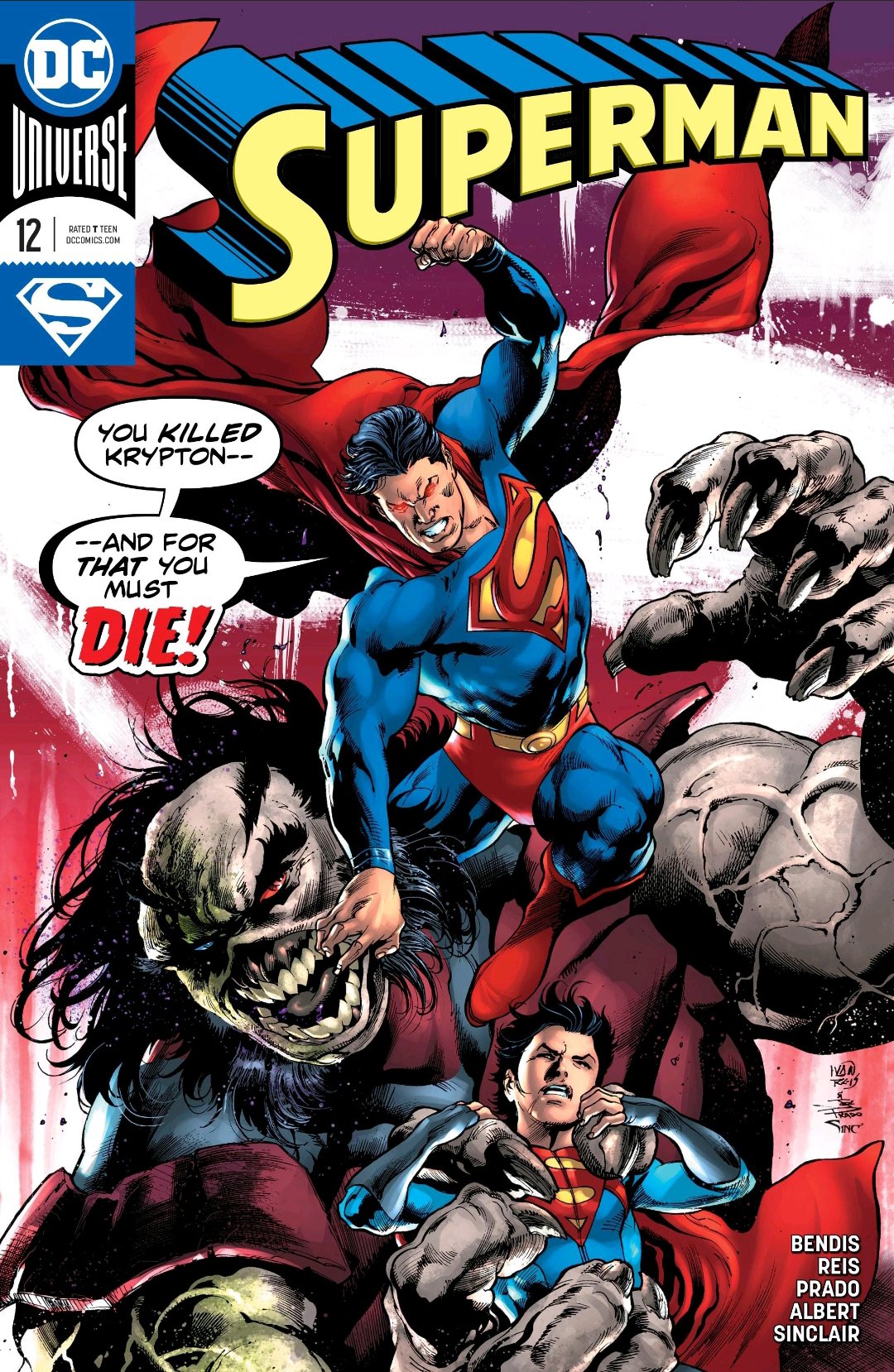
Runner Up: Superman #12 – Brian Michael Bendis, Ivan Reis, Joe Prado, Oclair Albert, Alex Sinclair and Josh Reed

Reunited and it feels so good.

The House of El has been separated for a long time. Jon went on adventure with his Grandfather and came back as a seventeen year old, though it’s only been three weeks on Earth. Kara went off into space to find out who destroyed Krypton and why and hasn’t been on Earth almost as long as Jon. That just left Superman while Rogol Zaar rotted in the Phantom Zone.

After Jon’s return, the father-son duo go on to rescue Jor-El, who’s in the middle of a war of his own design. Suddenly, Kara and Krypto join the fight, on the way back to Earth after discovering who killed Krypton. The family reunites just as Rogol Zaar, Jax-Ur and General Zod escape the Phantom Zone and go after the House of El.

Ivan Reis plays up this reunion like it’s been years in the making with Superman immediately intercepting Zaar with Kara, Jon and Zod in the background, all fighting in this amazingly drawn battle. Their blues and reds stand out as colors of hope as they fight against the Khunds, Thanagarians, Trilium Collective and the Enemies of El.

Superman fights with intensity, knowing the destruction that Zaar is capable of. When Zaar breaks away to take his ax/staff from Kara, she rocks him with a HARD punch. The impact almost shakes the page. The same things play out in her book, also released this week, but she knows that she has to keep the item away from Zaar, lest his power increases exponentially.

While the battle is going on, Krypto and Jon play around a little bit and this wholesome moment puts a smile on Clark’s face before Zod ambushes him. The two clash and briefly enter super speed before he and the rest of his family make a dash to Jor-El’s ship following Zaar’s retreat and the end of the battle.

The family, excluding Jor-El who looks salty as hell in the next panel, embrace. They go their separate ways soon after as Kara wishes to confront the leader of the Trilium Collective as they’ve been the main roadblock in her book. She takes Jon, leaving Superman and his father time to reconcile as Jor-El leads Superman to the remains of Krypton for a cool cliffhanger.

This book was great. Ivan Reis continues to be a fantastic artist for Superman, drawing on his and the others sheer amount of strength to make things look impactful and cool. His sense of scale makes things seem so much bigger, especially with all of the action going on in the background. With Sinclair’s help, colors are vibrant and give the book all of the life that makes it good, especially on the non-gloss paper.

One thing that I hold in high regard for this story is how it seems to be working towards making General Zod less of a tyrannical villain and more of a tyrannical anti-hero, at least for the moment. In most other cases, seeing Superman would be fight-on-sight because of his hatred for the House of El, but his Kryptonian pride won’t let him compromise the chance to take revenge on Zaar and anyone else responsible for Krypton’s destruction.

This allows him to form something of an alliance with Superman. Coupled with the two or so dream sequences we’ve seen that allude to peace between the two, there’s real hope for a mutual understanding between them. So long as Zod never learns of Jor-El’s involvement in Krypton’s destruction.

Best of DC: Week of June 5th, 2019

Best of this Week: Justice League #25 – Scott Snyder, James Tynion IV, Jorge Jimenez, Alejandro Sanchez and Tom Napolitano

The Year of the Villain is upon us.

The book begins with Clark in his youth, impatient and wanting to solve all of his problems by using his power, but being told to be patient by Pa Kent. Cutting to the future where he and Jon can’t light a lamp in Pa Kent’s honor, he’s drenched in rain under the cover of night. In the present an emaciated Superman floats through the Sixth Dimension in total darkness, left there by the glistening White Superman of the Utopia created by the World Forger.

Elsewhere, the League fights their future selves in an amazing action sequence by Jimenez and Sanchez. The clashing of ideals is in full force as these perfect beings from different eras fight each other for the future. Our Justice League fights with the fury of youth, uncompromising in their belief that a future where the lives of billions are lost in order to achieve justice is no future at all. The Future League, however, with their vast experience and tainted souls fight with  certainty, knowing that their world has no pain or injustice.

Their battle is captured excellently through sheer scale and intensity as the book rumbles on. Wonder Woman knows what she’s capable of taking and throws down on her older self with punches and kicks befitting a warrior with the heavy impacts to match. Lantern Stewart has an architectural mind, but his older self has obviously come across bigger, but doesn’t count on the flash decking him right in the mouth. The Flash himself doesn’t see it coming when he catches a flurry from himself and who I believe to be Wally and Bart as they phase in and out of existence.

Martian Manhunter uses his shapeshifting abilities to become something out of any Kaiju movie as he tears through the city and himself. Batman… dear God Batman and his beautiful Bat-Mech. The machine is over designed with sharp edges, a bright white color scheme with a gold Bat logo and big dumb Bat wings, but it is AMAZING to look at. Appearing to be on the side of the World Forger, he tells the team to see the Light, telling them to listen to his words and imagine light as they get beat down by their future selves.

Back in the Sixth Dimension, Batman thinks back to the light ceremony and how the League was there to help him and Jon and suddenly lights begin to appear, not just any lights… suns. In what may be one of the greatest sequence of pages in the last few issues of Justice League, (and there have been some great ones) Superman is re-energized. He dives through one sun and then another and another, regaining the hope and strength that he is so known for and rushes towards his friends.

The World Forger readies his hammer to strike this future reality into existence until he feels the vibration. He tells Future Lois Lane to shoot it down, but she sees the “S” and begins to cry. Flash sees him, Diana, J’onn and especially Bruce as Superman RAGES INTO THE BATTLE AND WITH A SINGLE, WORLD EXPLODING, PUNCH puts and end to the World Forger’s machinations.

Instead of destroying the World Forger in that instant, he extends his hand, telling him that there is another way to save the Multiverse if he joins the Justice League. Batman had his suspicions of the future the whole time and upon learning of Superman’s fate, decided to give him a chance to find his way back to his friends and if he didn’t then the Utopia was meant to be, but he always knew that Clark would find a way. Clark focused on hope and the happy memories. He knew that there was always another way and that the World Forger’s ideas that there was only one path or a few that involved him fighting against the Justice League were misguided and that there was one he hadn’t considered; joining them.

Before jumping into the latter 1/3rd of the book, I have to praise this book for having such a satisfying conclusion to this arc. I love that the League didn’t just have to vanquish another threat, but gained a new ally in their fight against the coming Doom. The art was amazingly frenetic and bright with the colors popping in ways that made everything all the more epic and badass. Shading and detailing made everything seem so much more inspiring and dire at times, which is exactly what this needed with special praise going to the single splash page of Superman roaring his arm back for a Real Superman Punch.

Things finally coalesce with the second story of this issue written by James Tynion IV and drawn by new series regular artist, Javier Fernandez. Paying off the events of the Year of the Villain One-Shot, Lex Luthor has made his plea to the people of Earth. After the Legion of Doom saves the world from a raging Mxypytlk, Lex tells them what a mess of things the Justice League made of the Source Wall. He encourages the citizens of the world to shun the League and become Villains just like him as it’s the only way to save themselves since the heroes obviously can’t.

The people are listening and have already started rioting in the streets. Unlike in The Last Knight on Earth, the League has hope. The World Forger hopes to gain the aid of his brothers, the Monitor and the Anti-Monitor. Starman hopes to gain the aid of other heroes from the Multiverse. Wonder Woman wishes to stay on Earth and utilize the Largest League that there has ever been and J’onn says that they have to do it all. At the same time, after his supposed Death, Lex brings himself back to life in a strange body, saying that Doom is just beginning.

I have never been more excited for Justice League than I am now, especially given how widespread this story will be. There are hints of the same kind of scale as Jonathan Hickman’s run on Avengers, with every small thing in every tangential book affecting some part of the larger narrative and that’s the kind of storytelling that I adore. Offers are going to be going out to every villain in the DC Universe and things are only going to be more intense from here on out and I am here for it.

Best of DC: Week of May 29th, 2019

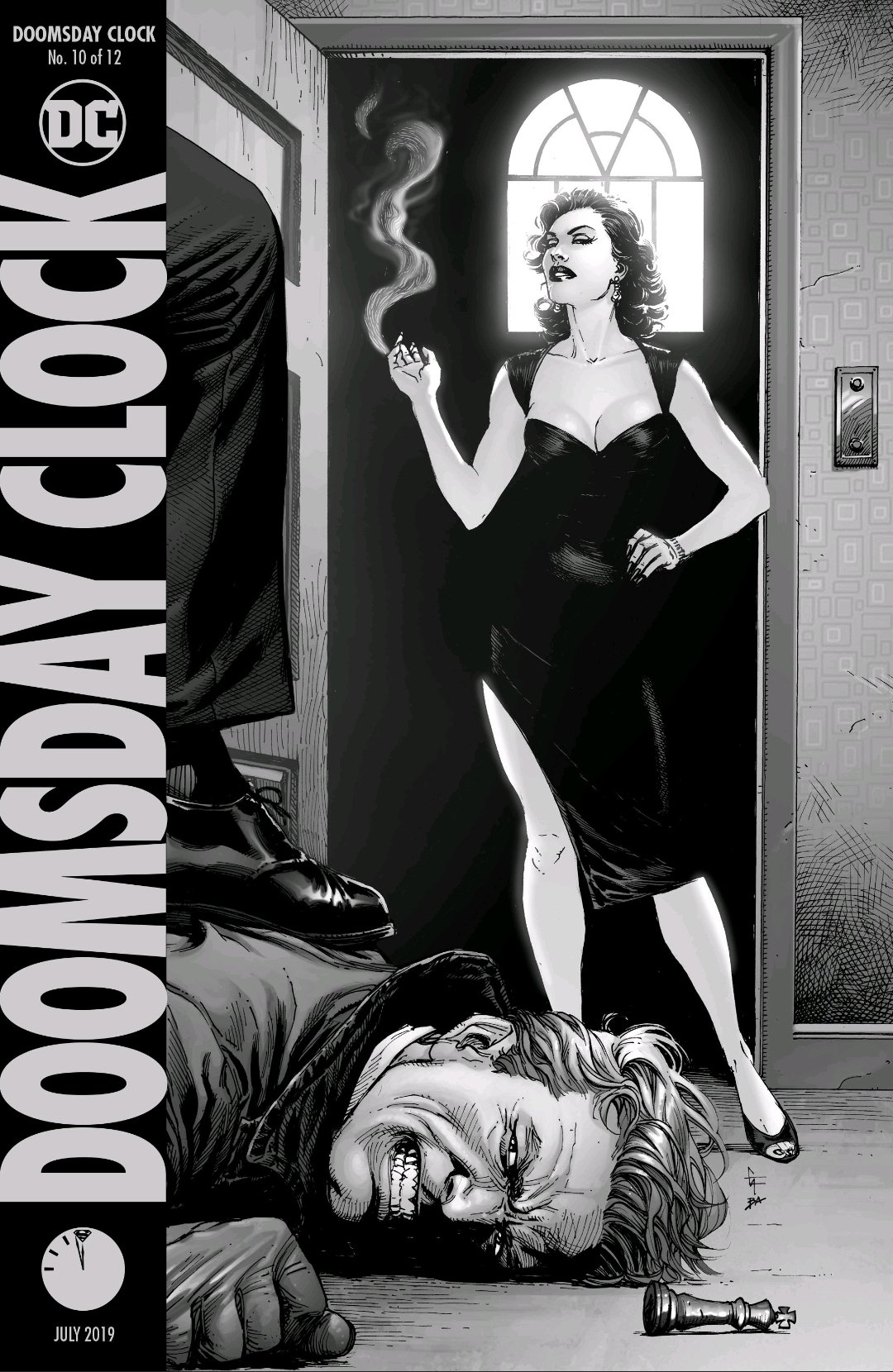
Best of this Week: Doomsday Clock #10 – Geoff Johns, Gary Frank, Brad Anderson and Rob Leigh

And yet another wrinkle is added to the DC Universe.

Or should I say, “Metaverse” now? Yes, after I think three months since the last issue, Doomsday Clock returns with yet another strong issue that expands upon the mythos of the DC Universe and just how Doctor Manhattan viewed and affected things at the many different positions of time that he has been able to inhabit.

The issue is framed around an actor by the name of Carver Colman, a very huge star in DCs 1954, who has been referenced or used in previous issues. This gives some kind of continuity in the context of the story as Johnny Thunder was seen watching his movie in the retirement home all the way back in issue two or three. Colman, unfortunately, has a secret that gets him killed soon after wrapping up the filming of his biggest hit, The Adjournment and as we make it through the issue and the back and forth of his life, we find the biggest change to Doctor Manhattan’s character and how he has to bend to the rules of this new universe.

Doctor Manhattan actually meets Colman in 1938 when he was a struggling actor who had just lost his job delivering mail to a movie studio after an unfortunate accident and things he saw. Manhattan takes Colman out for some food, attempting to use him as a rod to focus on to look towards the future as he can’t seem to do so on his own after arriving. He does so and is able to see a year into the future, then four and so on. His abilities work again, but then he hears something strange.

A radio report of a man lifting a car into the air. The first appearance of Superman on April 13th, 1938. Suddenly, it was gone, the crowds of people were gone as if they never existed. He follows the path where Superman existed in 1938 and finds the Justice Society, having formed and waiting for Superman to answer their summons. Jay Garrick “Flash”, “Green Lantern” Alan Scott, Hawkman, Doctor Fate and others, waiting for the Man of Steel to join their ranks and suddenly, they too have never heard of him.

Manhattan follows the many arrivals of Superman, from 1956, to 1986 and sees his arrival change again and again, noting the many deaths of Ma and Pa Kent and how this “Universe” seems to use Superman as a focal point, even going to a thousand years from now when Superman was briefly part of the Legion of Superheroes. So to test how things revolve around Superman, he changes the past by moving the Lantern away from Alan Scott, killing him, and drastically changes the future, creating the New 52 Timeline.

Everything is recontextualized as Manhattan sees that this action changes this universe and that it’s constant state of flux affects the wider multiverse. From the parallel worlds, to the anti-matter, to the Dark Multiverse, Earth Prime is a “Metaverse” in his words. The others change to match whatever is going on in the Prime World and once it realizes what he’s done, it begins to fight back. Manhattan sees Wally West trying to fight his way back to the Universe. This one action causes a chain reaction that will lead to his inevitable confrontation with Superman where Superman either kills him or he kills the Metaverse.

Cutting back to 1954, Manhattan is at Carver Colman’s home on the night that he’s murdered. He doesn’t do anything to stop it.

There’s a saying that “the only thing necessary for the triumph of evil is that good men do nothing.” In the Watchmen Universe, Doctor Manhattan was allowed to do or not do as he pleased because that world was a little bit more grounded or at worst cynical. Though, one might say that because he refused or didn’t care to use his power at a larger scale, Ozymandias’ “evil” won. Though Ozymandias thought what he did was the right thing, this series proved it it be disastrous in the wake of Rorschach’s journal being published, but initially Veidt’s plan did succeed. Doctor Manhattan escaping to the DC Universe put him into direct conflict with the Metaverse and its Hope. Its innate desire to have the good triumph over evil won’t let Doctor Manhattan get away with inaction and in his words, “To this universe of hope… I have become the villain.”

Words can’t describe how hype I was for this. With each and every issue, a new layer is added and brings us closer and closer to the epic conclusion that only Geoff Johns and Gary Frank can realize. I also love how they’ve expanded on the importance of Earth Prime, seeing as how it has indeed gone through many changes. It’s good to finally have an explanation that implies that even through the many reboots and retcons that if DC wanted to, they could tap into those timelines as main universes at any time. Everyone’s favorite time period matters or will matter again soon.