Best of DC: Week of November 13th, 2019

Best of this Week: Captain Cold and the Rogues #82 (The Flash #82) – Joshua Williamson, Rafa Sandoval, Jordi Tarragona, Arif Prianto and Steve Wands

We all thought the City of Bane was bad.

By all means it is, because Bane is a maniac, but at least Gotham’s infrastructure is still mostly intact. Central City, however, is a wasteland of snow, crime and Doom thanks to Captain Cold (now going by King Cold, totally not a Dragon Ball reference) and to a lesser extent “Apex” Lex Luthor. Captain Cold has taken over the city, divided it up amongst his fellow Rogues and they’ve finally won! So now the sole question is: What happened and where is The Flash?

The book begins with a gun fight between former Central City Police, now owned by King Cold, in a firefight with insurgents, seeming to consist of regular good people and other cops that Cold couldn’t buy. Rafa Sandoval does a good job in making Central City look absolutely wrecked. Cars and debris function as ramshackle barricades, fire and explosions ring all over the city as we see a wide shot of it from above and we even see Iron Heights Penitentiary, now renamed Ice Heights. It’s become a stronghold guarded by tanks with mortars, giant protruding ice spikes and Cold Soldiers with the Symbol of Doom overlooking it all. It’s a badass shot.

It’s a disturbing dystopia made even worse as the sky as been blackened, disrupting the weather which concerns Weather Wizard. He, Heatwave and Mirror Master sit in a meeting with King Cold to discuss a recent string of break ins in Central City that have been giving off strange power signatures. When one of his aides questions if it’s the work of the Flash, Cold answers that The Flash is “dead.” It seems that between the events of the last issue and this one, the relationship between the Rogues has gotten strained with all of them blowing Cold off, saying that this petty crime is a non-issue. 

It’s strange because the Rogues are supposed to be a family and Snart only took Luthor’s Offer if he could share the fruits of it with his buddies. Together they managed to take over Central City in The Flash’s absence and it’s alluded to that Snart’s sister, Golden Glider, has also gone missing. There’s a high chance that whatever happened to her might have contributed to the divide and combined with Snart’s more murderous tendencies coming out after his time with the Suicide Squad, it’s likely also hardened the hearts of the rest of the Rogues as well.

When another energy spike is detected, King Cold decides to go himself, saying that no one steals from him. He shows up to see citizens fighting, they seem to be some petty criminals claiming part of the city for themselves and get absolutely terrified when Cold shows up. Cold tells them how he used to live by a no killing code unless absolutely necessary, but things have changed, of course. As he goes to freeze them to death, he is stopped by Commander Cold, Flash’s partner from the far future. This is a conflict I’ve been absolutely waiting to see for a while! Much like Citizen Cold from the Flashpoint timeline, Commander Cold is a good, vigilant hero and is almost as capable and skilled as Leonard Snart in the use of Snart’s own Cold Tech. Key word: Almost.

Sandoval continues to amaze with an actual good fight between the two Ice-Men. As Commander Cold tells Kid Flash and Avery to escape, Snart creates giant, ice (hulk) fists and tries to pound all of them. Commander Cold repels him with his cold gun before it gets knocked away and then he creates a little bomb made from just a snowflake and it sends King Cold crashing into his tank. Snart, for the first time in a seemingly long time, smiles as the blood drips from his mouth. He laughs and says the fight is exactly what he needed!

Though, as Commander Cold recounts Snart’s own history to him, the former Captain reminds him that the tech he’s using is still his and that he’s the true master of it and freezes Commander Cold in a solid block of ice, winning the fight as Kid Flash and Avery get away with what might be one of Mirror Master’s mirror tech pieces. It’s actually really difficult to watch King Cold descend into what he’s become. I thought his time on the Suicice Squad would be similar to Harley’s or Deadshot’s, but every team he was saddled with left him as the only survivor and his heart became his name. This rings ever more true as we reach the absolutely horrific ending to this issue.

Snart remarks that people are trying to return the world back to the way that it was before the sky went black with Doom. He laments that his friends don’t see things the way that he does, especially after he bargained to give them their new gifts. He even asks himself if he should be out there trying to fix things, but then he’d lose Central City and be a loser again. It’s sad that The Rogues winning is ultimately what’s causing his melancholy. The only thing that’s been an upside was the fight with Commander Cold that he had earlier; it made him feel like himself again.

He chuckles and remarks to an unseen character that “he only kept him alive to show him that he won” and that if he tried what Commander Cold did, the same fate would befall him as he throws the decapitated and still frozen head of the hero into the cell to the shock and horror of the still living Flash. I used to think that Cold was redeemable, but after this, I don’t know if that’s at all possible anymore.

Joshua Williamson has seemingly been taking Leonard Snart on a roller coaster of a ride in his characterizations since he first appeared in DC Rebirth. He’s been almost an anti-hero, then a smart but bumbling villain, to a killer and finally just a man without remorse for his actions. He’s betrayed what the Rogues used to stand for and he’s dragged almost all of them down with him. He’s truly become a monster and Williamson has done an excellent job in writing his descent into Doom and evil. He almost used to be admirable for having a code and just wanting to be better than the Flash, but he let his greed and hatred get the better of him like his father before him, becoming what he never wanted to be.

Rafa Sandoval, Jordi Tarragona and Arif Prianto never cease to be an amazing team. Sandoval’s style is arguably why he’s my favorite Flash artist right now because it all flows so smoothly. His lines are thick and distinct and he gives clothes so much sway and movement. Even rips and tears in costumes look amazing. Everything feels so high energy, epic and dynamic in his hands.

Of course, without Arif Prianto’s colors and Jordi Tarragona’s inks, it wouldn’t be quite as amazing. Prianto has a way of giving everything a smoothness and shine that feels appropriate for this story, especially given the nature of Flash’s stories. Though his work on the colors of backgrounds, especially the snow, is amazing to look at. Tarragona, as well, does excellently in appropriate shadows that cut right into the darkness of the situation.

I absolutely loved this issue of The Flash, mostly because the TV show really got me into the Captain Cold character. His criminal motivations have been interesting and I’m even tempted to read more of the New 52 stuff as The Rogues were very prominent during that run.

I’d always put him off as being a lame Mr. Freeze because of Super Friends, but recent years have been extremely kind to Captain Cold. I love this dark path that he’s going down and I can’t wait to see how the Flash will reconcile with this and how he’ll finally take Leonard Snart down. High recommend!

Best of Marvel: Week of November 13th, 2019

Best of this Week: Fallen Angels #1 – Bryan Hill, Szymon Kudranski, Frank D’Armata and Joe Sabino

She is a butterfly.

Kwannon had been living in silent darkness for almost thirty years, trapped inside of her mind  while Betsy Braddock occupied her body (Uncanny X-Men #256, 1989). That changed in Hunt for Wolverine: Mystery in Madripoor #4 (2018) when Betsy psychically reconstructed her original body, allowing Kwannon to reclaim hers and make sporadic appearances in Matthew Rosenberg’s Uncanny X-Men (2018/2019), mostly serving as Wolverine’s back-up. Of course, things have changed significantly since then and now.

This book opens with a young girl standing on a train while Kwannon narrates in the background. It’s mostly vague as Kwannon refers to a mysterious “she” that she hoped was happy and free during the time that she was locked in her own body. The little girl puts on some sort of tech apparatus on her head which, upon activation, causes her eyes to turn blck as she begins to tear through the pedestrians on the train. It’s savage as she rips a handrail out of place and starts beating people with it. Eventually, she makes it to the train operator’s room, knocks him out and derails the train. Presumably everyone is killed in the horrific accident and the only word on her lips before it happens: Apoth.

Kwannon, now choosing to go by Psylocke as she sees her former name as a shackle to a horrible life of torment and pain, is meditating and enjoying the peace of Krakoa. The first panels are set up very well with many close up shots to Psylocke basking in nature, even pricking her finger and bleeding on a flower to show that blood can even bring new life as it blooms. Frank D’Armata makes excellent use of color as the flower and a butterfly appear purple, Psylocke’s signature color. It’s beautiful, especially as we get to a beautiful shot of Psylocke, in peace, floating as purple butterflies swarm around her.

That peace is soon interrupted as she’s bombarded with a psychic attack by an unknown entity telling her that she has to kill a God, she has to kill Apoth. After the vision, she goes to visit Magneto, still “mourning” the death of Charles Xavier (X-Force #1, 2019). She tells him what she saw and requests to leave Krakoa to investigate. Initially, he denies her request, citing the most recent attack that left Xavier dead as the reason no one is able to leave the island. She responds in fury, trying to assure him that what she saw wasn’t just a dream. 

These pages are strange as they also utilize a bunch of close-ups, focusing on their mouths. It gives the conversation a close and shadowy feel as they’re also shrouded in heavy inks. Magneto urges her to see Mister Sinister, saying that he might find her visions interesting. When she questions him about this, he explains that his grief over Xavier’s death makes him forget conversations (wink, wink, nudge, nudge). She then goes to visit the Evil Eccentric, who also doesn’t seem interested until Psylocke talks about her experience being trapped, showing her ferocity when he asks her how she’d kill Betsy if she could. Satisfied with her answer, he helps her out and asks that she gathers a team.

We then cut to X-23 and Kid Cable (I will never refer to him as just Cable) as they stand around one of the many fires made in celebration of peace and safety. Kid Cable sees Laura not enjoying her time and asks her how she likes to dance, then they have a small fight that Laura wins. She comments that she doesn’t feel anything because everything on Krakoa is safe and “safety sucks.” I like this characterization of Laura so much better than what she had been doing with her plucky, child sidekick, Gabby. It reminds me of both her time in X-Force and the beginning of All New, All Different Marvel when she was ultra violent and reckless. Psylocke tries to recruit the both of them, but Laura convinces her that Kid Cable deserves the peace that Krakoa provides and the two leave the island together.

The pair travel to Tokyo and meet a former contact of Kwannon’s. She informs them of a new designer drug created by Apoth called Overclock that seems to affect people’s mind states, causing them to murder others while the drug is killing them as they get super high. As Psylocke and X-23 watch the video of the train accident, Psylocke has a flashback to her days as a Hand assassin and we earn that she had a daughter that was taken from her. Her daughter was given a tattoo of a butterfly, same as the girl in the train derailment. Whether or not this is her daughter is unknown to us, but it is a possibility. 

The video sends Psylocke into a rage and she demands answers, grabbing the woman and threatening her with mind scrambling via psyblade. When the woman refuses and says that Apoth will kill her, Psylocke plunges her psychic dagger into her mind as Laura takes out her guards. The best things about these pages are that they’re all coated in a tint of purple, alluding to the fact that this somehow all ties back to Psylocke/Kwannon somehow. There are threads here that only she can follow because of her ruthlessness and it all feels so very personal.

Psylocke rips the information from her contact’s mind and travels to the location that she found. There, she encounters a shack full of children under the influence of Overclock and Apoth has taken one of them to speak through. The rest of the children die while he warns Psylocke and X-23 to return to the safety and seclusion of Krakoa while he evolves the world. Apoth seems like an interesting villain as he mentions how hard it is to kill children and yet does it anyway. He claims that what he’s doing is evolving humanity and the person who gave Psylocke the vision referred to him as a new God. What is his power and how is he able to control people’s bodies and create such a deadly and advanced drug?

If I were to have any complaints, it would have to be that sometimes the inks are so dark and prevalent that they can start to feel overbearing. There are a lot of good colors used and D’Armata’s signature style is there, they can sometimes feel drowned out by Kudranski’s inks. When they work together, they produce amazing panels, but when they don’t, they produce odd looking shapes and poses. One in particular after Laura is given the knowledge about Psylocke’s daughter and then she’s hunched over like Quasimodo, that’s more so for Kudranski’s posing, but that darkness doesn’t help.

This first issue of Fallen Angels was very interesting to say the very least. I love the idea of getting to know a new and reformed Kwannon as Psylocke given she hasn’t been a character of her own since the 80s and that small time she was resurrected in the mid-2000s. She seems focused and yet still maintains the deadly edge that served her so well as an assassin. I also like that she doesn’t want to be reminded of her time in the darkness, even dismissing Betsy when she presumably wants to talk about everything between them. I don’t know if its anger or contentment with her new life that lets her walk away from Betsy, but it kinda feels liberating in a way.

I’m actually very excited to see where things go from here, so far I love Psylocke’s new direction as she seems to be slowly turning into a teacher for people like X-23 and Kid Cable. Throughout the book there had been flashbacks showing Psylocke’s past and the abuse she went through to become one of the Hands deadliest assassins, so it’s very likely she’ll be similar but better to those two. She will turn them into butterflies. The most perfect versions of themselves.

Best of Marvel: Week of November 6th, 2019

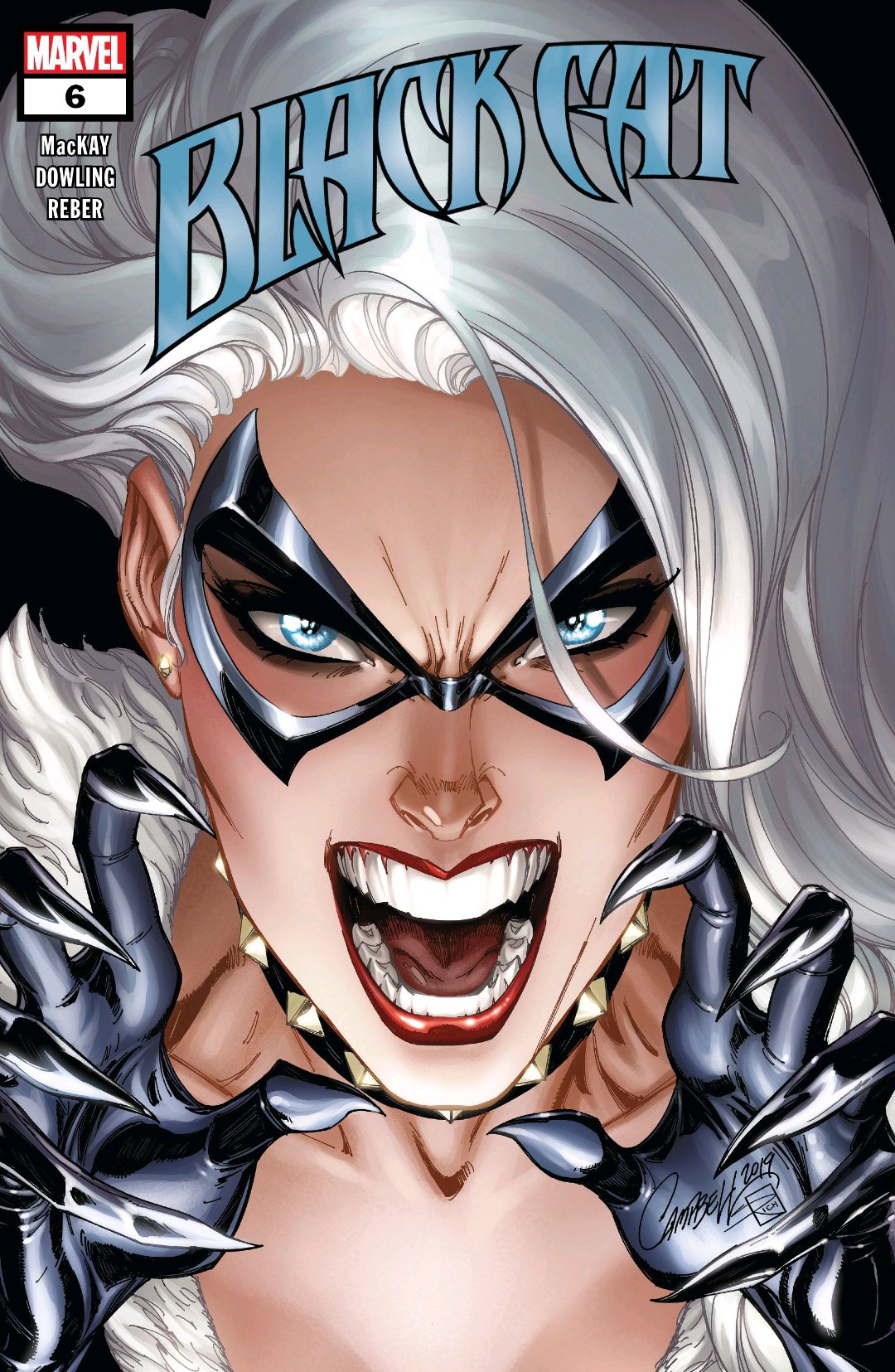
Best of this Week: Black Cat #6 – Jed MacKay, Mike Dowling, Brian Reber and Ferran Delgado

This issue was weirdly sexy.

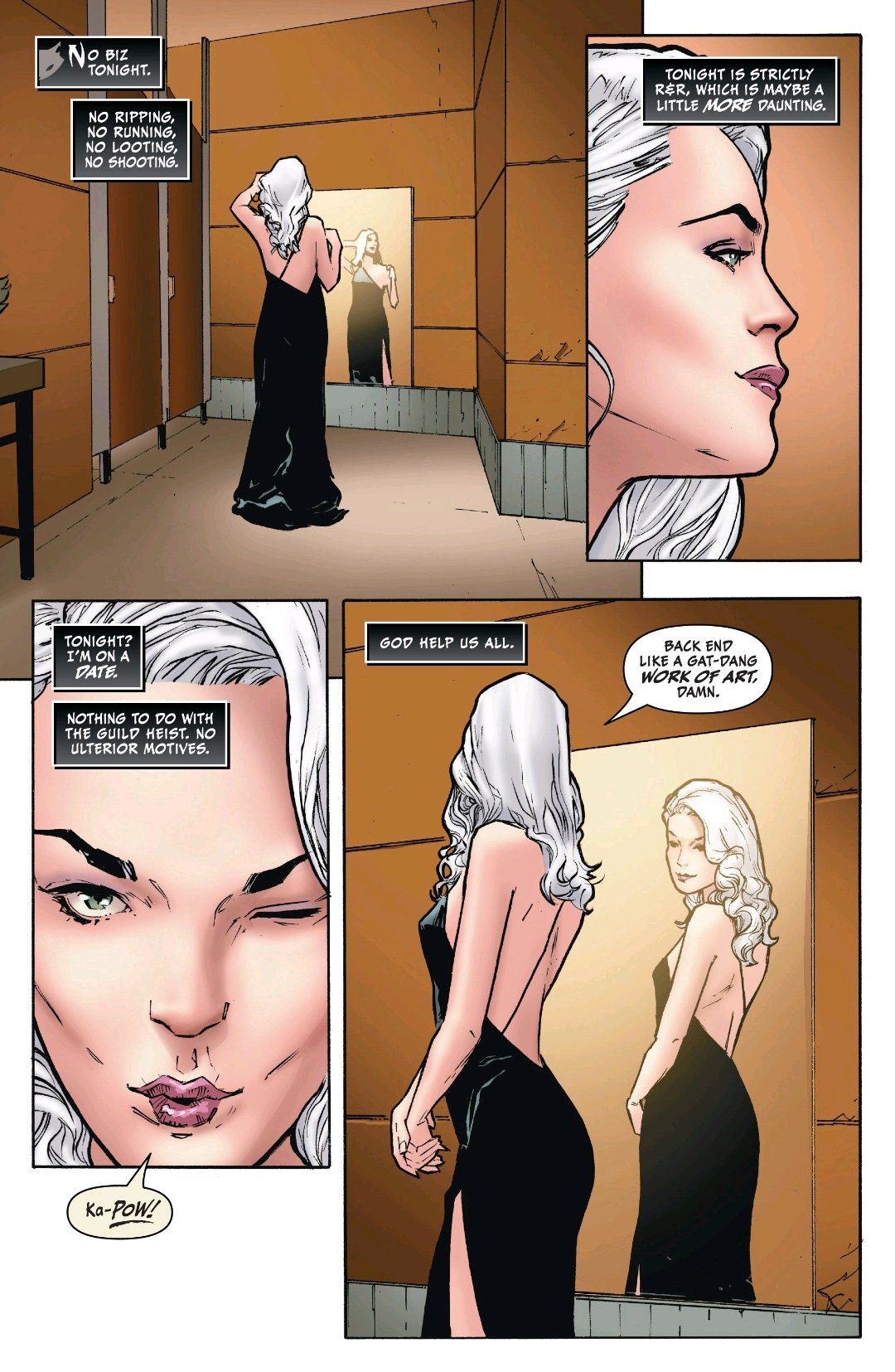
Not in the sense that Felicia was overly sexual or that the art was particularly provocative, but in the way that the dialogue was amazingly alluring. There’s something special in this issue that has been absolutely missing from the five prior to this and it’s definitely the sense of identity. Those prior issues did what most new series or mini-series do to sell the issues: feature cameos or locations from the bigger stars of the Marvel universe and hope things turn out well. I almost didn’t want to pick this issue up because of it, but I’m glad that I did because it had such a simple premise and an even better presentation. Felicia goes out on a date…with Batroc the Leaper.

Something about this struck a chord with me. There’s no pretense of romance between them, just two criminals, a thief and a mercenary, getting together to have a nice evening out together. Meanwhile, as the date goes on, we see another story going on at the same time with The Black Fox (Black Cat’s mentor) being targeted by members of the New York branch of the Thieves Guild. Something about the calmness of Felicia and Batroc’s conversation juxtaposed against the hectic action of the attack is beautiful in so many ways. 

Mike Dowling’s art absolutely captures this feeling with Felicia actually looking happy to be out with Batroc and the Leaper looking much the same. Reber’s excellent coloring and attention to lighting sets the mood as they go about their conversation, speaking of Batroc’s love of French, even the French Canadian variant and Felicia’s most recent heists, particularly the Sanctum Sanctorum and Richards family library jobs. They speak about these as if they’ve been friends forever and of course this is just a normal part of their jobs, of course.

Things start to get hot and heavy when they begin to speak of their attractions to their particular heroes. Felicia makes an excellent point that her attraction to Spider-Man is mostly due to the idea of him being a superhero and her being a thief, saying it’s the feeling of wanting something she couldn’t have. I’ve honestly never given it that much thought as to her attraction to Peter and Batroc even admits that he was surprised the first time he heard about their relationship, but understands the feeling.

Batroc draws a parallel between them with his own “paramour” in the form of Captain America, Steve Rogers. The way his face is drawn with such reverence and adoration is something I never expected. He explains that, other than lovers, no one is more passionate than those who engage in close combat against each other. I can understand exactly what he means because the two end up knowing each other so well after years and years of brutal battles against each other. He says that combat is as intimate as the act of love itself and I felt that. It’s extremely sentimental and shows another side of Batroc, a more French side, but with the depth that hasn’t been seen since Gwenpool’s first series.

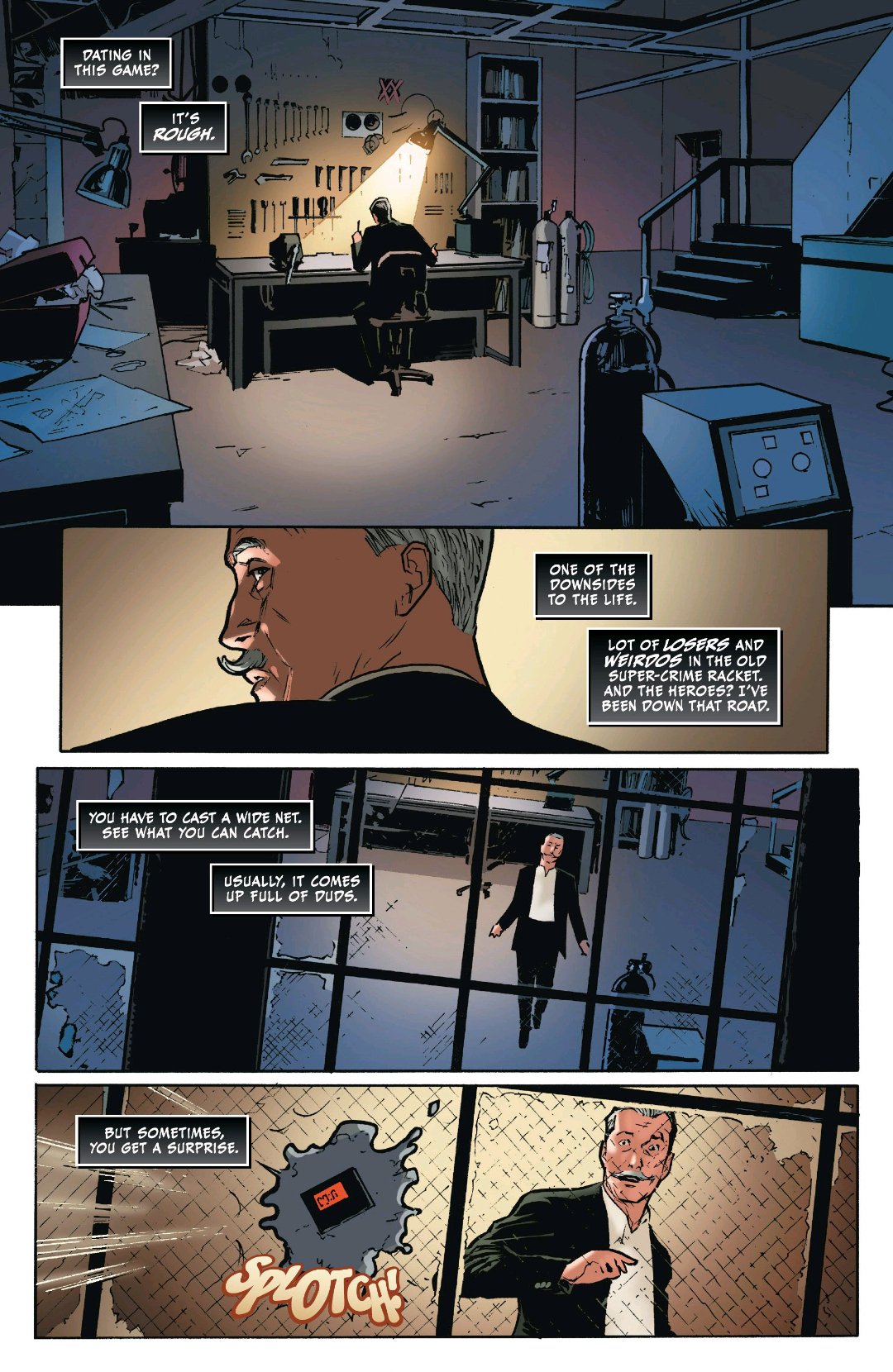
As all of this is going on, Black Fox does his best to fend off the ambush by the Thieves. They send a bomb to his window and the ensuing explosion causes a cloud of smoke to cover the room. Dowling does a great job of showing just how capable Black Fox is, systematically taking out the foot soldiers, utilizing the smoke and their own weapons to take them out. As he makes his escape, he even tries to use the grappling hook that Felicia had made use of during her career, but unfortunately he is injured and falls into a nearby alley.  Dowling’s use of scale makes this an epic escape to look at.

The date suffers a bit of a lull, but Felicia has been enjoying herself thus far and asks Batroc if he wants to go steal stuff. The next few pages share an excellent dichotomy as Felicia has an inner monologue about the streets being full of dirt and blood as Black Fox is shown escaping from the Thieves Guild in the dark alley. He is frantic and afraid, this is contrasted by the happy smiles on Felicia and Batroc’s faces as they smile. She says that the lights above the city have always been a sign of everything that they, as thieves, have always wanted and fought for.

The dark intensity of Black Fox’s chase as he steals a car and rams into the Thieves Guild members in a horrific chase, with fear and anger in his eyes is a far cry from the calm and collected nature of the two thieves on an impromptu job. Felicia, as per her nature, steals something that looks insanely valuable from the outside, while Batroc, the romantic Frenchman, steals something for her heart even if it’s only as friends.

He steals her a blender.

A blender. I honestly almost got choked up because she even notes that no one has ever stolen a blender for her before and such a simple gesture can mean so much. She acknowledges that she doesn’t see a future with Batroc, but decides to spend a nice night with him. Black Fox, on the other hand, is battered and bruised as he is captured by the New York Thieves Guild and taken to their leader, Odessa Drake. 

This is honestly the issue that the series has been building towards. In just one issue I feel like it has an identity of its own, focusing on Felicia and her thoughts in a mature and gratifying way. It doesn’t have over the top action or ridiculous comedy, but what it lacks in those, it makes up for in a good character driven story. We’ve gotten glimpses or little things dedicated to Felicia’s background in the past, but we’ve never taken a deep dive into her psyche, the why of her becoming a thief. It’s such a beautiful reason and the way she’s able to talk and think so candidly with another person just like her is so refreshing.

Dowling’s art plays a big part in this too. Travel Foreman has been doing a fantastic job on the art in the past few issues, but things always seemed a bit too scattered, lost in the myriad of details his art style is geared towards. Dowling is focused and almost minimalist with the scenes having very little in the way of insanely detailed background, accentuated by Reber’s simple hues and little colors used. Felicia is beautiful and refined while Batroc seems like the gay best friend with excellently shaped facial hair. Black Fox looks incredibly capable for a man likely in his fifties to sixties and the action here is superb.

If this is the tone for the series going forward, then I am absolutely excited about where this is going. Hopefully there’s a lot more subtle and dark thievery in Black Cat’s future. While I like Ocean’s Eleven style heists, there’s something so much sweeter in her brand of sly stealing.

High recommend.

Best of Marvel: Week of October 30th, 2019

Best of this Week: Conan the Barbarian #10 – Jason Aaron, Mahmud Asrar, Matthew Wilson and Travis Lanham

Conan has faced the horrors of this world and beyond, but his greatest threat has been looming in the shadows far longer than he ever realized.

From the very first issue of this series, there have been these two creepy little children that have shown up at the sites of Conan’s greatest victories, waiting in the wings for his blood to get even richer from all of the death that he’s escaped over his long and bloody life. What we didn’t know is that they’ve been on Conan’s tail since the very moment he showed up at the Tower of Razael, their Blood God, and killed their mother. This issue covers their own crimson origin and their journey to finally seeing the end of Conan the King and the Rebirth of Razazel.

The Crimson Witch has been searching for warriors to give rise to the Blood God for an unknown period of time, but none of them had proven virulent enough for her in her many years. Lord Bevel Stonemarrow bragged that his castle was draped with the flayed flesh of  Stygian She-Serpents and Hyperborean Witch Men, but alas it was likely all lies as his blood did nothing for Razael and the witch cast him aside with the other dead. The only “good” thing his seed provided was two children for her.

The sight of this old crone giving birth is absolutely disturbing. From the sweat dripping from her brow, snot from her nose and to the birth itself taking place on her sacrificial altar amongst the many corpses in the Tower. She offers her children up as the new disciples of Razazel, naming them Razza and Zazella, the Children of the Great Red Doom. Asrar does an amazing job of painting what this family is all about with just a few simple techniques. Their first cries are shown in blood and shadow. In the first three panels that they’re show, the background is either full black or littered with corpses, a good foreshadowing of their future.

Their childhood is signaled by a reverence for death contrasted by their playful nature as children. They play hide and seek amongst the many bodies of the Tower while their chores consist of dagger sharpening and gathering toads to make poisons. Aaron accentuates that by placing their childlike enthusiasm over wanting to hear about Razazel slaughtering the nonbelievers and blood oceans. These kids are absolutely adorable and terrifying at the same time. Asrar makes sure to make a point of this as well by drawing them and their mother as being a loving family, hugging and smiling as she goes off to have her first confrontation with Conan. The familial tie between them is as nearly powerful as their worship of the Blood God, despite the fact they are horrendous murderers.

We later find out that they were in the Tower the night that Conan nearly decapitates their mother and burns it all down, displaying a reverence for his ability to kill things and how the Blood Roots in the Tower resonated to his presence. As they watch their mother near death and the flames surround them, their eyes swell with tears and they resolve to kill each other with their own daggers. Children of the Great Red Doom don’t die by fire…and they wouldn’t as their mother and the power of Razazel kept her alive enough for them to escape.

These scenes are a beauty to look at. While most of the shots are flat, focusing on them from one angle, the intensity of the fire, their helpless expressions and their eventual rescue are amazingly well done. Their tiny kid bodies look ridiculous holding these massive daggers and the angles that they were going to stab each other at didn’t look right, but the despair on their faces is palpable. They look like they’ve been absolutely crushed after their mother is “killed” and their love for each other is shown as being genuine. When their mother does reappear, with her head barely being held on by magic and blood tendrils, she looks frantic, carrying them out of the furious flame. It’s disturbing, but heartwarming.

Matthew Wilson’s colors here are striking. The vibrancy of the veins is almost enough that they could pop out of the page at any moment. The fire appears amazingly hot and loud as it consumes the tower and the embers flying around is a really good effect. Wilson does an even better job of showing Razza and Zazella’s dedication growing when he colors their brown shirts with the same deep red of their mother’s neck tendrils. It’s great symbolism.

Over the next few years, the children prove themselves quite capable as worshippers of Razazel, luring many to their deaths with their growling mother ambushing and killing them. They drink the blood and eat the flesh of their victims with giddy smiles while their mother acts as a feral beast. Razazel’s magic keeps them young while they continue to keep tabs on Conan in the shadows, as seen through many of their appearances over the course of the story. Eventually, we come back to Conan’s capture at the end of Issue #2, I think?

The twins stab King Conan through the chest with their daggers and the Blood Roots surge with energy and the walls of the newly remade Tower start cracking. Conan manages to escape and fights The Crimson Witch, but it’s too late – a giant hand with many mouths emerges from the ground and Razazel awakens. 

Mahmud Asrar is still an amazingly talented artist for this book. He manages to pull so much depth out of these characters through simple body language and body language. All the while I was reading about these two kids, I found myself feeling sorry for them for being raised the way that they were, but upon remembering how happy they looked, that sadness was replaced with fear. Asrar makes sure to draw their eyes with the same madness that their mother has – a cold excitement and lust for blood under piercing green eyes. The twins are dangerous and their cuteness allows you to let your guard down just enough for them to stab you in the neck.

Not only are his characters well drawn, but the scenery is as well thanks to Matthew Wilson’s colors. Wilson does an amazing job of giving each scene life through his use of deep reds, putrid yellow-greens and cold tones when things happen in the Tower. He always elicits an eerie feeling of darkness through his colors and no location feels safe. Even in the scenes that take place in the day time, light colors are used to lure the reader into a false sense of security before the tables are turned and the pages are colored with an intense orange for the action.

This issue was absolutely dark. Children in general are terrifying, but cannibal children that know blood magic and have managed to stay young for the simple purpose of resurrecting their God through ritual sacrifice are a nightmare. Razza and Zazella are absolutely compelling characters to read and could stand at the top with Conan’s great foes like Kulan Gath and Thulsa Doom. Their drive and dedication to killing Conan far outweighs that of most others in that they might have succeeded where hundreds if not thousands of others have failed.

Best of DC: Week of October 23rd, 2019

Best of this Week: Batman: Curse of the White Knight #4 – Sean Murphy, Matt Hollingsworth and AndWorld Design

A Darkness has fallen over Gotham. 

Jim Gordon has always been one of the most trustworthy police officers in the cesspool known as Gotham City. Under his tenure as Commissioner, he cleaned up Gotham PD as much as he possibly could, brought up great officers like Harvey Bullock and Renee Montoya and even formed a long lasting partnership with Gotham’s protector, Batman. His role gained him allies and enemies alike and he put his life on the line every day he out a badge on.

Unfortunately for him, his number came in the last issue when Azrael impaled him with his sword, leaving him for dead in an alley for Batman and the Gotham PD to see. This issue follows what happens immediately after.

Gordon is rushed to the hospital and the doctors do their very best to keep him alive. The shots are tense and heartbreaking as we get no dialogue except for the words of the flashback that occurs simultaneously. Barbara is frantic, pushing through Renee and Harvey Bullock. We don’t hear what she’s saying, but her pain is palpable. She doesn’t have the cool calmness she maintained as Batgirl, she’s just a girl terrified of losing her father.

As the doctors use their defibrillators, Gordon flat lines and Barbara doesn’t even acknowledge Batman as she runs into the night, tears in her eyes. Interspersed between the operation are panels showing a flashback between Barbara and Jim. It acts a bit of foreshadowing as Jim tells Barbara to fight back and hit harder after she tells him that a boy bullied her at school. These two scenes play out in perfect opposition to each other.

Murphy is really good at Panel to Panel storytelling and conveys the happiness and absolute destruction with little dialogue, body language and facial expressions. He wants you to feel the despair that Barbara feels. Pulling in close to Gordon’s short breaths as she bangs on the window in the background as he kisses her little forehead in the next panel, it’s almost too much.

Hollingsworth colors the operation scenes with cool colors, making everything seem sterile aside from the blood on Gordon’s chest. It’s bleak and lacks the warmness of the muted pink/purple hue of the flashback. Murphy also does his best to depict how much Jim meant to Barbara by showing her childhood innocence and happiness opposite the fear that she faces as an adult. Barbara is absolutely devastated by what happens to her father and later on, it will drive to her make a reckless decision that will change her life forever.

Tensions are high when the Gotham Terrorism Oppression (GTO) unit meets in the aftermath of Gordon’s death. Barbara blames Batman and calls him a coward for operating in the shadows while her father stood at the forefront. Dick Grayson wants to console her, but Renee tells him to stay focused and when he tries to question her authority, she snaps that Jim put her in charge before his death.

Bruce leaves in the middle of the GTO’s planning, frustrating Renee as she gets a taste of what Gordon dealt with for years. He goes to visit Leslie Thompkins who’s taking care of Harleen Quinzel after she’s given birth to twins. They converse and Leslie reveals to Bruce that she and Alfred had known about the journal of Edmond Wayne.

What’s interesting about this section is the manner in which they retrieved it. Shortly after Bruce had put on the cowl, Alfred and Leslie found a letter addressed to Bruce and Batman, telling them to go to the oldest part of Gotham. The scene is drawn and colored in a style reminiscent of what I think of when I hear Victorian Era England. There’s a lot of smoke, greys, muted colors and vibrant yellows from lamps and fire. The building they enter is very old timey and they meet someone surprising upon their arrival.

While his name is never stated, I believe the Librarian of the New Order of St. Dumas to be Jason Blood. He maintains Blood’s red hair with a white streak and his brazenness when speaking to Alfred and Leslie and his lack of care when Alfred  levels a rapier to his throat is characteristic of a man that has lived for centuries and the knowledge he has attained up that point. He tells Alfred to give the journal to Bruce when he thinks the boy is read and then he just suddenly disappears. Alfred and Leslie have been guarding the secret ever since.

While all of this is going on, Barbara tries to find anything she can about the man who killed her father. Dick tries to talk to her, flipping their roles from the first White Knight series. Dick was angry the entirety of that series, blaming Bruce for the destruction of Gotham City, but now Barbara sees what he was talking about back then. Murphy makes the decision to not have Barbara don her mask, but still wear the ears, signaling that she can no longer hide behind her mask while Dick still wears his.

Page from Batman: White Knight #6

She’s rapidly removing herself from the world of capes and cowls, saying it’s not working, while Dick reminds her that she chose this life, same as him. She gets a hit on the vehicle Azrael used and sets off after him. She removes the bat ears, heads to the armory, grabs a gun and almost takes a tumbler before Harvey Bullock meets her there. Their relationship doesn’t need too many words as both of them want revenge, not justice. 

It’s wonderful to see because there’s no pretense between them. Harvey wasn’t exactly the best policeman before he was under Gordon, but he eventually learned to respect his higher up. He became a better officer and person because of Jim, he’d obviously be in the same mindset as Barbara, knowing that there’s only one way for this to end. As they race off in the Tumbler, the background is colored in a beautiful shade of light brown, insisting that the fight is on and blood is boiling.

Dick informs Batman that Barbara and a tumbler are missing, so Batman tracks it and catches up to her and Harvey just as they’ve ambushed Azrael and his crew. Barbara levels a gun to Azrael’s head and cries tears of anger as she goes to pull the trigger. Batman wraps a grapple around the muzzle of the gun and rips it away before Azrael’s brain is scattered all over the street. The distraction of Batman’s arrival allows the rest of Azrael’s crew to get their bearings as they begin to shoot at the Bat and Harvey. Azrael lunges at Barbara. 

With fire spreading all around them, the next few pages are coated with an intense orange and the action is impactful. Harvey screams at Batman to shoot Azrael as he overpowers Barbara. Bruce stands there, not knowing what to do and drops the gun, going for his grapple again. His inaction, however, allows Azrael to knee Barbara in the spine, breaking it with an unsettling “CRACK” sound effect.

Batman retaliates in anger, pleading with Azrael to leave the rest of them out of the fight. Azrael responds by saying that God must have spared Bruce for this moment, for this fight and begins to turn the tables on Batman. He manages to cut the cowl off of Batman before one of his crew pulls him away from the fight, saying that they need to leave as one of their men is lost and they escape. In the aftermath, Batman walks out of the fire with Barbara, his facial expression giving it away that he knows he has utterly failed.

One of the best characteristics of this version of Batman is his inability to recognize or change his ways following his failures. He failed to see how his increasingly dangerous battles with the Joker were destroying Gotham City, he failed to see that his protegés were slowly losing their trust and faith in him and only got worse over time. He tries his best to change throughout this series, but he’s always stopped by his own mind. 

It was heavily implied that his aversion to firearms is what caused this timeline’s original Robin, Jason Todd, to be killed and now it’s cost Barbara her mobility. Batman doesn’t often face adversity this much, so it’s great to see him continually broken down by the circumstances that absolutely could have been prevented. On the flip side, maybe this is exactly what he needed to actually solve the problem of Azrael. Not by killing him, but by using his motivation and willingness to change as a driving force to defeating the Knight and the remainder of his order.

He can’t flinch in the face of danger, not anymore.

Best of Marvel Week of October 23rd, 2019

Best of this Week: The Immortal Hulk #25 (Legacy #742) – Al Ewing, Germán García, Chris O’Halloran, Joe Bennett, Ruy José and Paul Mounts

At the end of the Universe, there is only the Breaker of Worlds.

Many issues of Immortal Hulk have tackled the horror of what comes next, the existence of an apocalyptic Green Hell for those touched by Gamma radiation being the most terrifying. This issue, however, doesn’t focus on what comes AFTER life, but what is coming for the last flickers of it that will exist at the end of time.

Following an alien being of some sort, named Par%l, we join hir as they travel to the last known vestige of the Universe’s knowledge. A planet called O%los, a beautiful planet with chromatic seas, crystalline superstructures and a general feeling of happiness. Par%l hopes that by beating the Breaker-Apart to O%los, that they might be able to warn the nine billion souls that live there or save the knowledge stored therein. From what we learn of hir interaction with another being of her kind, every other planet in the Universe has been destroyed by a monster of some kind.

These pages are characterized by García’s use of otherworldly visuals and O’Halloran’s use of warm and pastel colors. Par%l and her companion Farys look almost microbial with extended “necks,” long, almost tube like bodies, capped with heads that contain crystals of some sort in them. It’s abstract in a way that signifies that humans have long since been annihilated and that the beings at the far end of the universe are pretty much all that’s left.

The pages before this have been characterized by bright and lively colors. Warm oranges and yellows have signified life and the hope that knowledge could be saved. The multi colors of O%los even brim with light and a feeling that everything will be all right. O’Halloran makes sure to set the mood of the unknown before ripping it away at the very last moment.

As Par%l arrives to the orbit of O%los, in the distance, they spy a green light.

In an instant, O%los is beset upon by the form of The Immortal Hulk. He floats through space, not speaking a single word, but saying everything he needed to with a clothesline.

He obliterates the planet.

Par%l observes his every movement. From his crashing through several moons and lifeless planets, winding up his fist, to the impact of the hit. The crystals of O%los are spread across the vastness of space, the planet is turned into a combination of glass, dust and death as nine billion beings are killed and all of life knowledge if destroyed. What was once a colorful environment is then replaced with a bright green and the darkest blacks as the destroyed remains of O%los float around hir.

Par%l doesn’t understand and gathers the words for all of the things they’re seeing. They have never seen hands or arms before, but she finds the words, she has never seen a face before and above all, she had never seen a smile until the Breaker-Apart looks upon her minuscule and insignificant form. Hulk is terrifying here as he has now become planet sized or larger, able to shift his size enough to crush stars and even suns. He doesn’t have regular eyes as they just glow with evil Green Door Energy.

When Par%l tries to communicate with him, simply asking “Why?” They are met with horrors unimaginable. I’d imagine García is a fan of Jeff Lemire and Andrea Sorrentino’s Gideon Falls because the next few pages are beautiful double page spreads of Eldritch terror in a similar style. It’s not fair to draw comparisons, but in my opinion they are absolutely prevalent. 

The shots of thousands of people with their eyes blotted out, screaming in fear without any words or even sound as they’re coated in an evil green and black is more than mind numbingly scary. The next shot of The One Below All showing his fleshy, mucus-y visage under the guise of Hulk’s horribly distorted and ripped apart body with the background showing a city razed to the ground is terrifying. The red lettering by Cory Petit only stands to make the scene more scary as he’s able to convey what The One Below All says in a way that makes him seem out of this dimension. 

He is powerful in a way that is incomprehensible. This is shown even more on the final spread where he is shown with tunnels where his eyes were as he’s surrounded by faces in the melted flesh of the Hulk’s body. He says that he has eaten all of the selves that were in the Hulk and that the mystery of his own existence frightens him, but he will kill all of life to be alone. 

Par%l is unable to take it and hir shell cracks, forming a fly containing all of hir knowledge of the future. Somehow it travels through time into the hands of one of the Hulk’s oldest enemies. 

To say this book had me terrified would be an understatement. As I turned each page, the horrors only became more visceral, more dreadful. The Hulk will destroy the world, not just one, but all of them. Of the many futures that Marvel presents, I believe this one. The One Below All is written as if they are the truth. They will kill everything and there is nothing any living being can do to stop it. Maybe Par%l landing in the hands of who it does will be the catalyst to avoiding that future, but like Thanos, The One Below All might just be inevitable. 

Germán García’s art was phenomenal here, just beautiful to look at with a page turner everywhere. It had vast a detailed visuals when things seemed to have an upswing, but when the time came for Hulk to appear and collapse the entire idea, García hammered home just how hopeless things were. Chis O’Halloran colored this book like a champ and really sold the desolation that The Green Light brought with it. He’s able to easily elicit a feeling of fear with such a simple and common color through his use of a particular shade, kind of a toxic color accentuated by a whiteness in the center.

What’s most enjoyable about this is Al Ewing’s ability to weave a tale that goes beyond the initial premise of an unkillable Hulk, to one where an interdimensional God using the Hulk’s body sniffs out every last light in the universe. There’s so much story potential and it’s a wonder where he could possibly go to reach this point if it’s not stopped.

This book is absolutely fitting of the horror of October and is a definite Scary Recommend.

Best of DC: Week of October 16th, 2019

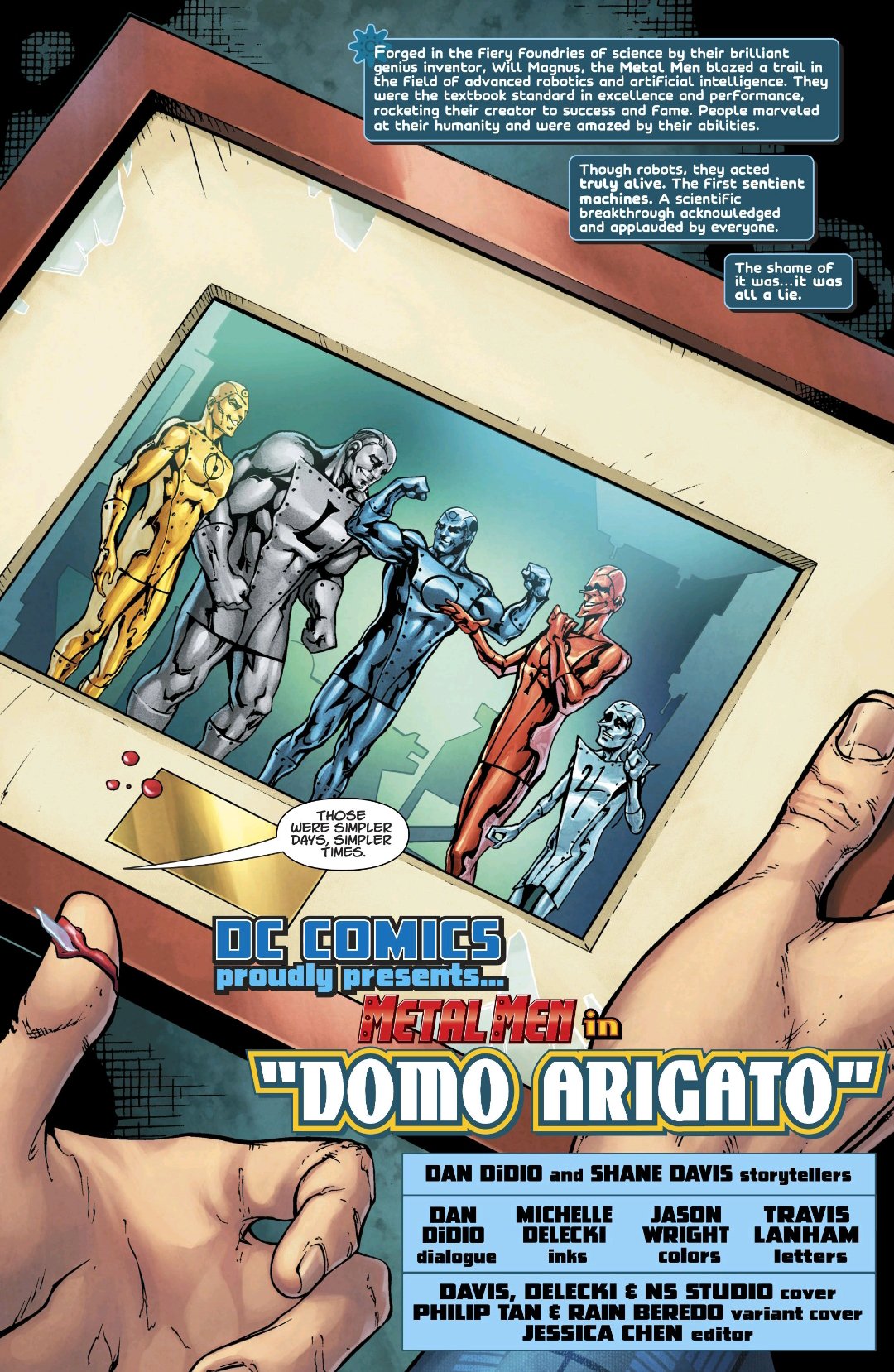
Best of this Week: Metal Men #1 – Dan DiDio, Shane Davis, Michelle Delecki, Jason Wright and Travis Lanham

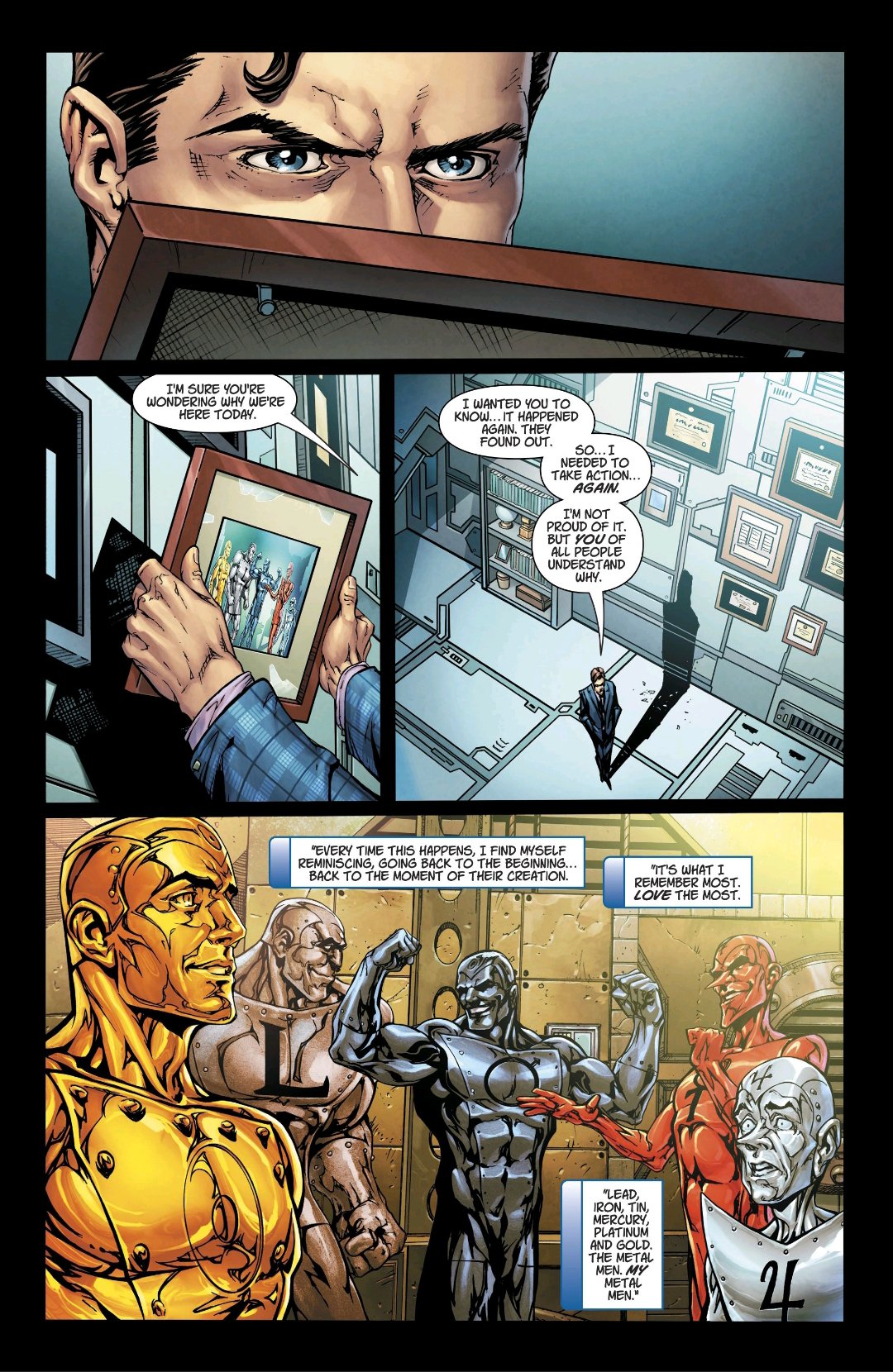
Will Magnus is a monster.

Now, that might come off as a little harsh for one of the most brilliant minds in the history of DC Comics, but this new series, or at least this first issue, builds off of past characterizations and reestablishes the Metal Men back into the DC Universe in a far more sinister light. Magnus used to be a bright spot, a brilliant mind that challenged the idea that machines couldn’t gain sentience. However, here, he falls more in line with his contemporaries in T.O. Morrow and Professor Ivo.

Will Magnus has always had something in the way of a susceptibility to mind control or falling prey to his own mental neuroses. At least with the Metal Men by his side, he’s either been able to mask this or overcome it by doing some good with his creations. When the Metal Men were supposedly the spirits of his dead colleagues, Magnus did what he could to fix them and make them heroes only for it to later be revealed that it was never the case and that his own mental illness convinced him to use that story to make the Metal Men seem unique.

When the New 52 reboot happened, Magnus was first seen as a depressed scientist who had seen his Metal Men project used in black ops missions and later as assassins before they destroyed themselves, later appearing in Cyborg’s DCYou series in a much happier state. Magnus is a brilliant mind, but time after time something will drop him from his course and cause him to retreat into himself over and over.

This series takes all of these past origins and brings back the Pre-New 52 Magnus, but paints him as a callous scientist that seems to have internalized all of his failures and lies and only talks about them to a Nameless bot that he’s created. The Nameless bot never talks, but looks at him disapprovingly. As it never moves, it’s hard to get a read as to whether or not Nameless is like the Metal Men or simply just something for Magnus to talk to without feeling judged.

The book mostly unfolds through this conversation with Nameless, with small cuts to Challengers Mountain for the exciting subplot. Magnus talks about how he was given various awards and accolades for The Metal Men, their sentience and just how lifelike they were. Though as we come to find out, as Magnus chucks one of his trophies into the glass case holding one of his Responsometers, it was all a lie and he wishes he never built the device. He admits that he just wanted to same notice that Ivo and Morrow received for what he calls “toy robots.”

Shane Davis draws this scene with a cold fury to it. The sterile nature of his trophy room is offset by the palpable rage of his words and his face in the last panel. Davis Used a lot of pulled in shots to focus on the trophy, the Responsometer and even Magnus’ finger pointing at his many certificates and plaques. It comes as an extreme shock the moment the trophy is crashing through the case that the Responsometer is in. It was so sudden and so violent that we can feel how angry he is, especially with how much the glass flies.

Professor Ivo, best known for creating Amazo, has often been seen as one of the Justice Leagues most brilliant and terrifying foes because of Amazo’s ability to copy those of any hero he encounters. T.O. Morrow is another brilliant scientist that created the Red Tornado, one of the Justice League’s most trusted allies. Both of these robots are treated with so much more regard and respect than the Metal Men ever have and Will Magnus knows this most of all, but can’t get over that they are noticed, but he is not. So he toils away with his Metal Men, constantly trying to find the edge and bring them real sentience, but he just can’t.

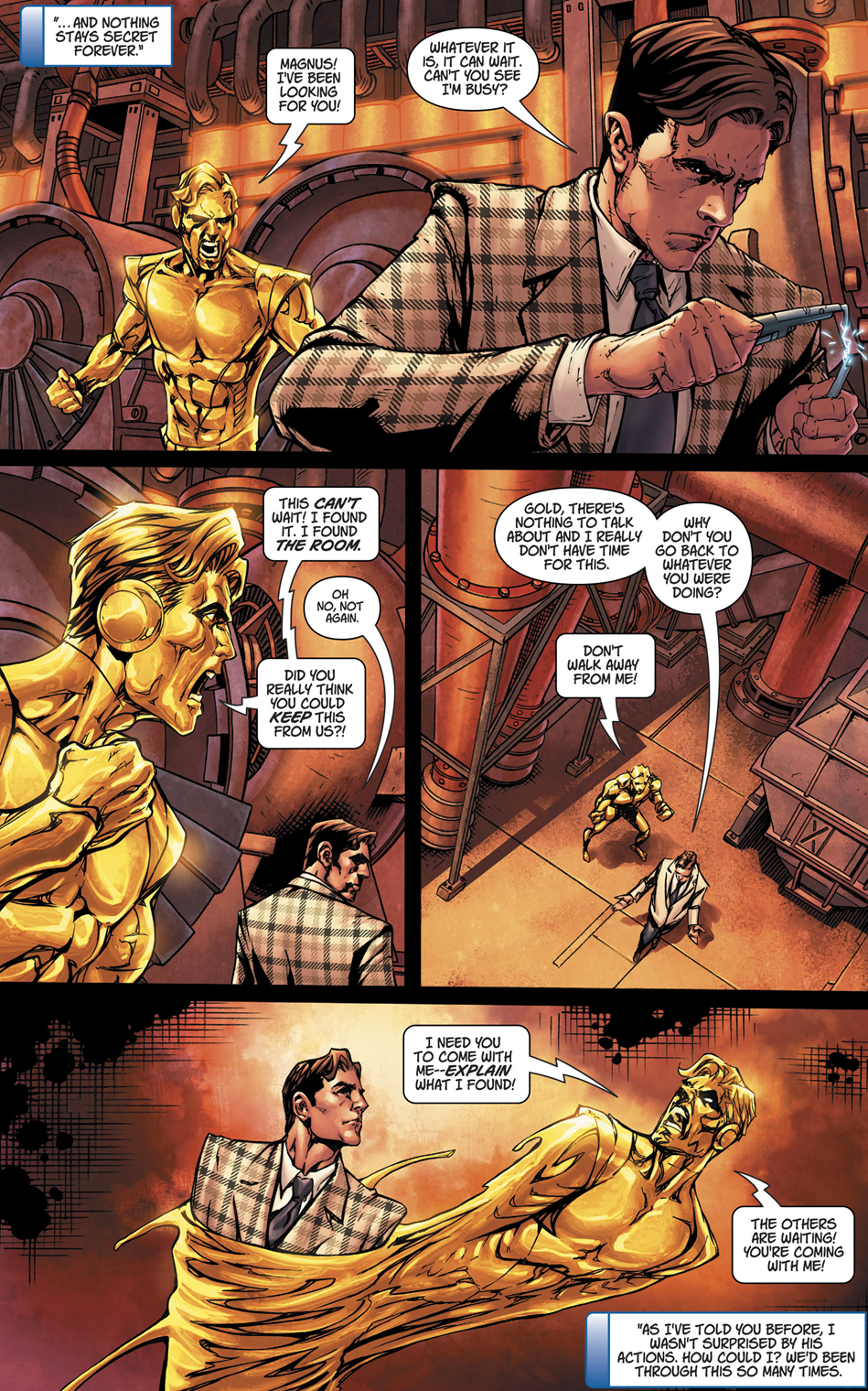
We flash back to the inciting incident of this talk when Gold finds a room containing the broken, dismantled and cast aside parts of Metal Men from the various eras of their existence. Where Gold, Tin and Mercury are enraged that Magnus thinks of these other versions as junk waiting to be recycled, Lead, Iron and Platinum are hurt and disappointed at finding all of this. They all confront him, asking why was all of this hidden away and Magnus answers by saying that he wishes he could have been honest with himself, but then he’d have to admit to being a fraud and he just can’t do that.

Gold looks a lot like Magnus, so when he screams at his creator it’s almost as if a mirror is being held up to him. Shane Davis uses this symbolism well in conjunction with the room of parts and old models showing Magnus’s failures. Platinum has always had something of an affection for Magnus so her disappointment hurts even more. Tin is always such a timid thing, so seeing him angry is a change for him and shows just how deep the betrayal goes. 

He tells them that the Responsometers just allow them to act and react and that it doesn’t give them personalities or sentience of their own. They’re all either shocked or angry, accusing him of being a liar, but he explains that their personalities are based on his own traits. His dimwittedness, his anger – hell, even their metal bodies aren’t even real with the Responsometers converting a base metal to the supposed atomic structure. Magnus couldn’t afford to make them out of real gold or platinum. Before their rage can get even worse, Magnus snaps his fingers and they immediately turn off.

What’s most disgusting about this isn’t the fact that he’s built failsafes into his “crowning achievements,” but that he mentions that they discovered the room “again.” This has happened more than once and he doesn’t know how many times they’ve done this. It shows a level of darkness and sociopathy that really chills the blood. He knows what his problems are, but instead of facing the embarrassment of admitting it to himself and his larger scientific community, he chooses to hide it and reprogram the Metal Men when they become aware, but not self-aware. 

When he’s made aware of living Nth Metal in Challenger’s Mountain asking for him by name, he gives a smile and says he has a team to rebuild…

I’m ultra excited for the future of this series because I’ve liked the Metal Men and their scant appearances in the DC Universe in recent years. Giving them this new and darker edge underneath the feeling of nostalgia. Given the cover of this issue, it’s likely that they’ll be going back to their 1960s-1970s looks, eschewing their more recent designs. Hopefully this has some interactions with the current Year of the Villain stuff as Will Magnus has the mind and motivation to receive something from Lex Luthor.

Best of Marvel: Week of October 16th, 2019

Best of this Week: Absolute Carnage #4 – Donny Cates, Ryan Stegman, JP Mayer, Frank Martin, Jay Leisten and Clayton Cowles

God is Coming and Eddie Brock is ready for him.

Things have not been looking good for Eddie, Peter and the rest of the heroes of New York. Carnage’s brutality and efficiency has seen him gain the upper hand at every turn imaginable, allowing him to snatch up codices from almost everyone he’s encountered. Ghost Riders haven’t been safe, Spider-People haven’t been safe and even girls with magical powers over hell haven’t been able to stop Carnage’s warpath. 

The last issue saw him take the appearance of Eddie Brock to infiltrate The Maker’s lab to steal the codices from Captain America, The Thing and Wolverine, taking everyone by surprise and seeing the Hulk use the Venom Symbiote himself. This issue follows up on that excellently by showing us the fallout of Hulk merging with Venom, Eddie dealing with the loss of his other again and the heroic efforts he makes to protect his son. 

The book begins with an amazingly drawn and explosive punch by Venom Hulk. Carnage is laughing as he’s being put through a wall while clawing at Hulk’s eyes. The Symbiote is barely able to contain all of Hulk’s massive musculature as it appears to be tearing apart around his fist and forearm. The use of blur around the edges of the page sell you on the velocity of the punch and all of the rubble flying out as they go through the wall shows just how heavy and impactful the blow was. For added measure, there’s even a pigeon just flying by as it all happens.

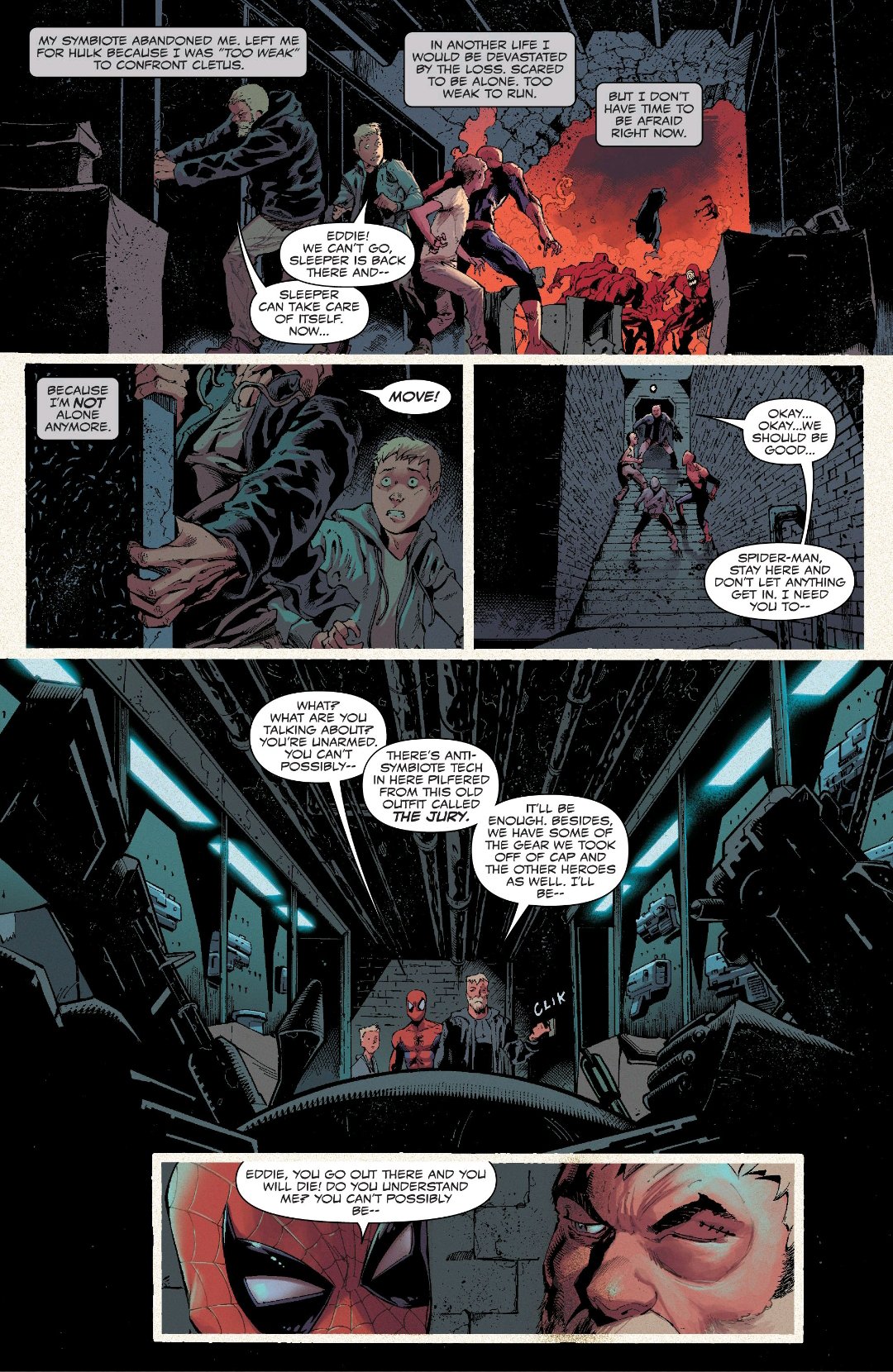
As the fight is going on, Eddie and Peter take Normie and Ethan to The Maker’s armory to protect the kids from the Symbiote Zombies and Norman Osborn himself. Eddie is dead set on protecting the other heroes, but Peter tries to convince him to stay down with the rest of them. This issue gives us one of the best glimpses of the inner heroism of Eddie Brock as he looks at Spider-Man with the most desperate look possible, one eye stitched closed and asks him to let him do this. Spider-Man does and Eddie gathers Cap’s shield and maybe some kind of electric glove to go and protect everyone. Presumably, the events of Amazing Spider-Man #31 take place while Eddie is out fighting.

The next few pages are just strings of awesomely paced and spectacularly drawn fight scenes. Eddie, armed with the shield, fights his way through Carnage’s hordes and Miles Morales as an infected symbiote re-emerges. (Sorta ignoring the events of Miles’ own tie-in) Elsewhere, Venom Hulk and Carnage continue their romp around the warehouse district as Carnage is surprisingly holding his own against the black and green giant. Frank Martin and the various inkers really set the mood for the fight. The fires glow bright in the backgrounds with a vibrant red and white coloring to it, almost like a fiery mist. Rain crashes down around them and the inks are dark in the perfect places, really bringing out the deep red in Carnage’s color scheme as well as the black veins that now coil around his body. As Carnage mushes Hulk into a wall, you can feel his expression of pain and rage, accentuated by the glowing green of his eyes.

Pinned under Cap’s shield with Miles bearing down on him, Eddie decides to use the shock glove to blast the symbiote off of the young Spider, allowing the two to finally re-team as Miles runs down what he learned while hearing Carnage’s thoughts. He warns that if he gets Hulk’s Codex and the Venom Symbiote, he’ll be unstoppable. In a surprise upset, Carnage overpowers the mind of the Hulk, turning him back into Banner and rips his spine right out as Eddie and Miles show up. It’s a disgusting scene as they always are with Cowles making sure to put as much emphasis as he can by giving it a nice “SHRIPP” sound effect in big, bold, red letters over an entirely black background.

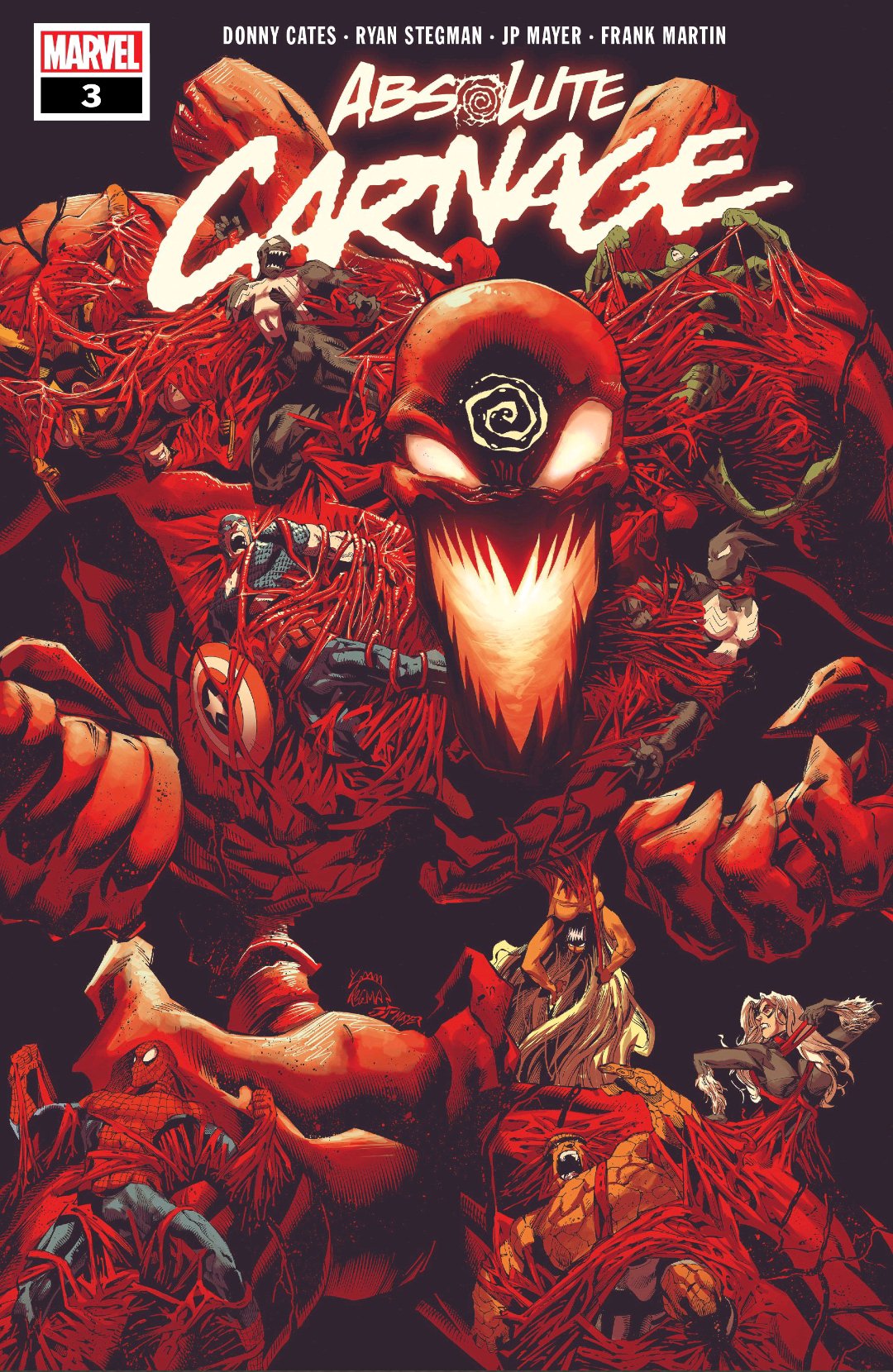
Before we know it, Carnage is covered in the Venom Symbiote, becoming an ultra badass. Ryan Stegman has done a lot to redesign some of the elements of some symbiotes, but this Black Carnage is somehow so much cooler and so much better. He looks like a demon knight with the pauldrons with spikes, an improbable neck guard/collar and Maleficent-esque horns all crackling with hell energy. Eddie begins to lose all hope upon seeing him, but that feeling is washed away when Captain America, The Thing and Wolverine all show up to help in the fight.

Miles grabs Eddie and tells him that the Maker’s machine that was supposed to destroy the codices did no such thing and instead saved them all. The last moments of the book show the Doverton Avengers fight a losing effort against Carnage while Eddie punches the machine, giving his own inner monologue about how he feels something creeping up inside of him. The hope that he thought was lost. Surrounded by all of this blackness and despair, Carnage and all of his bringers of Death, Eddie punches his way to the light.

As the penultimate issue to Absolute Carnage,  have to say that this event and the various tie-ins that have accompanied it have been absolutely amazing to read. I usually decry back to back event stories, especially since we had just come off the heels of War of the Realms, but Absolute Carnage fit the aesthetic of everything I love in stories. It’s dark, it’s bleak and it’s Absolutely Brutal.

Ryan Stegman can do no wrong here as his art style is amazing from start to finish, he has an eye for action scenes and makes great use of single a double page spreads to bring out the most in every scene. Even when the fighting is confined to a few panels, he manages to spring as many infected as he can into the space, making things feel claustrophobic and dangerous. Frank Martin’s colors give this book life, however, when they’re burning with darkness or glimmer with small glimpses of hope. They complete the amazing package by pulling the emotion out of you, whether you’re terrified or you have a bit of hope only or it to be ripped away.

JP Mayer and Jay Leisten help him by making sure that the pages have the perfect amount of darkness to them. The inks are phenomenal and really help to give off that feeling of hopelessness and danger in every scene, even better that most of this story takes place at night so the mood is always set.

I love that Eddie Brock is starting to be seen less as the villain who used to eat people’s brains and more as this responsible every-man that’s been caught in an extraordinary situation. When he got the Symbiote back at the end of Lee Price’s time in All-New, All Different Marvel, I never expected him to get this much heart. That’s the main thing that Donny Cates has contributed to this character, that feeling of heroism.

Eddie’s becoming a much better person than he ever was in the past, but at the same time, we know that he can never fully escape who he was. Even at the end of this issue there was a transcription of his first time in jail when he first met Cletus Kasady and it was so weird to see how unhinged Eddie was not too long ago.

As Absolute Carnage draws to a close (and with Venom Island on the horizon) I can’t wait to see what direction his story takes and how Eddie Brock could possibly see Avenger status in the far future. High recommend.

Best of DC: Week of October 9th, 2019

Best of this Week: The Joker: Year of the Villain One Shot – John Carpenter (yes, that John Carpenter), Anthony Burch, Philip Tan, Marc Deering, Danny Miki, Jonathan Glapion, Jay David Ramos and Gabriela Downie

John Carpenter understands horror. 

Helming the incredible Halloween franchise, the remakes of The Thing and a slew of iconic (and absolutely godawful) movies, Carpenter helped lend his skill to yet another psychopath in the form of the Joker in his comic debut and it is unsettling. While the rest of the Year of the Villain One-Shots have followed a particular villain and what Lex Luthor had to offer them, this book takes an entirely different route and chooses to focus on one of the Joker’s henchman while he and his boss tear through Gotham after another recent breakout from Arkham Asylum. 

Referring to himself only as Six of Hearts, this mostly somber tale sees the man examine his own mental illness through the lens of freedom while saddling alongside the Joker as they attempt to “stomp out crime” in Gotham City. Initially, he sees his illness as something that he needs to hide or repress since he is unable to get a grasp on whether whether his world is real or if everything is in his head.

He admires the Joker for his supposed freedom, the wackiness he displays by being open and free with his crazy and how unapologetic he is. Philip Tan shows this by drawing Six or “Of” as Joker refers to him, with this glazed over look of wonder as Joker blows up the other 51 henchman because they didn’t break him out. Watching Six’s face appear as if it’s being pulled into the explosion gives the idea that all of the anarchy is drawing him in. He doesn’t fear Joker, he’s willing to follow him through anything.

Joker doesn’t take notice of the kid until he randomly speaks up as the Clown Prince is dumping Scarecrow’s fear gas into the Gotham River. He asks Six of Hearts to drive him somewhere and puts a gun to the henchman’s head once boredom creeps in, ordering him to say something fun. We’re then treated to Six of Heart’s backstory of abuse for his mental illness. Gabriela Downie does an excellent job of using letters in the place of traditional borders for this scene, each border reading “Ha,” for Joker’s maddening laugh.

The scene is horrible and we see Sox’s father beating him, asking if it would kill him to be normal for two seconds before cutting to Six of Hearts holding a bloody skillet over the battered head of his father as his mother cries after trying to calm him from the beating. It’s a devastating scene that shows how the misunderstanding of mental illness can lead to needless violence.

Joker appears sated and removes the gun from Six of Hearts face and smiles, calling his tale fun. The two then stop at a gas station and encounter Condiment King. The…F-List villain attempts to rob Six, using a flurry of sauce based pins before Joker emerges from one of the aisles to put the fear of God into the villain. Putting his arm around Condiment King’s shoulder, grabbing the mustard gun and putting it directly against his head as he blubbers and cries, he fires and nearly drowns Condiment King in mustard.

Joker’s face is absolutely terrifying, shrouded in shadow with only his real eyes and red mouth, he appears far more demonic and scary than normal. His teeth are a gross yellow, making him appear gross as well. Tan does a great job of selling the fear and danger of the Joker with Condiment King’s face being absolutely great with tears and snot coming from every orifice.

With justice dispensed, Joker finds his “true” calling and makes Six don a Robin costume with himself in a Batman costume as the two then go out and fight crime. In the same way that Batman Odyssey was insane, this part of the book pulls no punches either, with mad grins from the Joker, ill fitting costumes on both men and absurd over the top violence. A man and his dog are just walking on the street when Robin Six accuses him of some sort of crime before letting him go after seeing his innocence. Just as he’s about to walk away, Joker shoots him, saying he’s got a gun, then shoots the dog saying the same thing before planting the gun on the dog. 

I audibly laughed at how ridiculous it was. It was so sudden and so random that I couldn’t contain it and the rest of the book continued that way. This is when the cracks began to show and Six slowly realized that Joker might not be all that he seemed. After an incident with Enchantress and Joker almost shooting a server in the face while commenting about Sox’s mother from earlier, Six gets terrified and tries to run from Joker. He returns home only to find Joker in his Bat costume holding a knife to his mother’s throat.

This scene felt terrifying. Coated in a slight red tint, we see the true madness from the Joker as he’s been listening to every word Six had said, knowing that he knew what he was doing all along. Six of Hearts realizes that Joker’s been done the entire time and that he’s not like his former idol at all and he attacks him in a rage. He somehow gets the upper hand before Joker puts the Batmask on Six and croaks “harder” as Six of Hearts chokes him to death. This catches the boy off guard and Joker sees the opportunity to beat him half to death with a crowbar before sauntering off.

The faces and the colors make for an absolutely great experience as we’re able to watch Six of Hearts explode with rage, Deering, Miki and Glapion’s various inks showcasing the darkness of the scene. Joker’s evil is palpable with all of this darkness. Jay David Ramos’ dark, but intense colors set an amazing tone for the somehow warm feeling that we’re supposed to get from this scene. Six of Heart earns something of a clarity, realizing that while the Joker doesn’t care about him, his mother still does and he loves her. As long as he was able to protect her and do something good with his life, then everything was worth it.

She embraces him and their broken relationship begins to mend itself unexpectedly. For an unbelievably dark and morbid story, this was amazingly sweet at the end.

I don’t know how much Anthony Burch had to carry the script for this issue, but I can definitely see Carpenter’s influence heavy in the book. Joker is amazingly terrifying and well directed and Six of Hearts is an excellent stand in for the general reader. This story was fantastic and in an event where Doom is the ultimate goal, it’s nice to get a little bit of hope.

Philip Tan’s art and the rest of the creative team from the various inkers to Jay David Ramos on colors were fantastic. Joker looks like an absolute maniac and the colors are so full and beautiful.  The inks are appreciably dark to match an equally dark character and the story therein.

I really, really want John Carpenter to do another book in much the same vein. Maybe Joe Hill and the rest of the Hill House imprint can have a place for him?

Best of Marvel: Week of October 9th, 2019

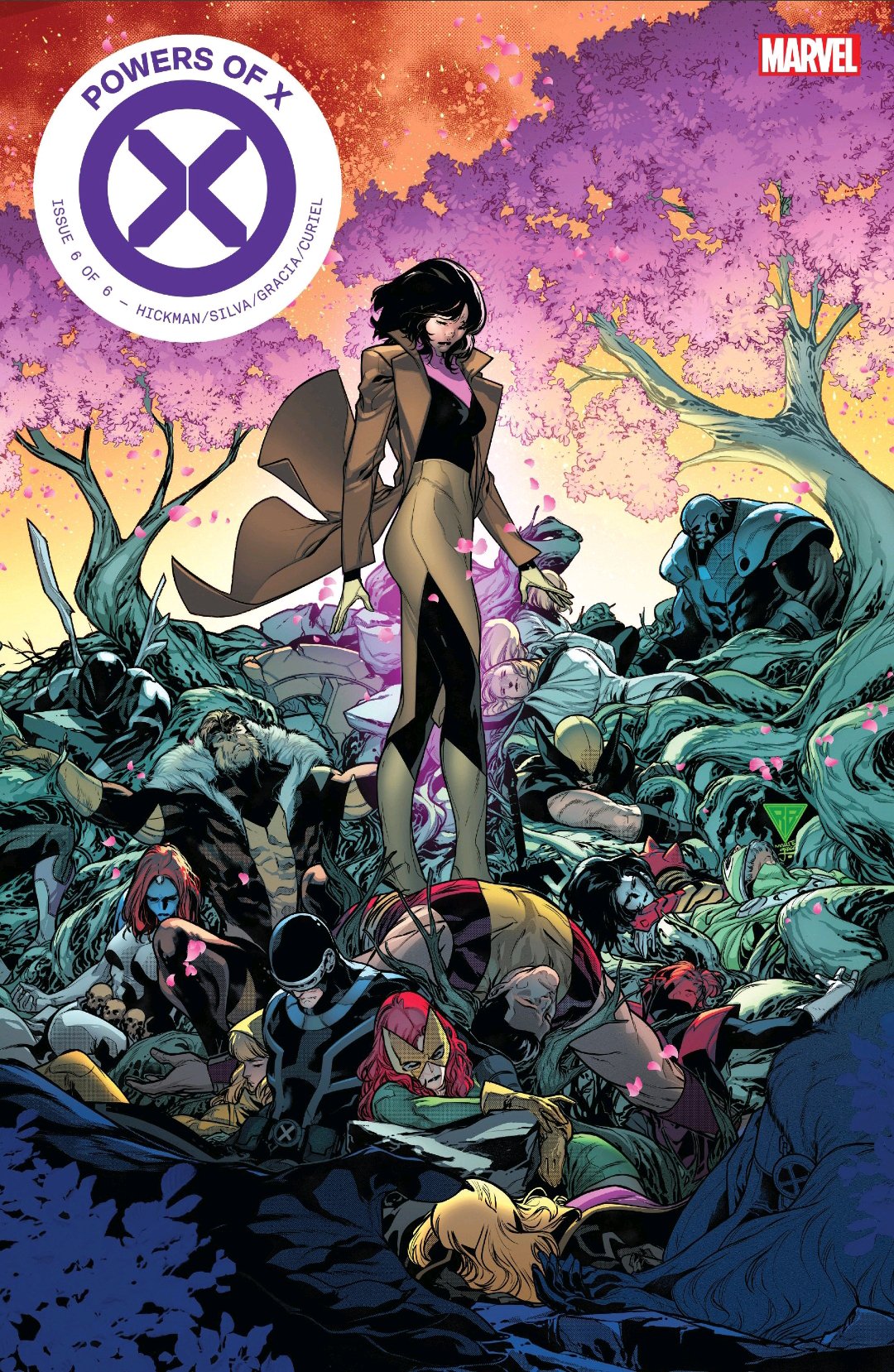
Best of this Week: Powers of X #6 – Jonathan Hickman, Pepe Larraz, R.B. Silva, Marte Gracia, David Curiel and Clayton Cowles

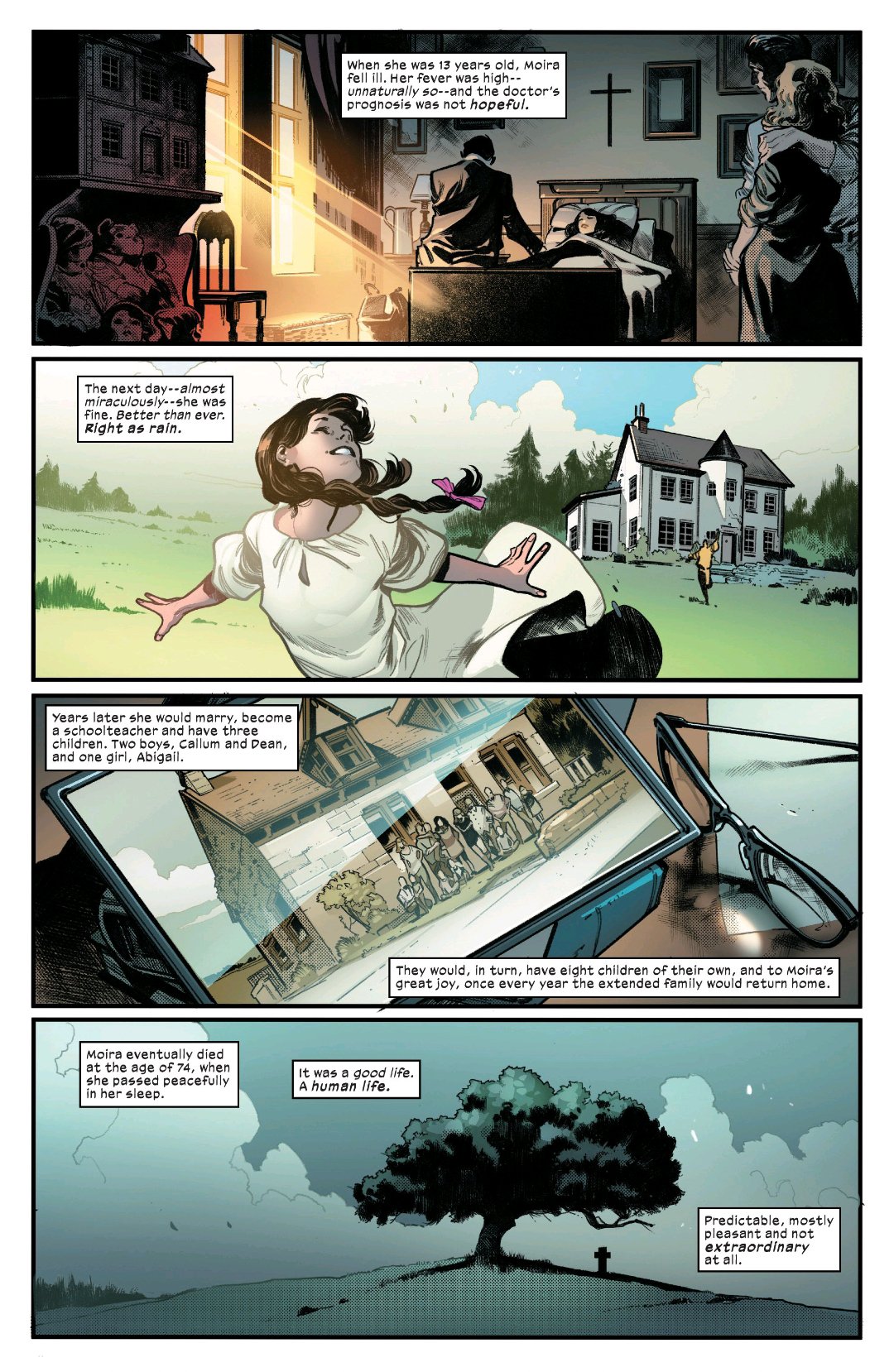
Moira MacTaggert just became far more powerful and dangerous than we could have imagined.

When I wrote the review for House of X #2 all those weeks back, I was under the impression that Moira MacTaggert had an overall purpose for her deaths and reincarnations in regards to making a mutant utopia that works and now I’m not so sure. I’m not saying that that isn’t the main goal, but there’s now a far more nefarious edge that’s been given to her intentions that aligns with my uneasy feeling about Charles throughout this story. I thought this was a story about mutants finally being able to flourish and slowly outnumber humanity.

But it’s about the first steps to utter annihilation.

The book begins with Moira’s 7th or 10th life (around Powers of X #1), I’m very unsure, and gives us the answer to what she showed Charles that set him on the path that we see him on now. Powers of X has been mainly focusing on a dystopian future where mutantkind has been nearly exterminated and both humanity and various forms of sentinels are flourishing. One of the main characters we’ve observed in this future is The Librarian, an evolved human acting as the receptacle of all knowledge of humanity. 

The vision begins with him entering a secret entrance to a place called The Preserve, very reminiscent of Krakoa, at least in terms of how to enter it and the residents therein. He’s immediately attacked by a beast-like man who is then revealed to be Logan, still alive after a thousand or so years and he stops him. The Librarian makes it a point to tell Logan that he’ll never be fast enough to kill him as he can’t feel everything about to happen and stop it before Logan has a chance to react. They have a short conversation about how English is now a dead language, but the Librarian has learned it to have a conversation, not with Logan, but with Moira X. 

She emerges from the shadows and the Librarian laments that the time of the last Mutants is about to come to an end because of the Phalanx. He also muses that he will separate Moira from the rest to prevent her from dying as that will immediately reset the timeline, stopping the Phalanx and The Librarian from ever coming into existence and he doesn’t want anything to have that power over him if he’s to exit outside of reality.

That’s the first definitive answer to how powerful Moira is that we’ve gotten thus far. We know that no matter what, she will die and come back to life and something like this has been speculated, but actually just resetting the timeline, erasing EVERYTHING that came before and starting again with the wealth of a thousand plus years of knowledge is insane to me. 

The Librarian, however, also knows that he likes to observe and see the wonders of the world and asks Moira how she would prevent this future from happening if she could, taunting the pair with their “evolutionary inevitability.” He notes that Mutants have never been able to see their true enemy, always blaming the creation of machines as their ultimate downfall. The book turn everything on its head when it’s revealed that it has never been the machines, but humanity itself.

Mutants adapt traits to their environments, but that doesn’t hold a candle to genetic engineering. Think about heroes like Captain America, The Hulk, Luke Cage, all of them were just regular joe schmoes that gained insane abilities from accidents or experimentation and can rival any one mutant. If you add machines and nanotechnology to that mix, then things become even more insane as they’re constantly able to be upgraded, reprogrammed and will destroy any threat that humanity sees until eventually consuming their masters. 

Maybe there’s a reason Charles was so willing to give away the Krakoa drugs. Speculation gives way to the idea that Moira, in her infinite knowledge, found a way to imbue those drugs with DNA chemicals in them. (That is in no way supported by this story) But I would love the idea that Logan proposed, to stop post-humanism, you have to do it at the humanity part. It aligns with Charles’ overall goal of using The Five and Cerebro to bring back the 16 million mutants killed on Genosha and overpower the number of Humans in the world with far greater numbers.

The Librarian turns his back to Logan and Moira and says that maybe since they have no alternative, then maybe it is also his destiny to become as a God…and then Wolverine kills him, quicker than he could have prevented. Armed with this new knowledge, Moira tells Logan to kill her and this scene is beautiful. I believe R.B. Silva draws this part of the book but the gravitas of the scene – Moira gently feeling Logan’s hand to reveal his adamantium claws, their silhouettes juxtaposed against the colors of morning light and the slight smile she gives are perfect. Marte Gracia and/or David Curiel’s colors as he impales her with his claws are immaculate as the lighting implies that life is leaving her body and sort of fits my motif of the bright morning shining on mutant kind.

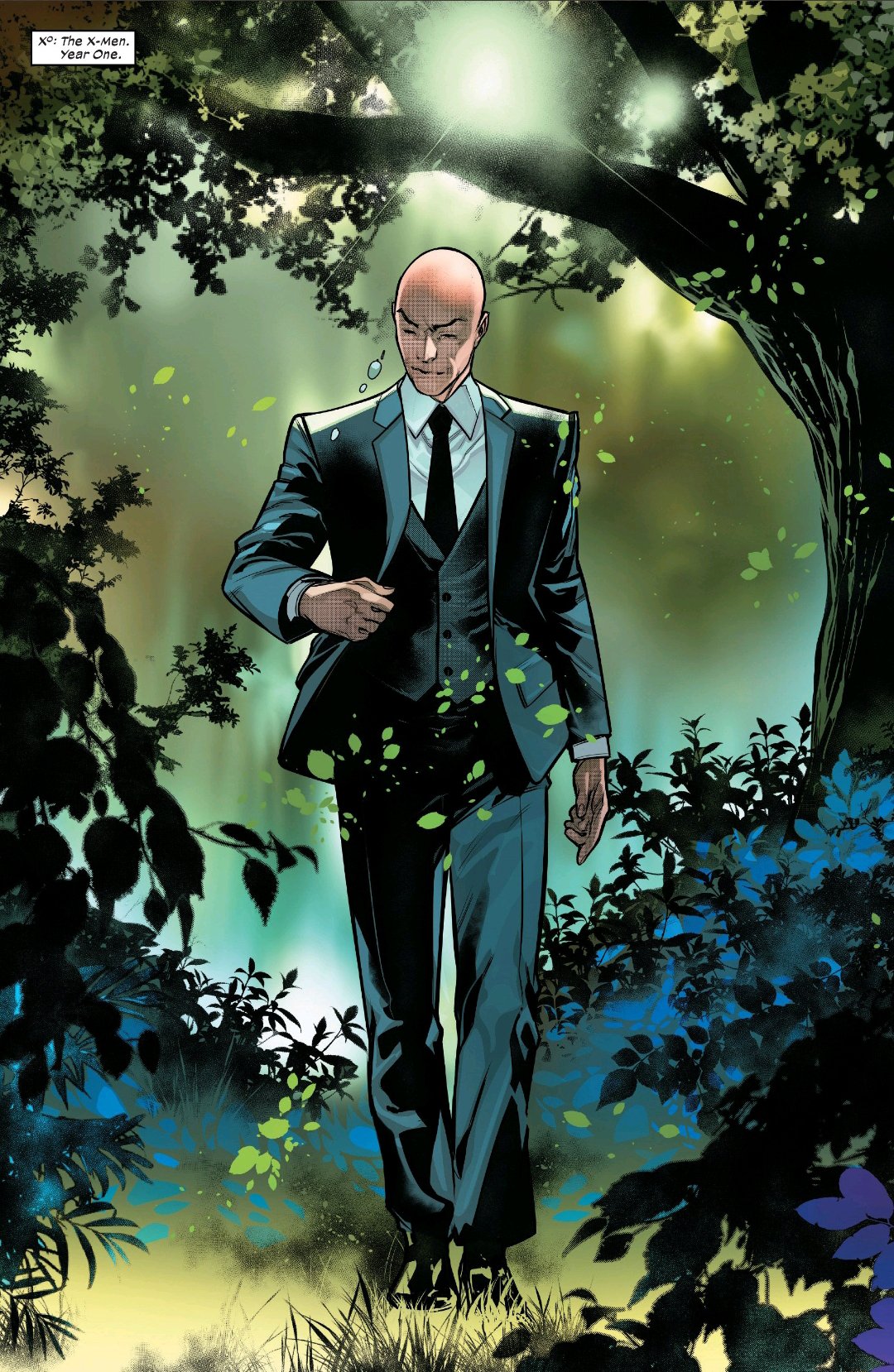
With all of this, we find out that Moira’s been the one that’s had to break Charles Xavier of the notion of peaceful coexistence with humanity. It’s also revealed that because she’s gotten too close to everything, that she’s had to fake her death to operate in the shadows and let Xavier and Magneto act as figureheads to the movement when in reality, almost everything is according to her plan.

But of course, not everything is as good as we’d hope as Moira’s been hiding the biggest secret from everyone else on Krakoa aside from Charles and Erik – Mutants will always lose.

Everytime, in every scenario, humans and mutants clash and inevitably, mutants are defeated. Moira has set a rule that mutants with precognitive abilities are not allowed to come back to life because if they’re allowed to see the future and they destroy the very foundation that Krakoa is built on, then everything will have been for naught. This could also allude to the visions that Blindfold had before she killed herself in Matthew Rosenberg’s Uncanny X-Men.Charles and Erik promised Mystique that they’d bring Destiny back to life and Moira lambasts them for even promising that, but they explain that they’ve been putting her off as long as they can, but eventually they will tell the truth.

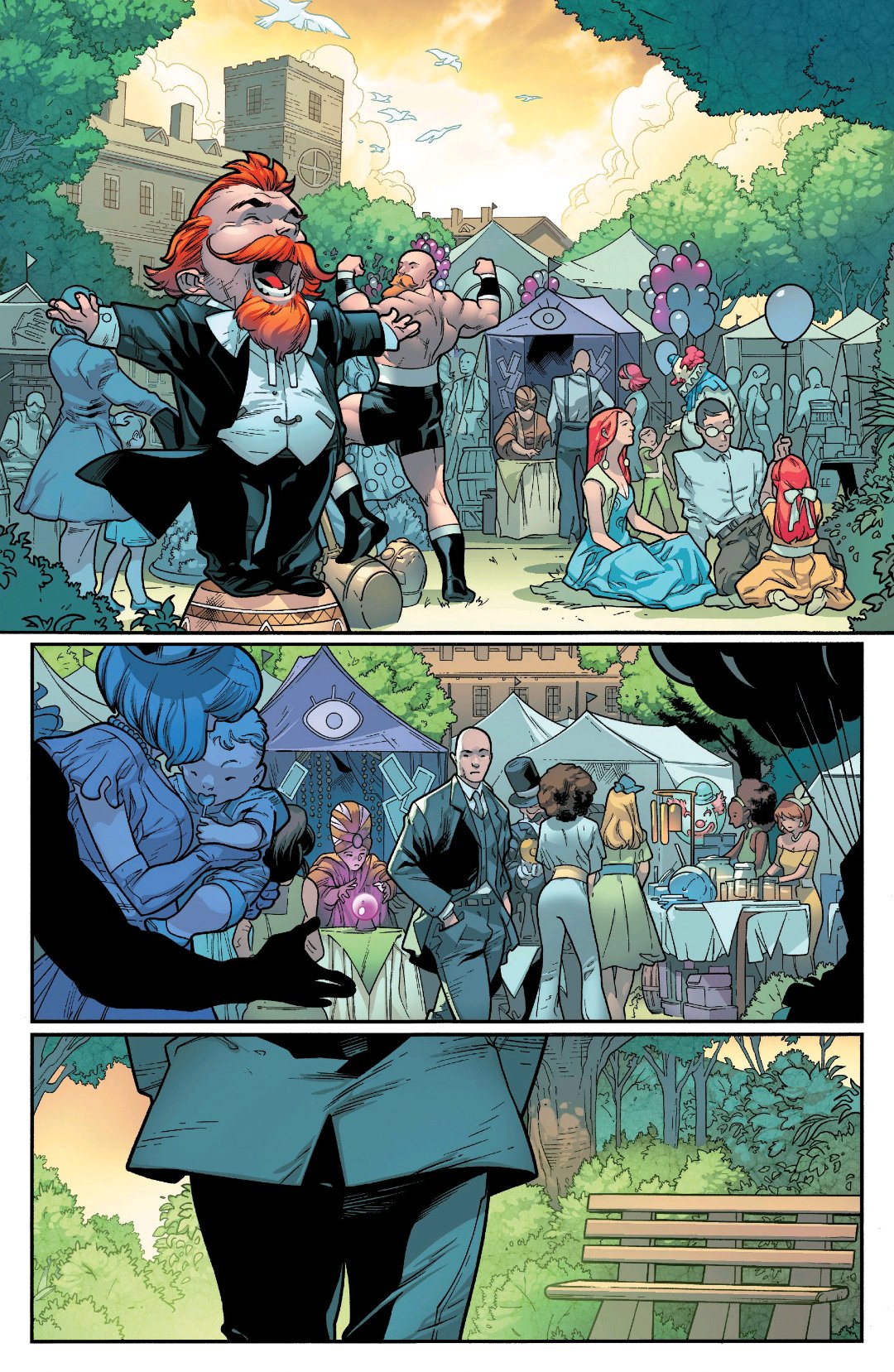
We see the celebration from House of X #6, but it’s been recontextualized. Under all of the celebration, the hope, is the feeling of dread. The feeling of utter hopelessness, knowing that it will all reach its end within a thousand years, all because of the idealism of men.

House of X and Powers of X have been amazing reads thus far. I love how circular this story is, how referential it is to past history of the X-Men and paints a new ideal of the futility of mutant life as long as humanity is still around to destroy them. It separates the X-Men from the numerous other superheroes by pointing directly at the lengths humanity will go to make sure that they remain the dominant species on Earth.

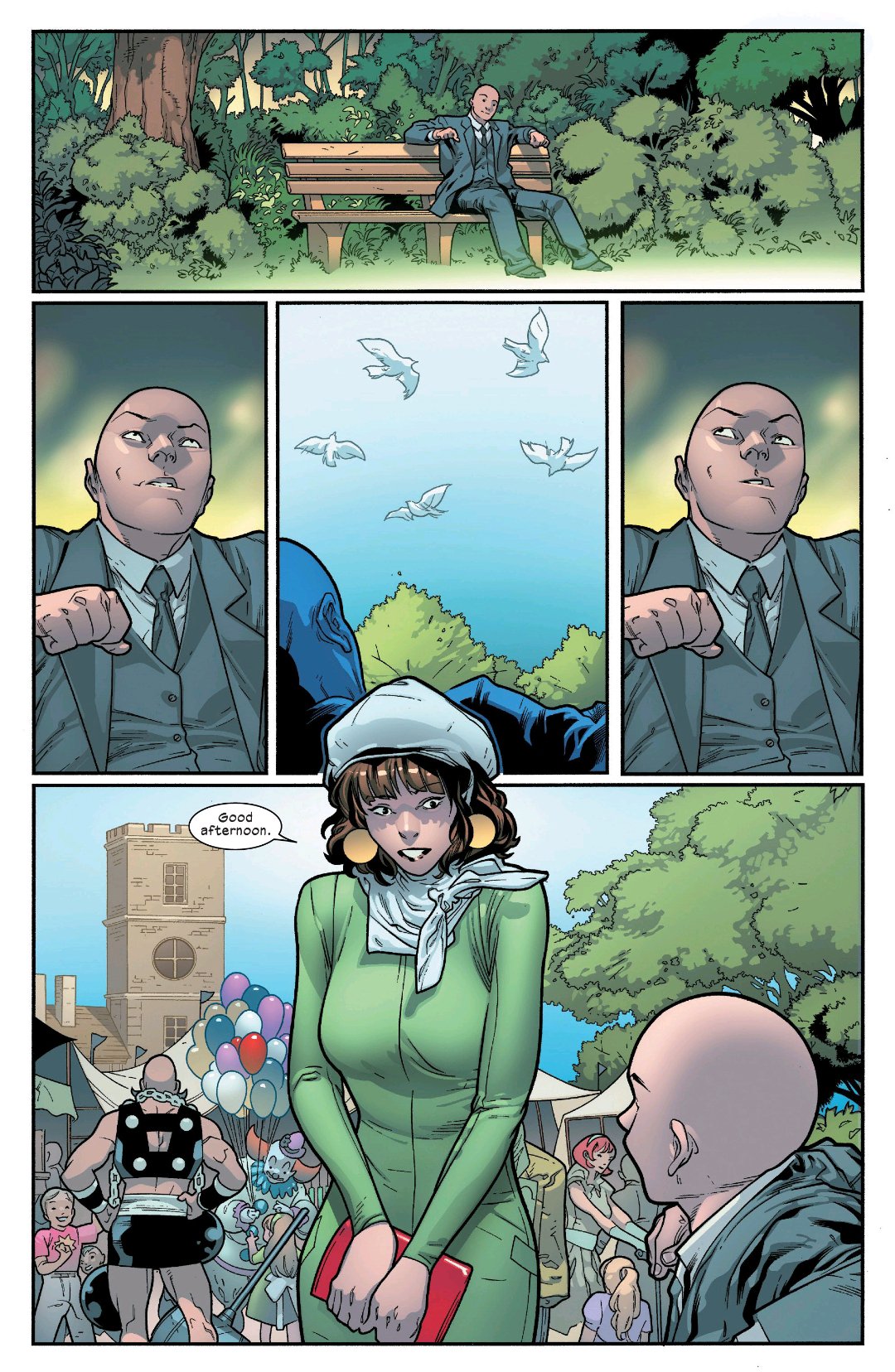
RB Silva and David Curiel have done a phenomenal job of giving this book life. From the cheery beginning of a lush and hopeful green to the ending of the dark night sky, lit by the explosions of fireworks, the flickers of hope with the true darkness behind it. Silva makes sure to draw Charles with an unearned smirk, the look of a man that’s very sure that his part of the plan will be perfect, at least after his initial spirit has been crushed. Moira has the look of determination, the kind of look only gained from centuries of experience and she maintains it even in the face of death.

Hickman has evolved these characters from just a Scottish doctor that used to care for the mutants on her island and hapless man that only wants to be peaceful – to the cold revolutionaries that want mutants to have one day in the sun before it’s ultimately ripped away again.

What does this ultimately mean for the X-Men? For Mutants in general? Hopefully we’ll see in the coming months as seven or eight new series will shine a light on what the rest of them are doing while Charles, Erik and Moira sip tea and wait for the apocalypse.