Best of Marvel: Week of January 1st, 2019

Best of this Week: Thor #1 – Donny Cates, Nic Klein, Matt Wilson and Joe Sabino

What a Thunderous way to begin the New Year! What better way to celebrate than with a glorious new #1 for the new King of Asgard helmed by the ever amazing Donny Cates, Nic Klein and Matt Wilson with awesome letters by Joe Sabino! This book hit so many good notes and lets me breathe knowing that one of Marvel’s most storied characters is continuing to be in good hands, especially after such an epic run by the awesome Jason Aaron.

The book begins with an amazing splash page of Mjolnir flying through space and then crossing into each of the Ten Realms as someone narrates Thor’s rise as the new King. It’s a beautiful sequence that alludes to the millennia of war between the realms, culminating in Malekith’s Invasion of them all very recently. Klein and Wilson treat the reader to a variety of landscapes from the bright pinks of Alfheim to the cold blues of Jotunheim. The pair do an amazing job characterizing these locales through visuals alone.

Of course, the reasoning behind the monologue and the throw itself is a show of force. Under Odin, the Realms fought each other as they pleased. Asgard was left in ruins because the All-Father was too stubborn to try and rally his people during Malekith’s Invasions. Under Thor, that would not be the case. As Mjolnir cracks through each Realm, without any of them hearing his words, they know to listen and fear him because of his power. This epic opening climaxes with Mjolnir crashing through the head of some monster the Avengers were fighting before Thor calls it back with a smirk from Asgard.

It is at this point that we finally see Thor, months after the War of the Realms. He is gruff, his hair and beard have grown out again and we learn through Tony Stark sharpie-ing a message on Mjolnir that Thor has retired. Sif the All-Seeing reiterates this as she informs the reader that Thor’s smiting days are over and that he must go and be King. 

This is…saddening in all honesty. Thor has spent many a lifetime fighting, drinking and avoiding his destiny for so long. He has always wanted to be king, but even as he walks down the Rainbow Bridge back to New Asgard, he looks as if there’s nothing but melancholy about him. The way that Klein frames this panel makes it seem as if there’s a wide divide between Thor and Asgard. The Realm flourishes now that life has been brought to it under Yggdrasil, but Thor is bored.

As he takes a seat on his new throne, we’re shown just how different he is to Odin. Instead of a shimmering palace, Odin’s hall is made of wood and stone because of the World tree with a rune etched just above his seat: Thurisaz, a symbol of defense and destruction (as the book describes) and perfectly fitting of the warrior king. He ushers his court out of his presence and sighs as he prepares to speak to his people and Loki appears from the shadows.

The brothers relationship here is far more confrontational than I would have expected. Granted, I didn’t read the Loki mini-series, so I don’t know if the Trickster did something to draw his brother’s ire. Thor is very terse with the King of Jotunheim and even throws Mjolnir in slight fury after Loki notes that Thor had to grunt when he lifted the hammer, something he’s never done before and a black portent for Thor’s future. Loki didn’t come out with any of his normal witticisms which was unexpected, but Cates does hint that there a potentially big things in store for the brothers through some narration.

Thor had been meant to speak to his people following the restoration of Asgard, but just as he’s about to regale his people of the new era of peace, his nervous butterflies turn to abject horror as a one armed Galactus crashes into Asgard, right on top of the Asgardians. Nic Klein and Matt Wilson spare no expense in making this one of the most epic double page spreads imaginable.

Galactus face of pain and sends a shiver down the spine as one wonders what could possibly have sent him crashing in the way that he did. The debris, people and smoke fly around the edges of the pages as Galactus’ impact and the snow that follows him creates a sense of unease. Klein makes sure that the reader can feel the weight of the crash and Sabino accentuates it with his EXCELLENT “KRAKOOOMM” sound effect. Wilson excellently blends Galactus varying purple tones to the fire just behind his head to create a sense of extreme heat. Klein creates a grand sense of scale as Thor appears miniscule to both Galactus and the incoming threat.

Not knowing what the hell had just occurred, Thor leaps a Galactus with every intention of sending him to Hel herself until the Eater of Worlds pleads with him to stop, warning him of something called “The Great Black Winter.” Part of said Winter had followed Galactus and caused the skies of Asgard to be cursed with rain and The World Tree began to turn black and die. Thor then calls previous Heralds of Galactus to see what is going on. At the table sits Firelord, Cosmic Ghost Rider and others until the Silver Surfer arrives, still black and intangible (See Silver Surfer: Black).

Thor is angry and demands answers which the Surfer is able to provide. We learn that The Great Black Winter was the event that destroyed the Universe before the one we know today and that the Surfer had hidden away powerful planets for Galactus to consume precisely for this occasion. Cates has done an amazing job in building a new lore and power scale for the Silver Surfer in particular as normally he’d have no secrets from his master.

As Thor dons his vestments of war, he thinks back to Sif and Loki’s words of his bygone days as a warrior. It’s a powerful set of panels as Thor seemed ready to enjoy his days of peaceful boredom. He grunts like an older man only snapping his cape on, but that doesn’t stop his kingly heart as when he approaches Galactus, he commands the World Eater to kneel to him. As The Surfer fills Galactus in on his plan, Galactus tells all about what lies in the void of the Great Black Winter; The form of ones own true death. Galactus reveals that he had gazed into it twice. First he saw the void because he couldn’t father the future things that he would see and next… he saw Thor.

The revelation comes as a shock to everyone as Galactus then blasts Thor with an immense amount of energy. Kein and Wilson make sure to shower the pages with bright light, intense lines and posing until revealing Thor: Herald of Thunder, similar to the cover of the book with Thurisaz as the new symbol of his chest. 

Donny Cates has a particular style when he writes. He scripts grand moments interlaced with shorter ones that build character. It worked when we got into the psyche of the Silver Surfer as he explored the primordial state of being and Thanos as he watched a future where he had killed all of life. Cates has an affinity for the cosmic characters and it shows as he’s taken the reigns of Thor and reminds us of why he and his lore have been able to capture our imaginations for so long. 

Thor has the ability to transverse the Ten Realms, the entire universe if he wishes, but even he suffers the melancholy of duty and boredom. He is a warrior at heart and he needs a great battle to fight in or he loses a part of himself that kept him motivated. With that in mind, Cates is looking to take Thor on a grand adventure in the stars with a buffed powerset that hopefully will expand on his greater strength in the Old King Thor future.

Nic Klein and Matt Wilson make all of this possible however with their amazing art. Klein is easily able to get into the groove of drawing these vast environments, amazingly dynamic poses and heavily expressive faces. Wilson brings it all to life with beautiful and vibrant colors that make you feel as though you’re in there, interacting with the characters. Without them, this wouldn’t feel as epic as it does.

This was a very explosive issue and I’m absolutely excited for the future of this series as I have been with all of Cates’ other work up to this point. It’s definitely a high recommend from me for a promising story and absolutely fantastic art!

Best of Marvel: Week of December 18th, 2019

Best of this Week: King Thor #4 – Jason Aaron, Esad Ribic, Ive Svorcina, Joe Sabino and a Cadre of Guest Artists and Colorists

Seven Years.

Seven years that Jason Aaron has been the primary writer of one of Marvel’s most popular heroes – redefining his history, character and just about everything we knew about the God of Thunder, Asgard and everything within the Norse plane of Marvel’s universe. It has had it’s ups and downs, but through it all, Jason Aaron and his various art teams have stuck things out to tell an amazing story that will be regarded as some of the most important and game changing material in Thor’s publication history.

This final issue of King Thor ends where it all egan, with Gorr the Godbutcher and his fight against the God of Thunder, both of them now at their most powerful. Immediately, the weight of the situation can be felt as Ribic gives us a beautiful double page splash of Thor smacking away debris as he approaches Gorr the Necroplanet. Ribic paints this scene with Gorr’s enormous eyes staring holes into Thor, accentuated by Ive Svorcina’s amazing purple glows as he looks on with anger. The entire scene is coated in the same hue with Thor furiously fighting his way to his much larger enemy.

Aaron writes captions calling Thor Ragnarok, giving him many nicknames – Thor the All-Butcher, the Annihilagod, The END-FATHER as his lightning reverberates across the cosmos, destroying everything in the way of him and Gorr. He notes how easy it is for Thor to destroy things and furthers the idea that’s plagued Thor for centuries; that Gorr was right the entire time. This simple truth has been hanging over Thor’s head since the end of the Original Sin (2014) event which saw Nick Fury whisper those very words into Thor’s ear, making the Odinson into the Unworthy Thor. At the end of Time, it still echoes in his mind.

Gorr, however, revels in his newfound necro powers. He has become death and welcomes the end of all things, especially the last of the Gods including Loki, Thor and the Granddaughters of Thunder. His mission has been one of destruction since his introduction way back in Thor: God of Thunder #2 (2013). He had systematically killed as many gods as he could before his supposed last confrontation with Thor in the Godbomb storyline. In the midst of this battle he nearly swallows Thor whole.

Gloriously, Loki rides into the fight on Toothgnasher, one of Thor’s trusty goats, and does his best to distract Gorr in his own way. Even though the God of Mischief is blinded by the darkness, he still has his tongue and taunts Gorr while Thor fights his way through the darkness. An Unseen narrator speaks about Thor’s own fights with depression over his worthiness. How he wished to one day be able to conquer his demons, but learned that it’s a constant battle that he would learn to live with and channel into his own Storm.

We get another double page spread with Thor’s lightning escaping the blackness of Planet Gorr, cracking dead planets in half as Loki looks on with laughter. Ribic and Svorcina work together seamlessly to make this entire battle seem epic. Thor’s centuries of Rage spring forth and in an excellently colored flash of blue, Thor destroys Gorr with his Storm. However…the cost of this action was immense as the Sun remains black and the edges of the universe are collapsing.

Before we reach the final conclusion, we get a short segment between the Lord Librarian and Shadrak, two characters from the God of Thunder run, as Lord Librarian chastises Shadrak for allowing a set of books to fall. However, upon seeing that they were a bunch of Thor stories, he tells Shadrak that some of the books are old stories and stories untold. We then get a montage from a bunch of Marvel artists of various possible stories for the God of Thunder and the final conclusions for present day character like Baldur, Jane Foster Valkyrie and Sif the All-Seeing.

Back to the far future, however, we learn that Loki thrust himself into the dead sun and began to speak into it, bringing the fires back to life with his many stories to tell. Unfortunately, the edges of the universe forever remain frayed, so Thor has one final thing to do. He whispers final words to Mjolnir, embraces his grand daughters with tears all around and boards a ship to stave off the collapse of the Universe with his Storm.

This was certainly the perfect way to end an awesome run with the character. Jason Aaron reinvigorated Thor even after great series by J. Michael Straczynski and Matt Fraction. Aaron pulled almost everything from his run back into the King Thor storyline and the War of the Realms event that preceded it. This book gave us a final ending for the Old God of Thunder that we’ve been waiting for since he was first glimpsed in the beginning of Aaron’s story.

As Always Ribic reminds us that he’s worth all of the money as his art stuns here as it always has when he’s worked on Thor. His lines are smooth, thick and he puts insane amounts of detail into characters and debris. Everything he draws has a sense of floatiness to it that would be detrimental to other artists, but he used it as an advantage to also display the weight of the situation and the Godly nature of the battle taking place. 

Ive Svorcina was the perfect colorist for this because his colors give this entire story an air of bleakness up until Thor’s final victory. His purples are hazy and his blues show the strength of the Thunder. When the time comes for Thor to fight off the darkness, he appears as a glorious shining beacon as the blue shines on him.

With Donny Cates run on Thor coming next year, he has big shoes to fill after seven years of pretty good story telling. Jason Aaron and his team knocked everything out of the park with this final issue of King Thor and I can’t wait to see what’s next for him as well as his continuing runs on Avengers and Conan the Barbarian. High recommend!
Best of Marvel: Week of December 11th, 2019

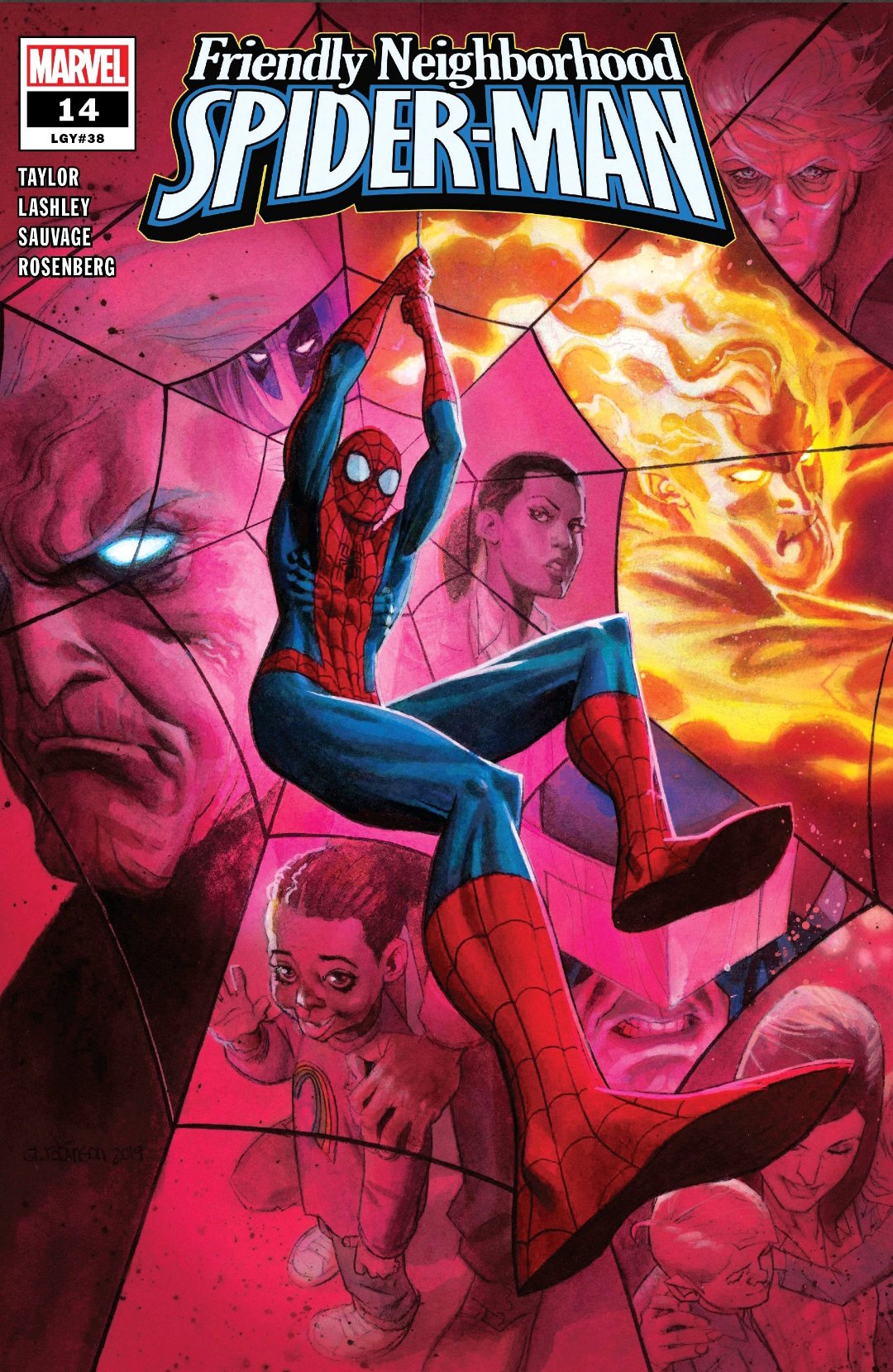
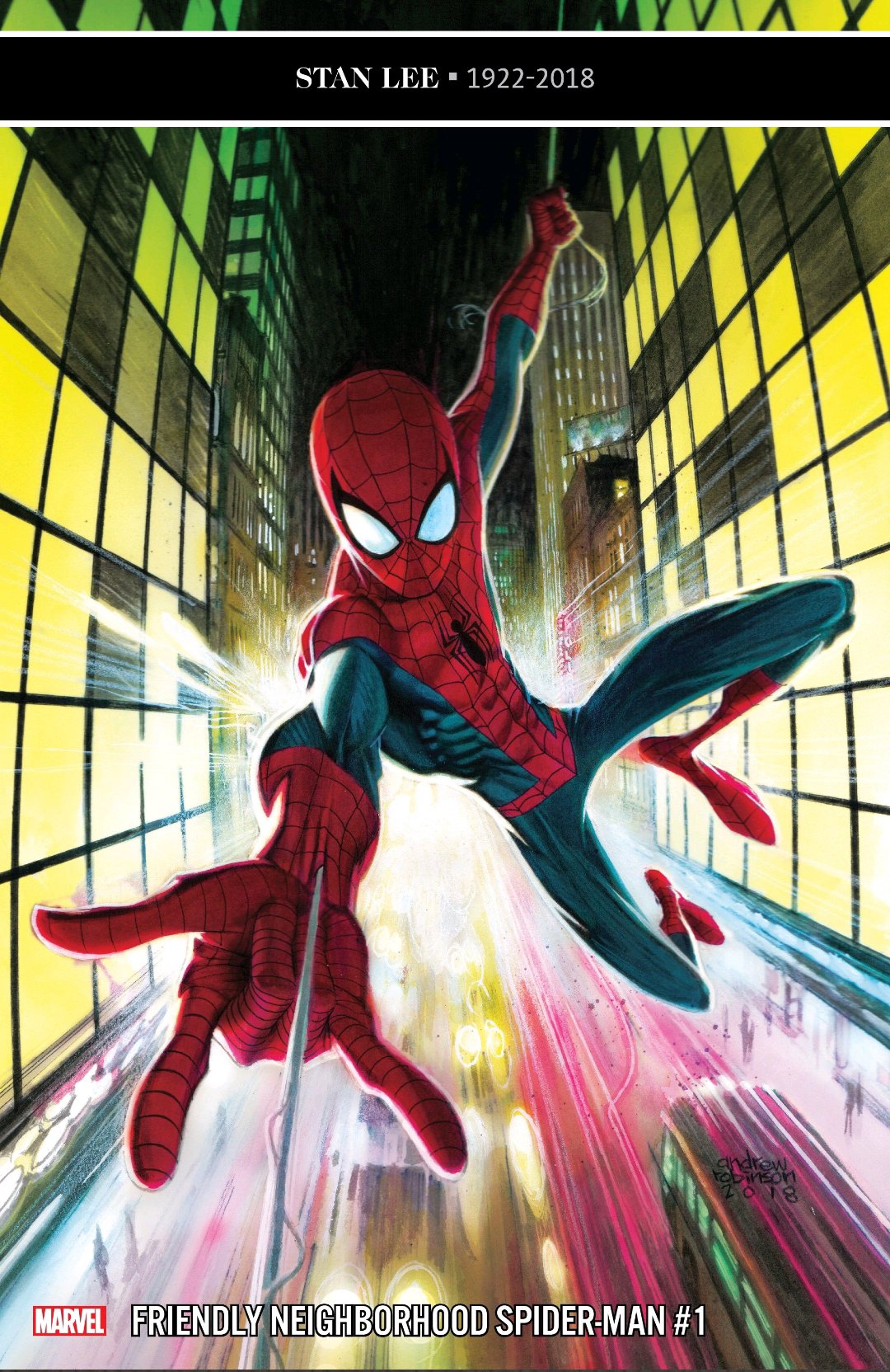
Best of this Week: Friendly Neighborhood Spider-Man #14 – Tom Taylor, Marguerite Sauvage, Ken Lashley, Rachelle Rosenberg and Travis Lanham

There’s a reason Spider-Man is Marvel’s most popular hero.

He’s the everyman. The guy that everyone of any age can relate to to some degree, or at least want to be even a little. Sometimes he’s down on his luck, but he always pushes on. He somehow manages to juggle work-life balance with superheroism thrown into that awful mix. He has family and friends that care about him so much as he cares about them and though sometimes he’s late or missed things, it’s always for a good reason, because he’s saving the world. What’s a better way to repay all of his devotion than by being there for him for even just one night? 

That’s the entire premise of this issue and it absolutely builds off of the rest of this run to produce an almost tear inducing finale that made everything worth it. As sad as I am that this down-to-Earth superhero story is ending, it’s certainly going out on a high note. 

Ever since Aunt May’s cancer diagnosis in, I think, issue #4, her health has always been this lingering concern throughout the book. Even before Peter found out about May, we got an amazing issue where Spider-Man teamed up with his new sidekick, Spider-Bite, and we got that reveal that he had a potentially terminal disease. It was wonderful because Spider-Man showed that he was never too high in the clouds to remember who he was fighting for. Even when the kid wanted to give up, or didn’t have hope, Spider-Man was there for him and it was beautiful. Peter found a way to give that kid strength against all odds.

Peter, however, upon finding out about Aunt May’s diagnosis, didn’t have the same strength. He didn’t want to believe it. He stormed off, not knowing what to do. He had saved the universe, billions of lives and there was effectively nothing he could do for his ailing Aunt. It’s such a real, but childish response to horrible news like that. However, for Peter, it’s normal. Peter’s done everything under the sun to protect Aunt May in the past, even going so far as to sell his love and marriage with Mary Jane to Mephisto in order to save May’s life for another decade in our time. All May really needed was Peter to be there for her and he realized as much.

Aunt May, ever the tough cookie, didn’t respond to the news with defeated grief. Instead she reopened the FEAST center for New York’s homeless to do something good with whatever time she had left and without a doubt helped the community despite the many times it was destroyed or threatened by supervillains. She wasn’t going to let cancer stop her from being the amazing woman that she always has been.

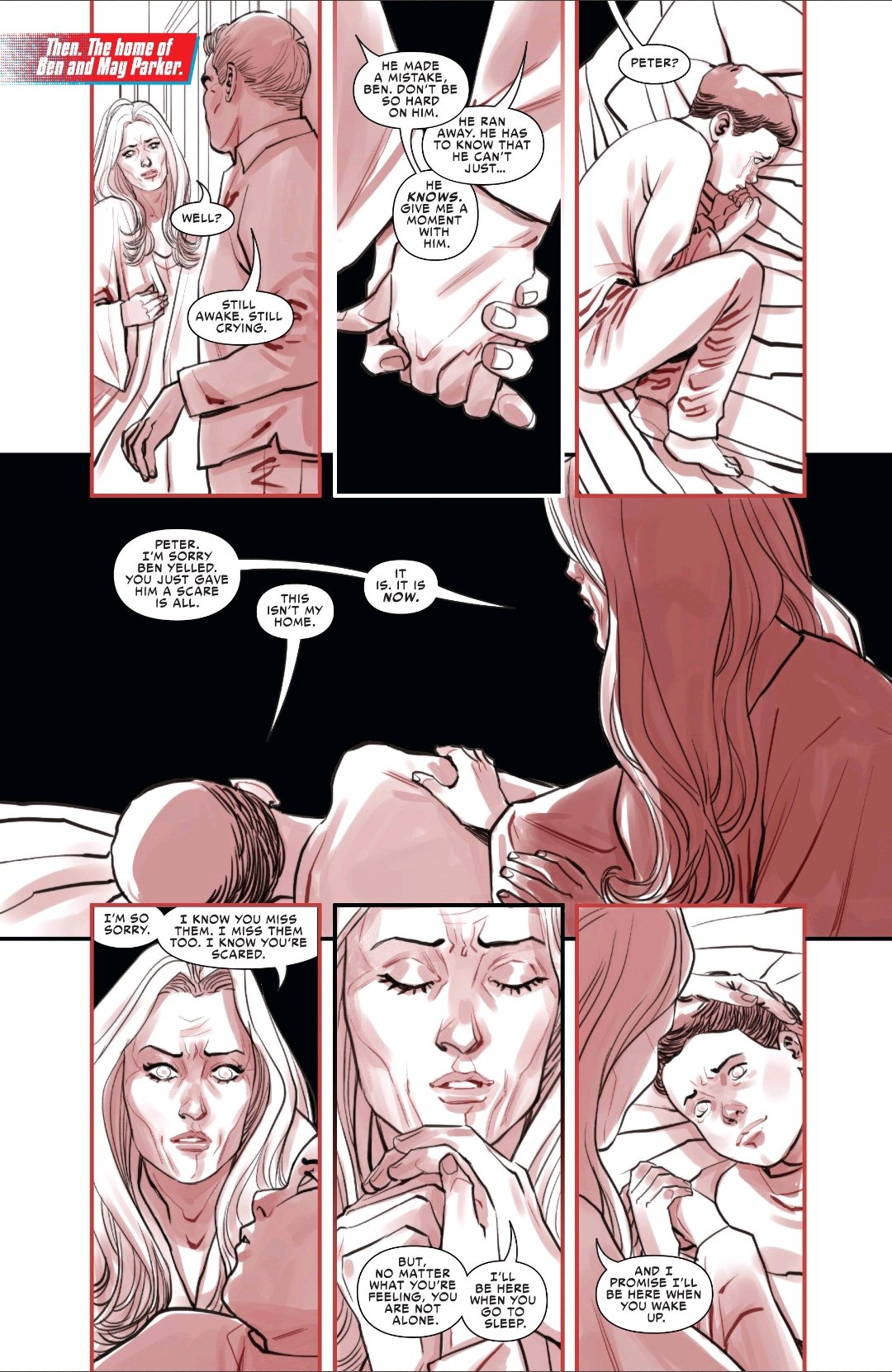
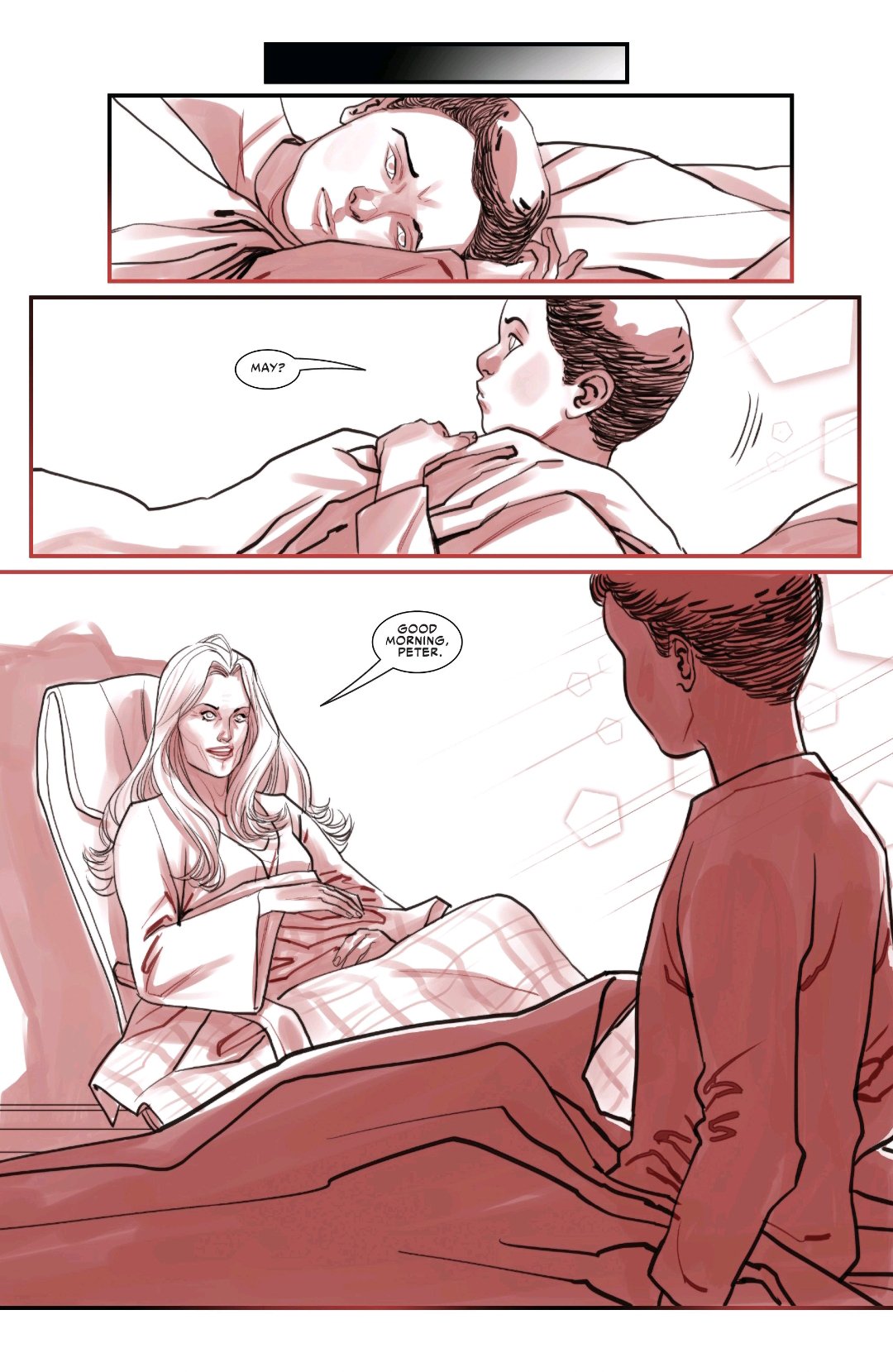
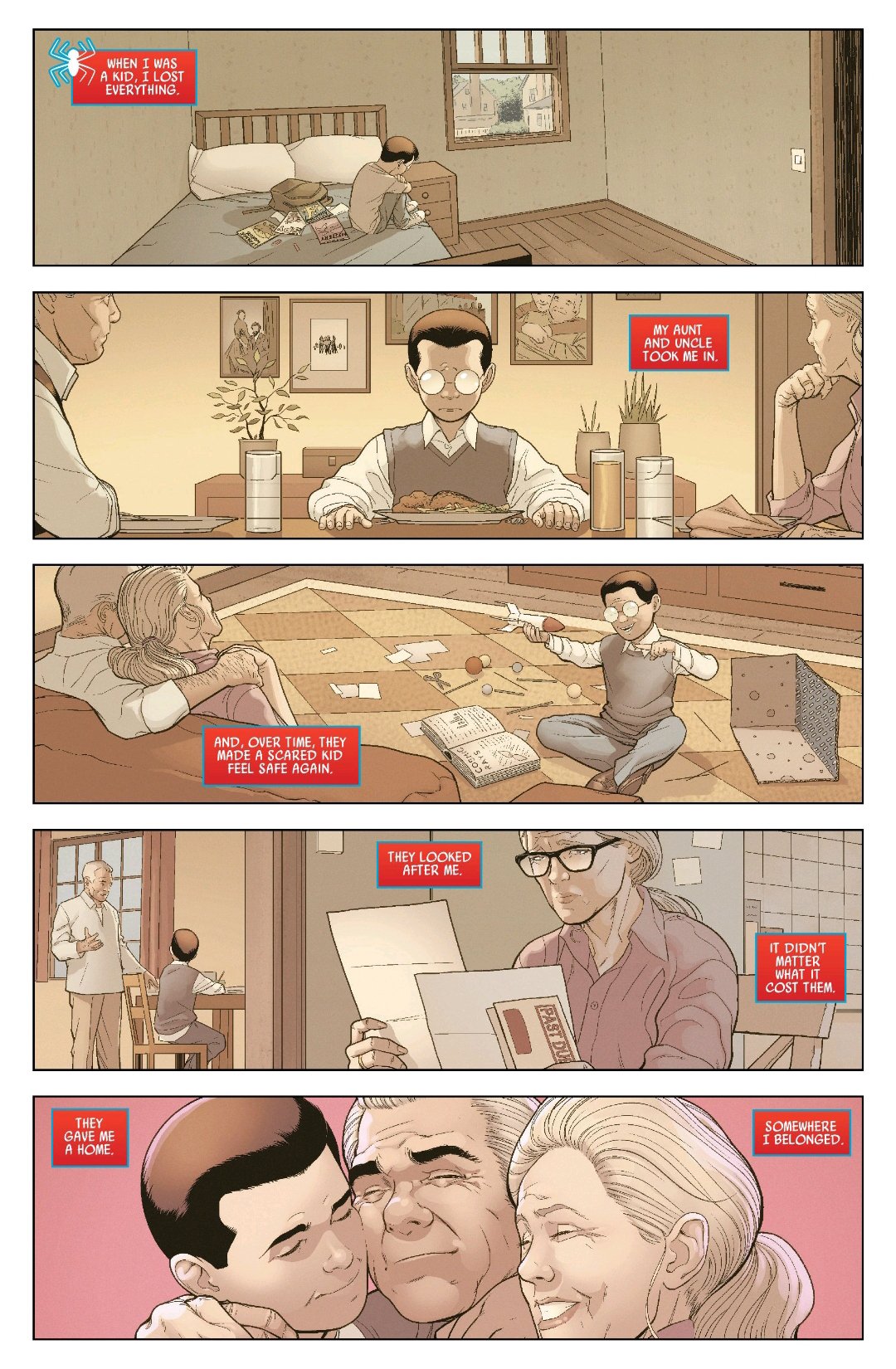
This book begins with a flashback sequence drawn by Marguerite Sauvage. Colored in red and white, Aunt May consoles a crying Peter after he gets yelled at by Uncle Ben for running away. He misses his parents, but May is there to assure him that he’s never alone and that as he goes to sleep, she will be there when he wakes up. It’s a touching scene made great by Sauvage’s warm coloring, soft shadows and sweet body language that shows the affection between them.

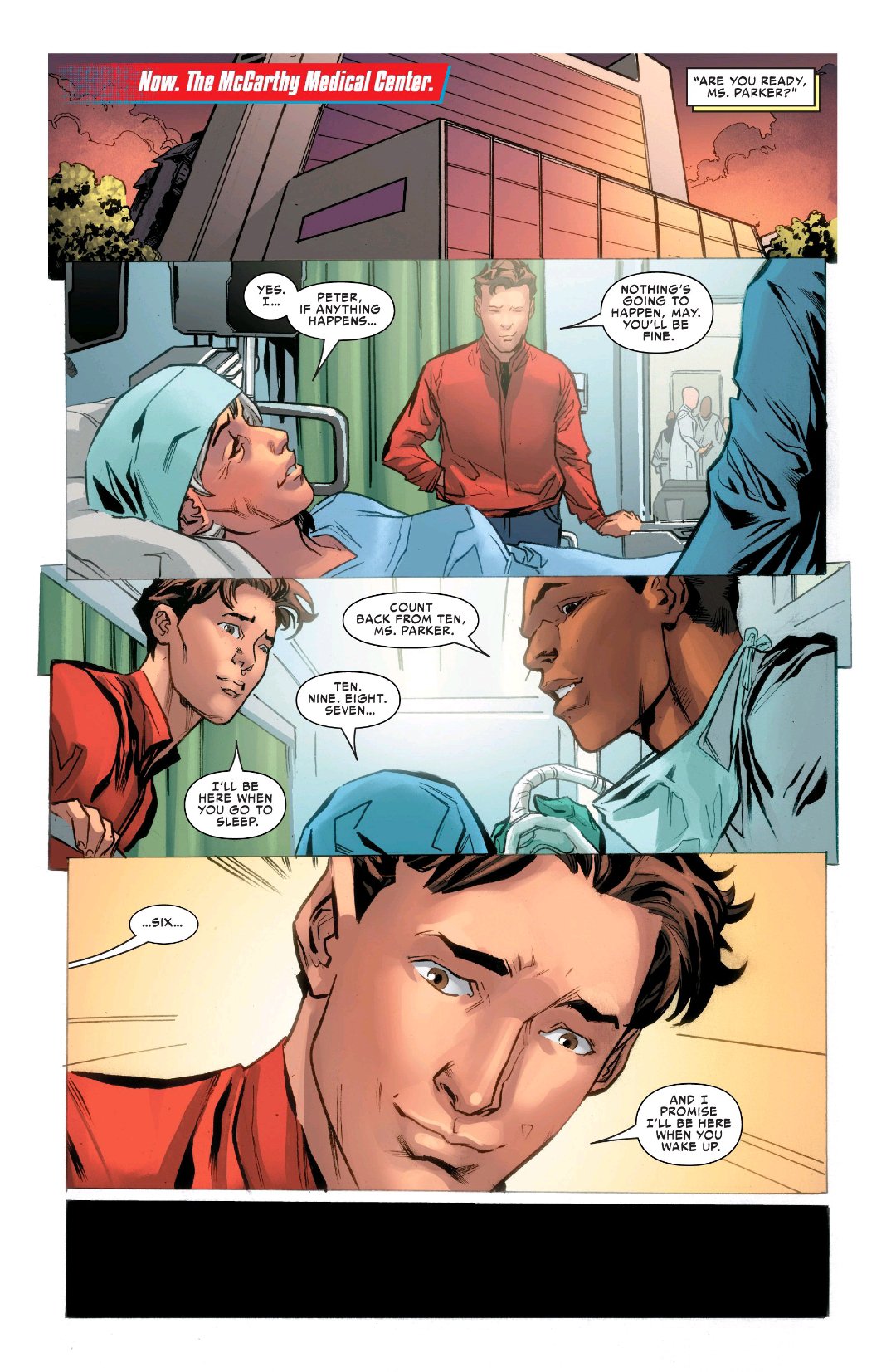
When the flashback ends and we cut to the modern day, May goes in for her first round of treatments and Peter makes the same promise to her that she made for him, that he’ll be there when she wakes up. Of course, given the good old Parker luck, a supervillain manages to crash New York’s power grid, causing the hospital to lose power as well. Initially, Peter wants to stay in the hospital and drink their bad coffee, but his guilt convinces him that he’s needed in the city and he shoots off to fight whoever may be thinking of taking advantage of the darkness.

Initially, I thought this issue was going to be another one of Peter’s gauntlets where he’d have to go up against all of his villains and save the day alone and it sure seemed that way. Ken Lashley sets up a conflict with Shocker, making him look cool and dangerous with Rachelle Rosenberg’s colors making his energy waves look devastating. Just as the two are about to fight, Shocker gets THWIPPED away by Spider-Man: Miles Morales. Miles tells Peter that he’s not supposed to be out in the city tonight and asks his mentor to follow him. 

Lashley stuns with a sequence of many of Peter’s friends protecting Spider-Man’s neighborhood for the night. Rumor, the newest elderly superhero that’s made her name in this series, Human Torch, Iron Man, Ben Grimm, Ms. Marvel, Mr. Fantastic, Miles and the Defenders (Jessica, Luke and Danny) all show up for him. Spider-Man may not get the respect from the public at large, but he has managed to cultivate amazing friendships among his own fellow heroes and what more could he possibly ask for?

Spider-Man returns to the hospital and tries to sneak back in when he’s stopped by a kid who gives him a bit of information on who might have caused the blackout. He manages to get a hold of Detective Sebbens, the officer he befriended early on in the series and she gives him an address. It leads him to a suburban neighborhood which is hilarious as Ken Lashley draws him running around like a nerd. Spider-Man finds the home and the perpetrator, a simple high school kid.

This is the bit that made me absolutely love this issue.

Peter understands that the kid is just that, a kid, so he calmly asks him to reboot the city’s power. The kid, Darick, does so, to the surprise of Spider-Man. He cites the many many times that Spider-Man has saved the world and even apologizes for making Spider-Man’s life harder. Spider-Man doesn’t come down hard on him. He sees that Darick’s a smart kid, able to hack the  Social Services website into showing that he had a family when he’s been alone. Pete says there’ll be consequences, but promises to be there for him and says that he’ll talk to other people he knows about Darick – hopefully putting him on the right path.

The last beautiful shot is a mirror of what Aunt May said to Peter all those years ago as he’s there when she wakes up.

Tom Taylor knows how to write a damn good story. He understands what Spider-Man is all about; the little guy, the man on the street. Universe eating monsters be damned, Spider-Man will take on any threat, but what makes him so special is that he’ll always remain grounded. He didn’t have to go see the sick kid in the hospital and he certainly could have just thrown Darick under the jail, but he didn’t. He sees the good potential in everyone and gives them a chance to improve the world with that hope. That’s what’s made Friendly Neighborhood Spider-Man such a refreshing story to read.

Sure, all of it may not have focused on small things, but it did focus on helping everyone. The Undercity, pensioners, how the people that Spider-Man’s saved feel about him. It’s been a wonderful ride, especially with the art teams. Ken Lashley and Marguerite Sauvage absolutely made this issue feel so personal with their stellart art.I only hope that we get to see more stories like this for other heroes. Not everything can always be the most dire of straits, sometimes it’s good to stop and smell the roses.

Best of Marvel: Week of December 4th, 2019

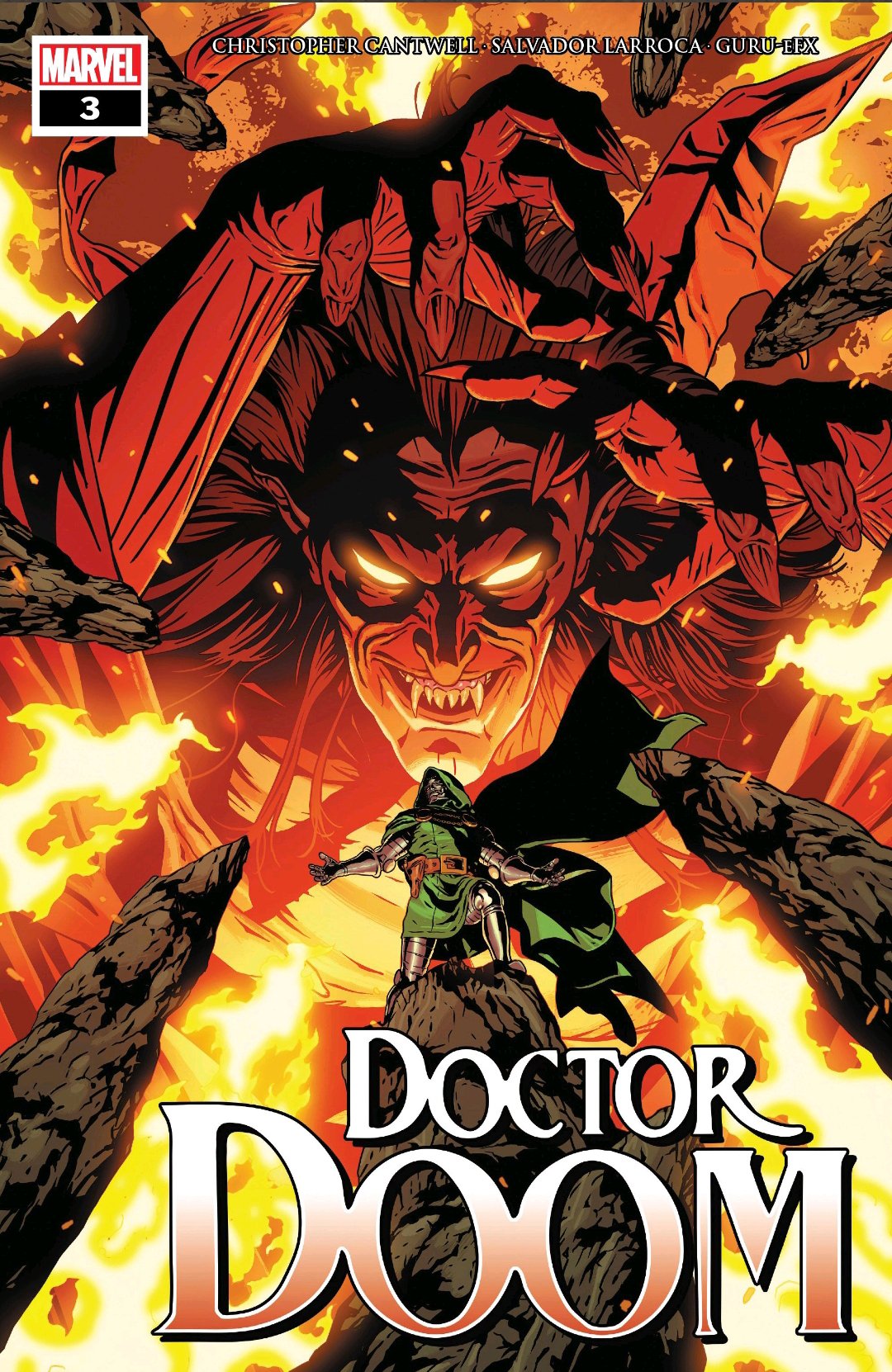
Best of this Week: Doctor Doom #3 – Christopher Cantwell, Salvador Larroca, Guru-eFX and Cory Petit

Doom is a very complex man.

He wants to be humanity’s savior, the one to see us lift ourselves up by our bootstraps and accomplish everything that he believes us capable of. At the same time, he wants to rule over it all as the supreme being over everything. His motivations are kinda good, but his methodology and lust for power will always be his downfall. For a man of immense intelligence and power, the only thing that trips him up is himself and it will always be that way, no matter how good he tries to be.

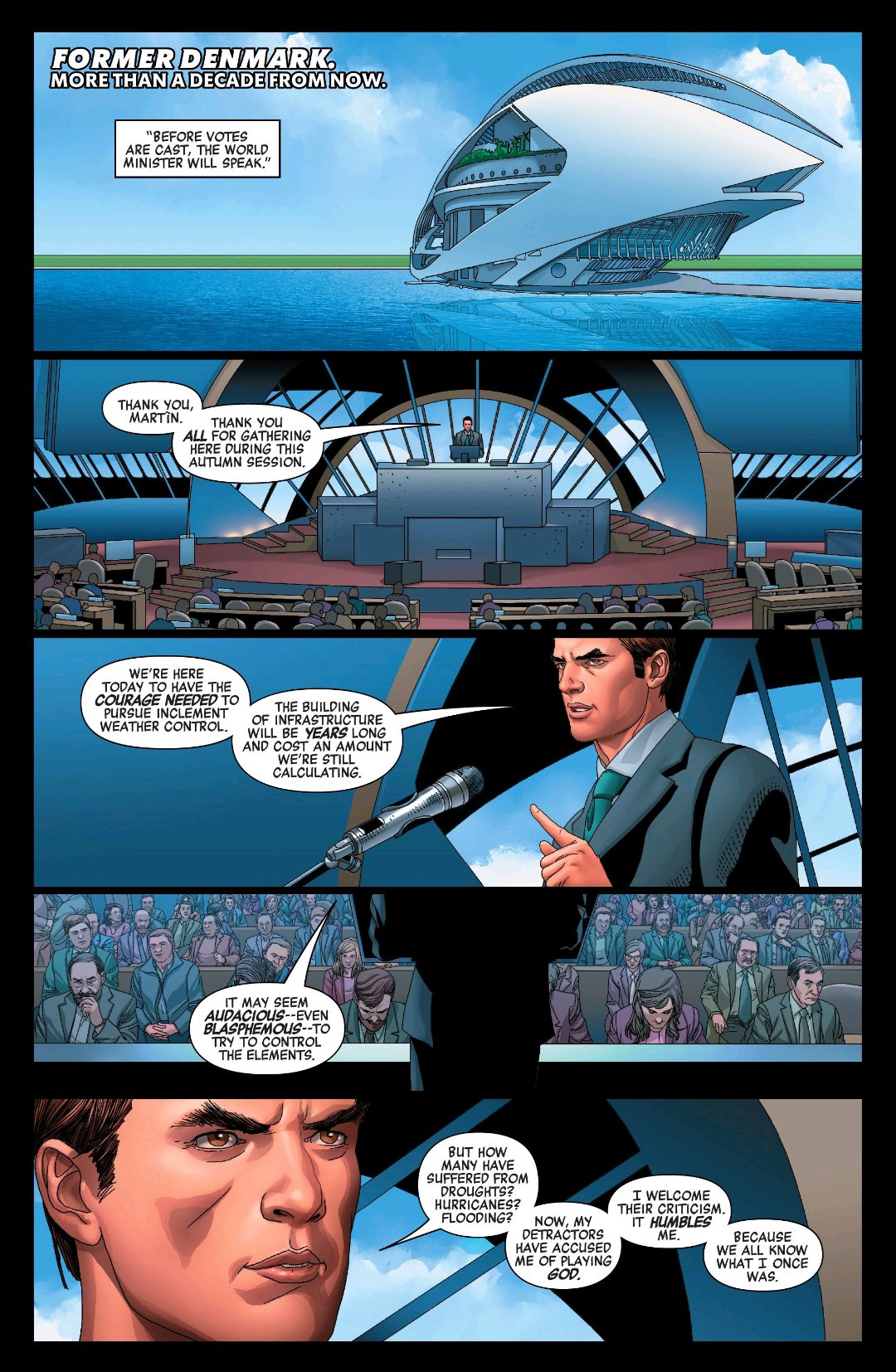
This issue starts off with Doctor Doom having a vision of the future. He sees a world made better by his own inentions, ideas that he might have hatched sometime after his accusation of terrorism from the first issue of this series if he had admitted himself to prison. Surprisingly, his face isn’t disfigured and he’s actually cordial with the crowd that’s allowed him to speak of solar skyscrapers and clean fuel. He seems like a calm, down to Earth, Victor Von Doom. However, amongst those in the crowd is current Doom himself, or what remains of him after being shot in the head in the last issue.

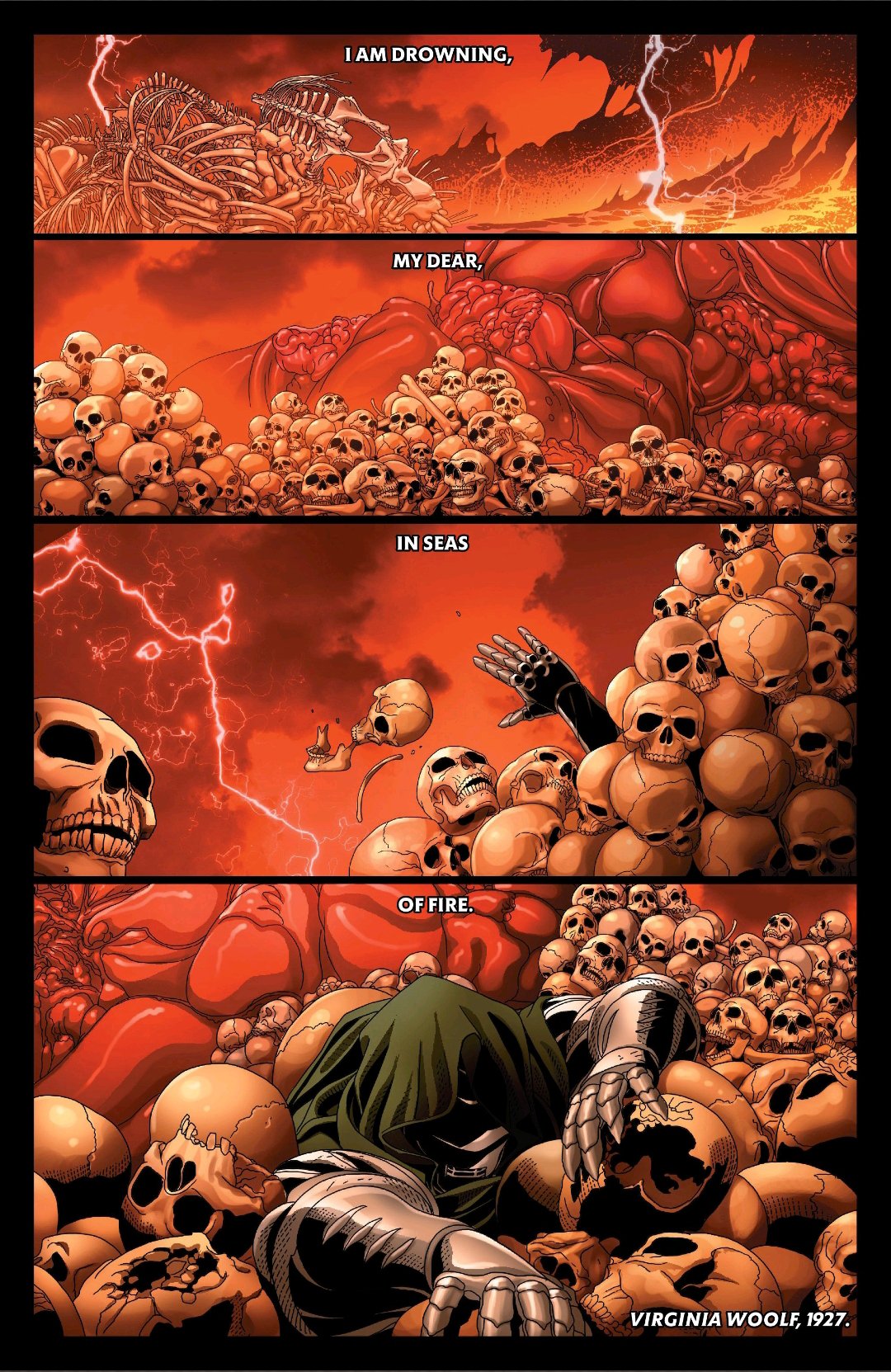
Salvador Larroca then switches from this bright, serene scene, to one of abject Heavy Metal terror as Doom climbs his way up from a sea of skulls in HELL. I cannot stress enough just how badass this art is. Larroca has always been good at visceral art and great backgrounds, but this scene alone is epic. There’s one wide, pulled out shot of a mound of maybe dinosaur bones and lightning crackling into the lava. The next pulls in to a pile of skulls placed against a mass of indeterminate flesh and organs. The next panel shows Doom’s hand breaking free of the pile and the last shows him crawling his way free of the skulls and flesh.

We then get one amazing shot of Doom in a badass set of armor surrounded by the flames, lava, skulls and lightning. Guru-eFX colors this in such a way that you feel the heat and intensity of the flames with hot oranges, the lightning is vibrant and dynamic and Doom stands above it all. His armor looks like something of a combination between a Dream Theater and Disturbed album cover. The use of shadows and lighting emphasize every detail and makes him look like the new biggest threat in Hell and he just strides through like a big dick G.

Eventually he comes upon Mephisto, former Ruler of Hell, and gloats that he finally has Doctor Doom’s soul for eternity. Doom is having none of this and punches Mephisto to the ground before picking him up by the throat, claiming that he was meant to save all of mankind and that he doesn’t belong in hell. Mephisto mocks him by saying that Doom did save his mother from the demon once upon a time (Doctor Doom & Doctor Strange: Triumph and Torment, 1989), but he then also sacrificed the love of his life for more power (Fantastic Four #67, 2003). He then snaps her soul into view of Doom to distract him.

Meanwhile, in Latveria, the political situation is the region is not getting any better as Symkaria is launching an assault with forces, tanks and artillery while NATO and the UN aren’t doing anything to stop it. Victorious is monitoring it all and notes that they plan to “stabilize” Latveria in Doom’s absence and retires to her quarters to clear her head. I do love stories of political intrigue and it’s clear to see how badly the moon base explosion is affecting Doom’s country with his people suffering because of the actions he’s accused of. It’s also interesting to see how Victorious is dealing with her newfound leadership.. She gets angry and her generals listen to her, but even she has to relax after everything.

When she goes to her room, Larroca draws an intimate scene where she removes her armor and works out her stress. It shows a level of dedication to her own personal strength and alertness as she success out an assassin in her window. She tries to blast the assassin away, but misses, only for them to enter the room and put up a short fight with Victorious. The fight is dynamic and allows Victorious to show off her hand to hand skills in a small space. Both of these scenes are colored with the backgrounds a nice blue hue to contrast the frenetic action and sees Victorious winning the battle.

Though it pains me to say, Latveria is in a state of disarray because it doesn’t have Doom there to lead it. No one ever tried to send assassins to kill Doom, nor did they try to send forces to stabilize the region when he was around. Though Doom is the very pinnacle of tyranny in the Marvel Universe, every time he is away from his throne, the country goes into shambles. It happened under Lucia von Bardas, it happened when Doom disappeared following Secret Wars (2015) and it happened after Riri Williams seized control from a returning von Bardas and her insurgent force and tried to turn the country into a democracy (Iron Man, 2018).

For all the good that Victorious is doing and the order she’s trying to maintain, Latveria needs Doom.

Shortly after the assassination attempt, we cut back to Doom who is being tempted by the form of his former lover’s soul in hell. She calls him a monster and tries to persuade him to stay in hell with her, but when he refuses because of the visions he’s seen of a future where he saves humanity, it is revealed to be a trick by Mephisto. He rages at Doom for thinking that he will ever be free because of some “visions” that he had and Doom proceeds to beat his ass. Doom punches the Demon, stabs him in the neck with a bone and plunges both of them off of a cliff, into another ocean of skulls.

The fight could have gone on forever with these two, but is soon stopped by Mistress Death. Death usually only appears when mass deaths are incoming and she allows Doom to return to life. Mephisto kneels to her and protests that Doom should be his forever, but she replies that he will actually her greatest servant of all. In light of Thanos being dead and Deadpool not talking to her much anymore, this is a grim portent for Doom and the Universe at large. 

I absolutely loved this issue of Doctor Doom. With the history the villain has in Hell, seeing how he might fare there alone is actually metal as hell to see. His armor was badass and made him look like a steampunk knight and the way he held his own without it when he fought Mephisto showed just how much he believed in his vision. Seeing the political crisis that Latveria is facing is intriguing now that we see how they’re dealing with things internally. Christopher Cantwell manages to give Victorious some dimension that was only slightly explored in her first appearance in Fantastic Four earlier this year and makes her a compelling character in this book

Salvador Larroca and Guru-eFX absolutely slayed on the art. Larroca continues to stun with his visceral and detailed art, even managing to make a hoodie clad Doom look strong. His designs, action and pacing make this so much more appealing than I originally thought it would be. Guru-eFX’s coloring only accentuates that feeling by eliciting strong emotions based on the hues used. I could feel just how hot and awful hell was through the oranges and I could feel the uncertainty of Victorious through the blues.

Overall, this issue of Doctor Doom and the series thus far is well deserving of a read. Because if you don’t, Doom will find you.

Best of Marvel: Week of November 27th, 201o

Best of this Week: Invisible Woman #5 – Mark Waid, Mattia De Iuis and Joe Caramagna

How did this series go from something I was apprehensive about, to something I couldn’t wait for the next issue of?

That’s the strength of Mark Waid’s writing, Mattia De Iuis’ art and Joe Caramagna’s lettering. Much like the Digital First series that Marvel has been putting out, this book was of a surprisingly high quality that I never would have expected for Sue Storm alone. Sue has always been part of the Fantastic Four and though she’s had storylines where she’s been away from them, they’ve always been so fleeting that they’re almost inconsequential given her larger history. The biggest of these has to have been when she was an Agent of Shield and the many adventures that we’re only discovering because of this series now.

The book begins shortly after the ending of the last issue with Sue’s former partner, Tintreach having compromised their mission, causing a plane full of, I think teenage Morovian, hostages to take off. Tintreach, knew that if they reached Symkarian airspace a bomb will activate and Symkaria will be blamed. He counted on Sue doing everything in her power to save them. The pair are confronted by former Agent of SHIELD, Maria Hill, who threatens them with a gun that can “pierce Invisible Woman’s force field like a katana through a marshmallow.” Suddenly a light is shot out, giving the traitorous Tintreach time to escape and Sue time to explain the situation to Maria. The pair then race off to stop an international incident in an FBI-adjacent VTOL plane.

De Iulis’ photorealistic style of art allows this whole issue to flow with intensity and emotion. Facial expressions and body language are strong with Agent Hill mostly seething with the rage that she displays when she’s not in control of a situation, Tintreach looking like a snarky, mad bastard and Sue straining when she overtaxes her powers. Sue, however, is always shown to be in control of things because that’s who she is. Even when she has to make a forcefield bridge between two planes, like something out of Mission Impossible, she knows that she can do it and looks like such a badass in the moment.

Sue narrates how the rest of the family would think that what she’s doing would make them lose their minds and she agrees because she hasn’t done something that insane until now. It puts a strain on her, but she manages to make it inside of the plane with the hostages and a single guard. She tries to peacefully diffuse the situation, but the guard is too on edge and ends up taking a fire extinguisher to the back by one of the teenagers. In an amazing shot, De Iulis displays Invisible Woman’s powers by showing her turn the entire plane translucent as they all begin to search for the bomb. It’s a beautiful double splash page and makes great use of cool, hazy greys, understanding of the structure of the plane and positioning of bags and people. I really appreciate stuff like that because it’s just fine details. 

Sue manages to locate the bomb and tosses it out of the plane in an epic shot of them flying away from the explosion like cool guys. She immediately takes over the plane’s controls and tries to hail Maria for their landing. Unfortunately, unbeknownst to both of them, Tintreach had stowed away on the plane, knocked Maria out and left her in a meadow while he takes care of his business with Sue.

De Iulis makes Tintreach look absolutely insane as he begins to spew all of his insecurities to Sue while grinning from ear to ear. Projecting, he claims that Sue’s made her vow to never kill because she’s “oh so above him” and much like the reader, she is left confused because she has never said that and he is obviously blaming his own fall from grace on her. In the last issue we learned that when she got out of the game the first time, Tintreach initially tried to keep to the example she set, but over time killing became far easier and he lost his soul because of all of the death while thinking of how Sue never killed anyone, all of his kills weighed on his conscience.

De Iulis and Waid work together to convey their contrasting ideologies as De Iulis shows back and forth shots of Sue and Tintreach. Sue’s panels are coated in cool blues, signifying her calm and good demeanor while Tintreach is shown in a dark red. Initially, Tintreach’s panels are large and almost overpowering until Sue’s sense shines through and she makes him look like a fool. He tries to condescend her by saying, “must be awful to finally consider KILLING.”

Sue. Goes. Off.

One thing that I think is often overlooked in regards to Sue Storm-Richards is that SHE is one of the most POWERFUL and DANGEROUS heroes in the Marvel Universe. She explains to Tintreach that her powers allow her to cause embolisms from hundreds of yards out, fill peoples lungs to bursting and could make a force-field spikes through hearts with little effort. She’s an insanely powerful hero whose powers go above and beyond just the ability to turn invisible. She has strong telekinesis, can make near impenetrable force fields and project energy with enough force to destroy the strongest machines and supervillains. As much as Iron Fist is a living weapon, she is too, if not more.

She’s also strong enough to keep herself from killing and won’t allow Tintreach to put his own death on her. She projects a force-field next to the plane she’s in as he flies towards her, hoping to collide and kill them both. She pleads with him to pull up, but he’d long since given up and crashes into it, supposedly allowing himself to die. These scenes are some of the best as Sue looks enraged at the notion that she hasn’t considered her own strength and power in all of her years as a spy. Even when she’s tearing up because Tintreach won’t pull up, the art is enthralling and beautiful as she screams and cries over her former best friend.

After a short time, Sue and Maria meet each other again after Tintreach’s burial and Hill tries to congratulate her on a job well done, but Sue doesn’t see it that way. After what happened to her friend, she decides that, at least for now, she’s done with the game for good. Aidan Tintreach was a good man who lost his way because of all of the horrors spycraft consists of. She knew that the same could potentially happen to her and she’s damn near unstoppable. The last thing we see is Sue disappearing, not wanting to take the chance.

With amazing art and damn fine writing, Mattia De Iulis and Mark Waid have turned Invisible Woman from a character that  was pretty meh about to one of my favorite and most compelling heroes in the last few months. She is never without confidence, beauty, strength and grace. Not a single one of these issues has been bad and Mark Waid stepped up his game for this miniseries as he has for all of his ongoings.

As the final issue of the Invisible Woman miniseries, we see most of the story threads in it come to an end, especially that of her former partner who had allowed darkness to creep into his heart following her many years absence from the spy game. Who she is as a person, a hero, an Agent of the US Government is expanded upon in such a strong and gratifying way that I find myself wanting more from this creative team. This coupled with my love of Bond-esque spy thrillers with superheroes made this an amazingly enjoyable ride throughout.

Best of Marvel: Week of November 20th, 2019

Best of this Week: Captain Marvel #12 (Legacy #146) – Kelly Thompson, Lee Garbett, Tamra Bonvillain and Clayton Cowles

Captain Marvel is supposed to be Earth’s Mightiest Hero.

She recently just fought off Star, a new”hero” siphoning off her power, while dealing with the world calling her a traitor when her Kree DNA came to light to the world. Because of only one little girl protecting her, she was able to defeat Star and regained the love of humanity. After the battle, she breathes a sigh of relief that they saw her in a good light again, but wondered about their fickle nature and if they’d eventually turn on her again. So it begs the question, what happened to her?

This issue begins with Carol barreling towards the Earth, her inner monologue talking about never knowing what’s waiting and how preparing for things is pointless. We see Thor picking the mounds of snow off of Avengers Mountain when suddenly someone comes crashing into him; that someone being Captain Marvel, clad in all black with a mask now adorned with a bright red Kree Star on it.  She knocks Thor into another mountain and depressingly muses that she always thought that she’d be the hero in the end.

Thor soon calls Mjolnir and cracks the helmet off of her face with an amazing shot by Garbett and Bonvillain. The lightning cracks so smoothly with all of the impact of a thundercrack as Carol is sent flying back, revealing her face to the God of Thunder. It’s an amazing visual made even more powerful when Thor towers above her, ready to strike again, but finally sees that it is in fact his teammate. His face turns from anger to concern and she apologizes before blasting him in the chest.

The next few pages see Carol and Thor fighting their way through just about everywhere. They make arenas of Greenland, Manitoba, Kansas, California and Mexico all the while a gorgeous splash page acts as their background. Carol and Thor are locked in a battle of wills, thunder crackles from Mjolnir and bother of them look at each other with rage on their faces. Thor looks far more imposing, but Carol is able to hold her own against him. It’s the fight I’ve always known I’ve wanted to see! Though of course the tables get turned when Thor overpowers her and calls the lightning down.

Thor continues to plead with her, asking her to stand down, knowing that she cannot defeat him while he wields Mjolnir and she even acknowledges this to be true before blasting the hammer away. Thor believes this to be a trivial act before Mjolnir is sent across the cosmos and doesn’t return, allowing Carol to take advantage, giving Thor everything she’s got. I can’t even describe the page and give it the credit it deserves. 

Bonvillain’s colors are amazingly well done and help to make Captain Marvel look like an evil firebird, almost like her Binary form, but more controlled. Bonvillain’s excellent use of yellows and oranges gives these scenes some powerful heat, especially as Garbett makes Captain Marvel look like a force to be reckoned with. She’s absolutely terrifying with all of her power and the black face paint around her eyes. Her new costume design was amazing as well, cause I’m a basic guy and love red and black color schemes. I love the torn sash, the red line down her arms and the Kree star aligned to the left side of her costume.

In a shocking twist, after Thor’s defeat, we see Carol delivering his head to Vox Supreme, possibly the new leader of The Kree people following Donny Cates’ Death of the Inhumans storyline as the Vox were introduced there. However, I honestly do not think that Thor, nor any of the impending deaths in this arc will stick or will be real in the first place. Though, I do have to say that this story has me very intrigued. I want to know what’s going on with Carol, why has she aligned herself with Vox and what does all of this have to do with the Kree?

Throughout the book, Carol notes that she doesn’t want to do this. In her mind, it’s something she has to do and asks Thor and presumably the other Avengers to forgive her for all of the things that she’s going to. I like the seeds of mystery that Kelly Thompson is sowing here as we are given almost no answers as to what happened between issues eleven and twelve to get us here. I also like that she chose to have Carol fight Thor, the “Strongest” Avenger, first. This showcases Carol’s strength and gives us the impression that maybe the other Avengers will be easier pickings…save for She-Hulk.

After the roller coaster that the last arc was, I can only hope that this one will live up to that and show just how fearsome Captain Marvel could be if she turned evil. She’s got the strength, but does she have the mean streak to go through with it through her Avengers team?

Best of Marvel: Week of November 13th, 2019

Best of this Week: Fallen Angels #1 – Bryan Hill, Szymon Kudranski, Frank D’Armata and Joe Sabino

She is a butterfly.

Kwannon had been living in silent darkness for almost thirty years, trapped inside of her mind  while Betsy Braddock occupied her body (Uncanny X-Men #256, 1989). That changed in Hunt for Wolverine: Mystery in Madripoor #4 (2018) when Betsy psychically reconstructed her original body, allowing Kwannon to reclaim hers and make sporadic appearances in Matthew Rosenberg’s Uncanny X-Men (2018/2019), mostly serving as Wolverine’s back-up. Of course, things have changed significantly since then and now.

This book opens with a young girl standing on a train while Kwannon narrates in the background. It’s mostly vague as Kwannon refers to a mysterious “she” that she hoped was happy and free during the time that she was locked in her own body. The little girl puts on some sort of tech apparatus on her head which, upon activation, causes her eyes to turn blck as she begins to tear through the pedestrians on the train. It’s savage as she rips a handrail out of place and starts beating people with it. Eventually, she makes it to the train operator’s room, knocks him out and derails the train. Presumably everyone is killed in the horrific accident and the only word on her lips before it happens: Apoth.

Kwannon, now choosing to go by Psylocke as she sees her former name as a shackle to a horrible life of torment and pain, is meditating and enjoying the peace of Krakoa. The first panels are set up very well with many close up shots to Psylocke basking in nature, even pricking her finger and bleeding on a flower to show that blood can even bring new life as it blooms. Frank D’Armata makes excellent use of color as the flower and a butterfly appear purple, Psylocke’s signature color. It’s beautiful, especially as we get to a beautiful shot of Psylocke, in peace, floating as purple butterflies swarm around her.

That peace is soon interrupted as she’s bombarded with a psychic attack by an unknown entity telling her that she has to kill a God, she has to kill Apoth. After the vision, she goes to visit Magneto, still “mourning” the death of Charles Xavier (X-Force #1, 2019). She tells him what she saw and requests to leave Krakoa to investigate. Initially, he denies her request, citing the most recent attack that left Xavier dead as the reason no one is able to leave the island. She responds in fury, trying to assure him that what she saw wasn’t just a dream. 

These pages are strange as they also utilize a bunch of close-ups, focusing on their mouths. It gives the conversation a close and shadowy feel as they’re also shrouded in heavy inks. Magneto urges her to see Mister Sinister, saying that he might find her visions interesting. When she questions him about this, he explains that his grief over Xavier’s death makes him forget conversations (wink, wink, nudge, nudge). She then goes to visit the Evil Eccentric, who also doesn’t seem interested until Psylocke talks about her experience being trapped, showing her ferocity when he asks her how she’d kill Betsy if she could. Satisfied with her answer, he helps her out and asks that she gathers a team.

We then cut to X-23 and Kid Cable (I will never refer to him as just Cable) as they stand around one of the many fires made in celebration of peace and safety. Kid Cable sees Laura not enjoying her time and asks her how she likes to dance, then they have a small fight that Laura wins. She comments that she doesn’t feel anything because everything on Krakoa is safe and “safety sucks.” I like this characterization of Laura so much better than what she had been doing with her plucky, child sidekick, Gabby. It reminds me of both her time in X-Force and the beginning of All New, All Different Marvel when she was ultra violent and reckless. Psylocke tries to recruit the both of them, but Laura convinces her that Kid Cable deserves the peace that Krakoa provides and the two leave the island together.

The pair travel to Tokyo and meet a former contact of Kwannon’s. She informs them of a new designer drug created by Apoth called Overclock that seems to affect people’s mind states, causing them to murder others while the drug is killing them as they get super high. As Psylocke and X-23 watch the video of the train accident, Psylocke has a flashback to her days as a Hand assassin and we earn that she had a daughter that was taken from her. Her daughter was given a tattoo of a butterfly, same as the girl in the train derailment. Whether or not this is her daughter is unknown to us, but it is a possibility. 

The video sends Psylocke into a rage and she demands answers, grabbing the woman and threatening her with mind scrambling via psyblade. When the woman refuses and says that Apoth will kill her, Psylocke plunges her psychic dagger into her mind as Laura takes out her guards. The best things about these pages are that they’re all coated in a tint of purple, alluding to the fact that this somehow all ties back to Psylocke/Kwannon somehow. There are threads here that only she can follow because of her ruthlessness and it all feels so very personal.

Psylocke rips the information from her contact’s mind and travels to the location that she found. There, she encounters a shack full of children under the influence of Overclock and Apoth has taken one of them to speak through. The rest of the children die while he warns Psylocke and X-23 to return to the safety and seclusion of Krakoa while he evolves the world. Apoth seems like an interesting villain as he mentions how hard it is to kill children and yet does it anyway. He claims that what he’s doing is evolving humanity and the person who gave Psylocke the vision referred to him as a new God. What is his power and how is he able to control people’s bodies and create such a deadly and advanced drug?

If I were to have any complaints, it would have to be that sometimes the inks are so dark and prevalent that they can start to feel overbearing. There are a lot of good colors used and D’Armata’s signature style is there, they can sometimes feel drowned out by Kudranski’s inks. When they work together, they produce amazing panels, but when they don’t, they produce odd looking shapes and poses. One in particular after Laura is given the knowledge about Psylocke’s daughter and then she’s hunched over like Quasimodo, that’s more so for Kudranski’s posing, but that darkness doesn’t help.

This first issue of Fallen Angels was very interesting to say the very least. I love the idea of getting to know a new and reformed Kwannon as Psylocke given she hasn’t been a character of her own since the 80s and that small time she was resurrected in the mid-2000s. She seems focused and yet still maintains the deadly edge that served her so well as an assassin. I also like that she doesn’t want to be reminded of her time in the darkness, even dismissing Betsy when she presumably wants to talk about everything between them. I don’t know if its anger or contentment with her new life that lets her walk away from Betsy, but it kinda feels liberating in a way.

I’m actually very excited to see where things go from here, so far I love Psylocke’s new direction as she seems to be slowly turning into a teacher for people like X-23 and Kid Cable. Throughout the book there had been flashbacks showing Psylocke’s past and the abuse she went through to become one of the Hands deadliest assassins, so it’s very likely she’ll be similar but better to those two. She will turn them into butterflies. The most perfect versions of themselves.

Best of Marvel: Week of November 6th, 2019

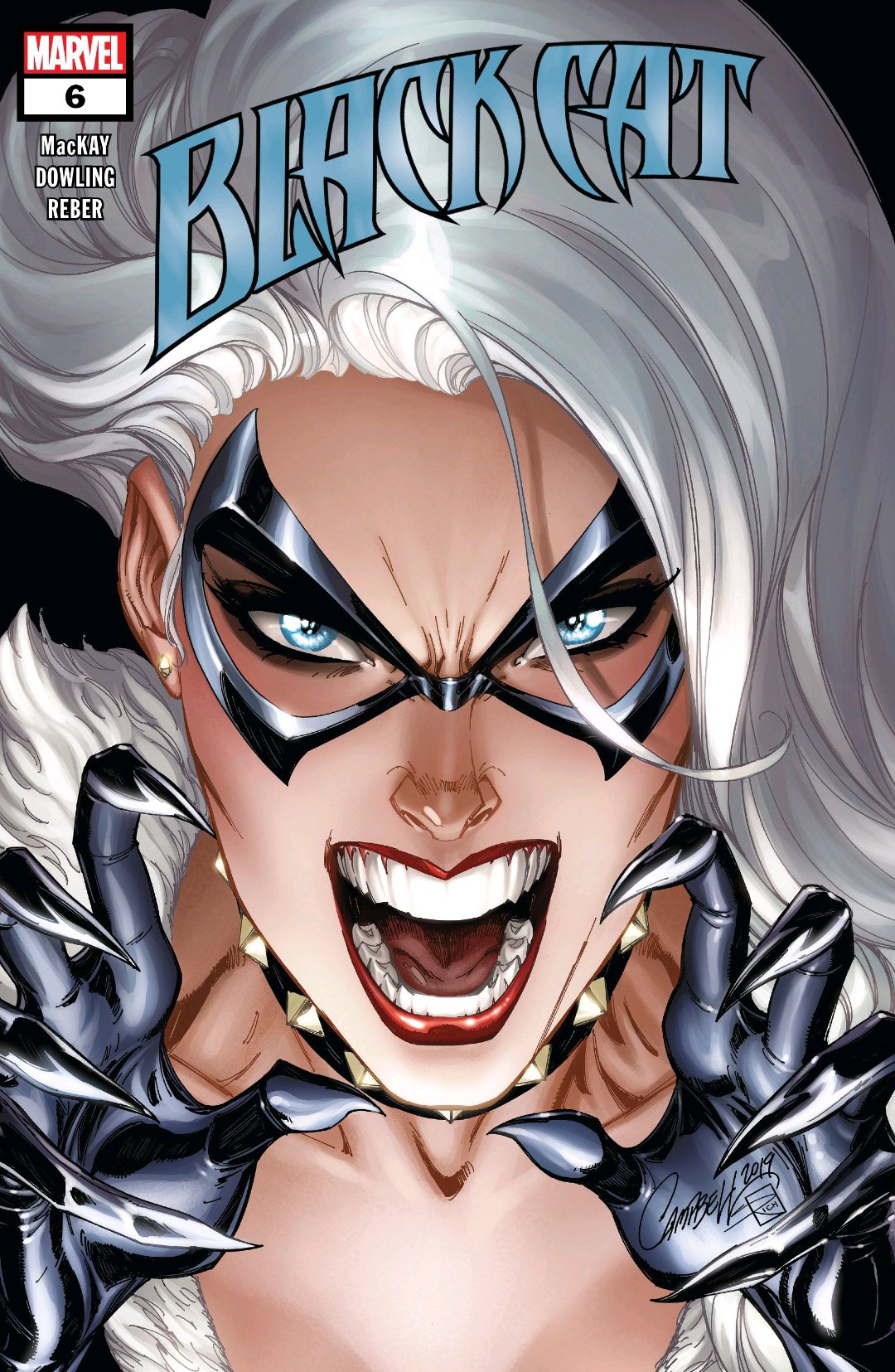
Best of this Week: Black Cat #6 – Jed MacKay, Mike Dowling, Brian Reber and Ferran Delgado

This issue was weirdly sexy.

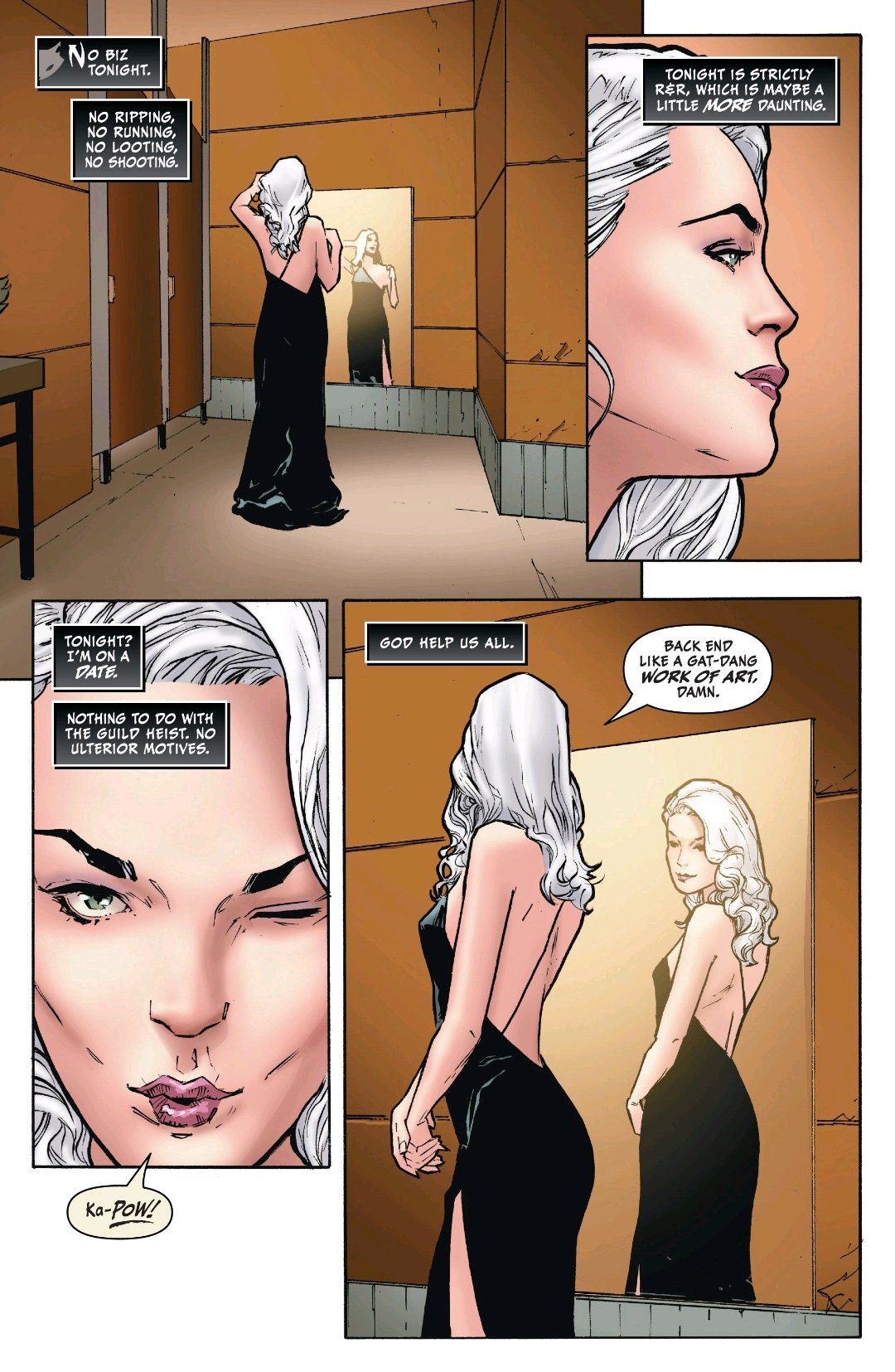
Not in the sense that Felicia was overly sexual or that the art was particularly provocative, but in the way that the dialogue was amazingly alluring. There’s something special in this issue that has been absolutely missing from the five prior to this and it’s definitely the sense of identity. Those prior issues did what most new series or mini-series do to sell the issues: feature cameos or locations from the bigger stars of the Marvel universe and hope things turn out well. I almost didn’t want to pick this issue up because of it, but I’m glad that I did because it had such a simple premise and an even better presentation. Felicia goes out on a date…with Batroc the Leaper.

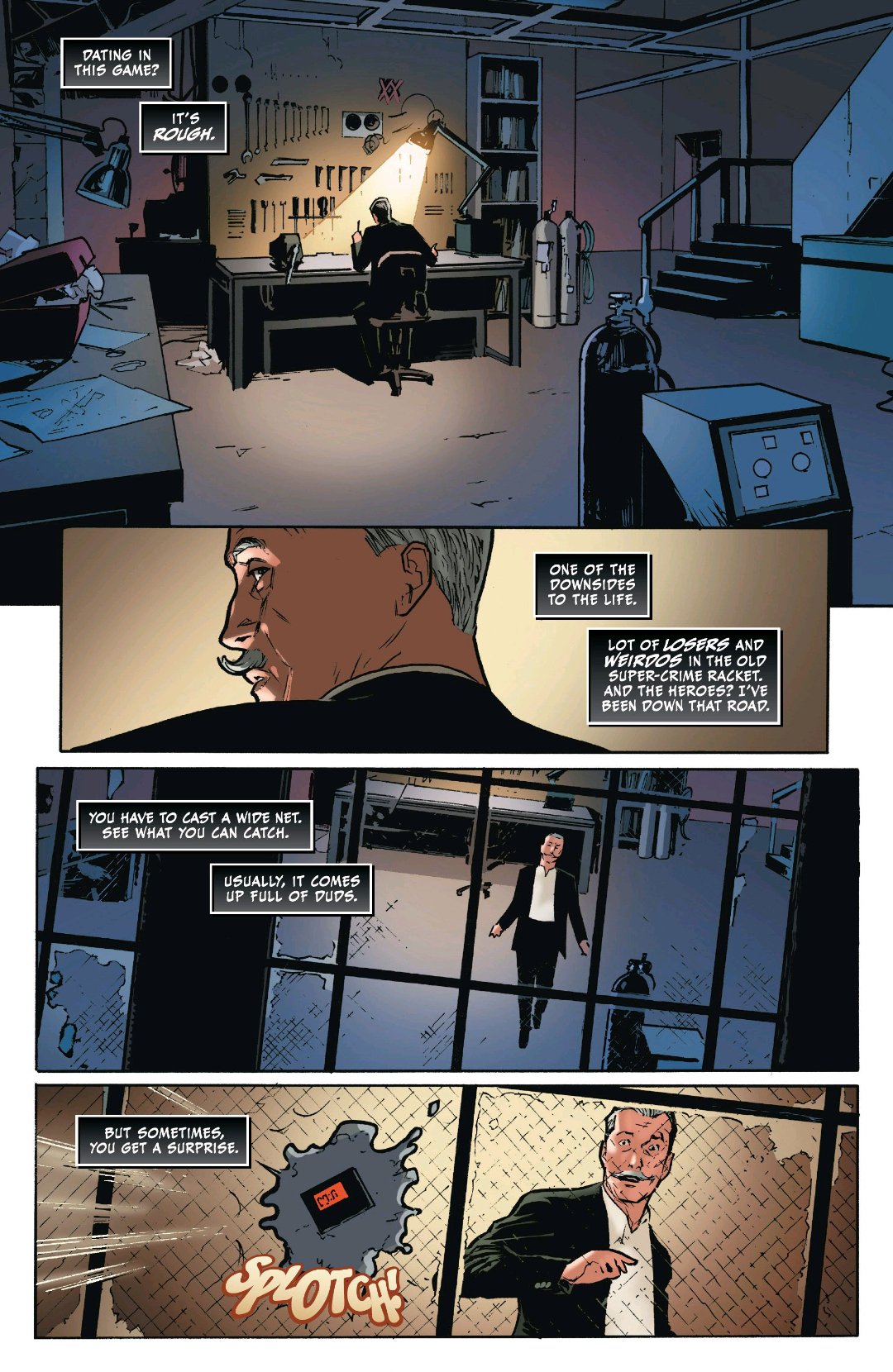
Something about this struck a chord with me. There’s no pretense of romance between them, just two criminals, a thief and a mercenary, getting together to have a nice evening out together. Meanwhile, as the date goes on, we see another story going on at the same time with The Black Fox (Black Cat’s mentor) being targeted by members of the New York branch of the Thieves Guild. Something about the calmness of Felicia and Batroc’s conversation juxtaposed against the hectic action of the attack is beautiful in so many ways. 

Mike Dowling’s art absolutely captures this feeling with Felicia actually looking happy to be out with Batroc and the Leaper looking much the same. Reber’s excellent coloring and attention to lighting sets the mood as they go about their conversation, speaking of Batroc’s love of French, even the French Canadian variant and Felicia’s most recent heists, particularly the Sanctum Sanctorum and Richards family library jobs. They speak about these as if they’ve been friends forever and of course this is just a normal part of their jobs, of course.

Things start to get hot and heavy when they begin to speak of their attractions to their particular heroes. Felicia makes an excellent point that her attraction to Spider-Man is mostly due to the idea of him being a superhero and her being a thief, saying it’s the feeling of wanting something she couldn’t have. I’ve honestly never given it that much thought as to her attraction to Peter and Batroc even admits that he was surprised the first time he heard about their relationship, but understands the feeling.

Batroc draws a parallel between them with his own “paramour” in the form of Captain America, Steve Rogers. The way his face is drawn with such reverence and adoration is something I never expected. He explains that, other than lovers, no one is more passionate than those who engage in close combat against each other. I can understand exactly what he means because the two end up knowing each other so well after years and years of brutal battles against each other. He says that combat is as intimate as the act of love itself and I felt that. It’s extremely sentimental and shows another side of Batroc, a more French side, but with the depth that hasn’t been seen since Gwenpool’s first series.

As all of this is going on, Black Fox does his best to fend off the ambush by the Thieves. They send a bomb to his window and the ensuing explosion causes a cloud of smoke to cover the room. Dowling does a great job of showing just how capable Black Fox is, systematically taking out the foot soldiers, utilizing the smoke and their own weapons to take them out. As he makes his escape, he even tries to use the grappling hook that Felicia had made use of during her career, but unfortunately he is injured and falls into a nearby alley.  Dowling’s use of scale makes this an epic escape to look at.

The date suffers a bit of a lull, but Felicia has been enjoying herself thus far and asks Batroc if he wants to go steal stuff. The next few pages share an excellent dichotomy as Felicia has an inner monologue about the streets being full of dirt and blood as Black Fox is shown escaping from the Thieves Guild in the dark alley. He is frantic and afraid, this is contrasted by the happy smiles on Felicia and Batroc’s faces as they smile. She says that the lights above the city have always been a sign of everything that they, as thieves, have always wanted and fought for.

The dark intensity of Black Fox’s chase as he steals a car and rams into the Thieves Guild members in a horrific chase, with fear and anger in his eyes is a far cry from the calm and collected nature of the two thieves on an impromptu job. Felicia, as per her nature, steals something that looks insanely valuable from the outside, while Batroc, the romantic Frenchman, steals something for her heart even if it’s only as friends.

He steals her a blender.

A blender. I honestly almost got choked up because she even notes that no one has ever stolen a blender for her before and such a simple gesture can mean so much. She acknowledges that she doesn’t see a future with Batroc, but decides to spend a nice night with him. Black Fox, on the other hand, is battered and bruised as he is captured by the New York Thieves Guild and taken to their leader, Odessa Drake. 

This is honestly the issue that the series has been building towards. In just one issue I feel like it has an identity of its own, focusing on Felicia and her thoughts in a mature and gratifying way. It doesn’t have over the top action or ridiculous comedy, but what it lacks in those, it makes up for in a good character driven story. We’ve gotten glimpses or little things dedicated to Felicia’s background in the past, but we’ve never taken a deep dive into her psyche, the why of her becoming a thief. It’s such a beautiful reason and the way she’s able to talk and think so candidly with another person just like her is so refreshing.

Dowling’s art plays a big part in this too. Travel Foreman has been doing a fantastic job on the art in the past few issues, but things always seemed a bit too scattered, lost in the myriad of details his art style is geared towards. Dowling is focused and almost minimalist with the scenes having very little in the way of insanely detailed background, accentuated by Reber’s simple hues and little colors used. Felicia is beautiful and refined while Batroc seems like the gay best friend with excellently shaped facial hair. Black Fox looks incredibly capable for a man likely in his fifties to sixties and the action here is superb.

If this is the tone for the series going forward, then I am absolutely excited about where this is going. Hopefully there’s a lot more subtle and dark thievery in Black Cat’s future. While I like Ocean’s Eleven style heists, there’s something so much sweeter in her brand of sly stealing.

High recommend.

Best of Marvel: Week of October 30th, 2019

Best of this Week: Conan the Barbarian #10 – Jason Aaron, Mahmud Asrar, Matthew Wilson and Travis Lanham

Conan has faced the horrors of this world and beyond, but his greatest threat has been looming in the shadows far longer than he ever realized.

From the very first issue of this series, there have been these two creepy little children that have shown up at the sites of Conan’s greatest victories, waiting in the wings for his blood to get even richer from all of the death that he’s escaped over his long and bloody life. What we didn’t know is that they’ve been on Conan’s tail since the very moment he showed up at the Tower of Razael, their Blood God, and killed their mother. This issue covers their own crimson origin and their journey to finally seeing the end of Conan the King and the Rebirth of Razazel.

The Crimson Witch has been searching for warriors to give rise to the Blood God for an unknown period of time, but none of them had proven virulent enough for her in her many years. Lord Bevel Stonemarrow bragged that his castle was draped with the flayed flesh of  Stygian She-Serpents and Hyperborean Witch Men, but alas it was likely all lies as his blood did nothing for Razael and the witch cast him aside with the other dead. The only “good” thing his seed provided was two children for her.

The sight of this old crone giving birth is absolutely disturbing. From the sweat dripping from her brow, snot from her nose and to the birth itself taking place on her sacrificial altar amongst the many corpses in the Tower. She offers her children up as the new disciples of Razazel, naming them Razza and Zazella, the Children of the Great Red Doom. Asrar does an amazing job of painting what this family is all about with just a few simple techniques. Their first cries are shown in blood and shadow. In the first three panels that they’re show, the background is either full black or littered with corpses, a good foreshadowing of their future.

Their childhood is signaled by a reverence for death contrasted by their playful nature as children. They play hide and seek amongst the many bodies of the Tower while their chores consist of dagger sharpening and gathering toads to make poisons. Aaron accentuates that by placing their childlike enthusiasm over wanting to hear about Razazel slaughtering the nonbelievers and blood oceans. These kids are absolutely adorable and terrifying at the same time. Asrar makes sure to make a point of this as well by drawing them and their mother as being a loving family, hugging and smiling as she goes off to have her first confrontation with Conan. The familial tie between them is as nearly powerful as their worship of the Blood God, despite the fact they are horrendous murderers.

We later find out that they were in the Tower the night that Conan nearly decapitates their mother and burns it all down, displaying a reverence for his ability to kill things and how the Blood Roots in the Tower resonated to his presence. As they watch their mother near death and the flames surround them, their eyes swell with tears and they resolve to kill each other with their own daggers. Children of the Great Red Doom don’t die by fire…and they wouldn’t as their mother and the power of Razazel kept her alive enough for them to escape.

These scenes are a beauty to look at. While most of the shots are flat, focusing on them from one angle, the intensity of the fire, their helpless expressions and their eventual rescue are amazingly well done. Their tiny kid bodies look ridiculous holding these massive daggers and the angles that they were going to stab each other at didn’t look right, but the despair on their faces is palpable. They look like they’ve been absolutely crushed after their mother is “killed” and their love for each other is shown as being genuine. When their mother does reappear, with her head barely being held on by magic and blood tendrils, she looks frantic, carrying them out of the furious flame. It’s disturbing, but heartwarming.

Matthew Wilson’s colors here are striking. The vibrancy of the veins is almost enough that they could pop out of the page at any moment. The fire appears amazingly hot and loud as it consumes the tower and the embers flying around is a really good effect. Wilson does an even better job of showing Razza and Zazella’s dedication growing when he colors their brown shirts with the same deep red of their mother’s neck tendrils. It’s great symbolism.

Over the next few years, the children prove themselves quite capable as worshippers of Razazel, luring many to their deaths with their growling mother ambushing and killing them. They drink the blood and eat the flesh of their victims with giddy smiles while their mother acts as a feral beast. Razazel’s magic keeps them young while they continue to keep tabs on Conan in the shadows, as seen through many of their appearances over the course of the story. Eventually, we come back to Conan’s capture at the end of Issue #2, I think?

The twins stab King Conan through the chest with their daggers and the Blood Roots surge with energy and the walls of the newly remade Tower start cracking. Conan manages to escape and fights The Crimson Witch, but it’s too late – a giant hand with many mouths emerges from the ground and Razazel awakens. 

Mahmud Asrar is still an amazingly talented artist for this book. He manages to pull so much depth out of these characters through simple body language and body language. All the while I was reading about these two kids, I found myself feeling sorry for them for being raised the way that they were, but upon remembering how happy they looked, that sadness was replaced with fear. Asrar makes sure to draw their eyes with the same madness that their mother has – a cold excitement and lust for blood under piercing green eyes. The twins are dangerous and their cuteness allows you to let your guard down just enough for them to stab you in the neck.

Not only are his characters well drawn, but the scenery is as well thanks to Matthew Wilson’s colors. Wilson does an amazing job of giving each scene life through his use of deep reds, putrid yellow-greens and cold tones when things happen in the Tower. He always elicits an eerie feeling of darkness through his colors and no location feels safe. Even in the scenes that take place in the day time, light colors are used to lure the reader into a false sense of security before the tables are turned and the pages are colored with an intense orange for the action.

This issue was absolutely dark. Children in general are terrifying, but cannibal children that know blood magic and have managed to stay young for the simple purpose of resurrecting their God through ritual sacrifice are a nightmare. Razza and Zazella are absolutely compelling characters to read and could stand at the top with Conan’s great foes like Kulan Gath and Thulsa Doom. Their drive and dedication to killing Conan far outweighs that of most others in that they might have succeeded where hundreds if not thousands of others have failed.

Best of Marvel Week of October 23rd, 2019

Best of this Week: The Immortal Hulk #25 (Legacy #742) – Al Ewing, Germán García, Chris O’Halloran, Joe Bennett, Ruy José and Paul Mounts

At the end of the Universe, there is only the Breaker of Worlds.

Many issues of Immortal Hulk have tackled the horror of what comes next, the existence of an apocalyptic Green Hell for those touched by Gamma radiation being the most terrifying. This issue, however, doesn’t focus on what comes AFTER life, but what is coming for the last flickers of it that will exist at the end of time.

Following an alien being of some sort, named Par%l, we join hir as they travel to the last known vestige of the Universe’s knowledge. A planet called O%los, a beautiful planet with chromatic seas, crystalline superstructures and a general feeling of happiness. Par%l hopes that by beating the Breaker-Apart to O%los, that they might be able to warn the nine billion souls that live there or save the knowledge stored therein. From what we learn of hir interaction with another being of her kind, every other planet in the Universe has been destroyed by a monster of some kind.

These pages are characterized by García’s use of otherworldly visuals and O’Halloran’s use of warm and pastel colors. Par%l and her companion Farys look almost microbial with extended “necks,” long, almost tube like bodies, capped with heads that contain crystals of some sort in them. It’s abstract in a way that signifies that humans have long since been annihilated and that the beings at the far end of the universe are pretty much all that’s left.

The pages before this have been characterized by bright and lively colors. Warm oranges and yellows have signified life and the hope that knowledge could be saved. The multi colors of O%los even brim with light and a feeling that everything will be all right. O’Halloran makes sure to set the mood of the unknown before ripping it away at the very last moment.

As Par%l arrives to the orbit of O%los, in the distance, they spy a green light.

In an instant, O%los is beset upon by the form of The Immortal Hulk. He floats through space, not speaking a single word, but saying everything he needed to with a clothesline.

He obliterates the planet.

Par%l observes his every movement. From his crashing through several moons and lifeless planets, winding up his fist, to the impact of the hit. The crystals of O%los are spread across the vastness of space, the planet is turned into a combination of glass, dust and death as nine billion beings are killed and all of life knowledge if destroyed. What was once a colorful environment is then replaced with a bright green and the darkest blacks as the destroyed remains of O%los float around hir.

Par%l doesn’t understand and gathers the words for all of the things they’re seeing. They have never seen hands or arms before, but she finds the words, she has never seen a face before and above all, she had never seen a smile until the Breaker-Apart looks upon her minuscule and insignificant form. Hulk is terrifying here as he has now become planet sized or larger, able to shift his size enough to crush stars and even suns. He doesn’t have regular eyes as they just glow with evil Green Door Energy.

When Par%l tries to communicate with him, simply asking “Why?” They are met with horrors unimaginable. I’d imagine García is a fan of Jeff Lemire and Andrea Sorrentino’s Gideon Falls because the next few pages are beautiful double page spreads of Eldritch terror in a similar style. It’s not fair to draw comparisons, but in my opinion they are absolutely prevalent. 

The shots of thousands of people with their eyes blotted out, screaming in fear without any words or even sound as they’re coated in an evil green and black is more than mind numbingly scary. The next shot of The One Below All showing his fleshy, mucus-y visage under the guise of Hulk’s horribly distorted and ripped apart body with the background showing a city razed to the ground is terrifying. The red lettering by Cory Petit only stands to make the scene more scary as he’s able to convey what The One Below All says in a way that makes him seem out of this dimension. 

He is powerful in a way that is incomprehensible. This is shown even more on the final spread where he is shown with tunnels where his eyes were as he’s surrounded by faces in the melted flesh of the Hulk’s body. He says that he has eaten all of the selves that were in the Hulk and that the mystery of his own existence frightens him, but he will kill all of life to be alone. 

Par%l is unable to take it and hir shell cracks, forming a fly containing all of hir knowledge of the future. Somehow it travels through time into the hands of one of the Hulk’s oldest enemies. 

To say this book had me terrified would be an understatement. As I turned each page, the horrors only became more visceral, more dreadful. The Hulk will destroy the world, not just one, but all of them. Of the many futures that Marvel presents, I believe this one. The One Below All is written as if they are the truth. They will kill everything and there is nothing any living being can do to stop it. Maybe Par%l landing in the hands of who it does will be the catalyst to avoiding that future, but like Thanos, The One Below All might just be inevitable. 

Germán García’s art was phenomenal here, just beautiful to look at with a page turner everywhere. It had vast a detailed visuals when things seemed to have an upswing, but when the time came for Hulk to appear and collapse the entire idea, García hammered home just how hopeless things were. Chis O’Halloran colored this book like a champ and really sold the desolation that The Green Light brought with it. He’s able to easily elicit a feeling of fear with such a simple and common color through his use of a particular shade, kind of a toxic color accentuated by a whiteness in the center.

What’s most enjoyable about this is Al Ewing’s ability to weave a tale that goes beyond the initial premise of an unkillable Hulk, to one where an interdimensional God using the Hulk’s body sniffs out every last light in the universe. There’s so much story potential and it’s a wonder where he could possibly go to reach this point if it’s not stopped.

This book is absolutely fitting of the horror of October and is a definite Scary Recommend.